Blog

  • The Surprising Origins of Bluetooth Name and Logo

    The Surprising Origins of Bluetooth Name and Logo

    The Birth of Bluetooth: Connecting More Than Just Devices

    Imagine a world before Bluetooth: tangled wires in every office, clunky adapters to connect phones to headsets, and business professionals struggling to sync devices across brands. The seamless wireless technology we now rely on for music, work, and socializing started with an unexpectedly historic inspiration. The story of Bluetooth origins is filled with fascinating twists—Norse kings, engineering ambition, and brilliant branding. Let’s dive into the rich tale behind the name, the logo, and the journey that shaped one of modern tech’s most successful wireless standards.

    How Wireless Communication Sparked a Revolution

    Communication Needs Before Bluetooth

    Before Bluetooth, the tech landscape was cluttered with proprietary cables and protocols. Connecting devices from different manufacturers was often an exercise in frustration. Consumers demanded a simple, universal solution for wireless data exchange.

    – Wired headsets tethered users to their devices
    – Infrared (IR) demanded direct line-of-sight and had limited range
    – Cable clutter was a constant nuisance at home and in the office

    The field was ripe for innovation. Companies worldwide raced to develop a wireless communication protocol that would be easy, secure, and compatible with any device.

    The Technical Challenge

    In the late 1990s, wireless tech giants like Ericsson, Nokia, Intel, Toshiba, and IBM formed a Special Interest Group (SIG) to tackle the issue. Their vision was audacious: create a low-power, short-range wireless solution that would work across devices and brands. The answer to their quest was the technology that would soon become known as Bluetooth.

    The Surprising Name: Tracing Bluetooth Origins to a Viking King

    Who Was King Harald “Bluetooth” Gormsson?

    At first glance, “Bluetooth” might sound like a quirky term for a tech project. But its roots, as part of Bluetooth origins, go deep into Scandinavian history. King Harald “Bluetooth” Gormsson was a 10th-century Danish monarch famed for uniting Denmark and Norway. His nickname, “Bluetooth,” is believed to refer to a dead tooth, perhaps darkened in color.

    Why invoke a Viking king for a groundbreaking wireless technology? The answer reveals the branding brilliance behind Bluetooth origins.

    Why the Name ‘Bluetooth’ Was Chosen

    When the SIG needed a code name for their new venture, Jim Kardach of Intel, inspired by a book on Viking history, suggested “Bluetooth.” The parallel was perfect: Just as King Harald united warring tribes under one kingdom, Bluetooth aimed to unite communication protocols across devices.

    – “Bluetooth” symbolized unification and harmony
    – The code name stuck as the technology’s reach expanded
    – Branding experts later agreed the unexpected name gave Bluetooth a unique, memorable identity

    The official Bluetooth website details this naming story and honors Kardach’s key role (see: [Bluetooth.com – The Origins of Bluetooth Technology](https://www.bluetooth.com/learn-about-bluetooth/bluetooth-technology/bluetooth-technology-origins/)).

    Decoding the Bluetooth Logo: Ancient Runes Meet Modern Marketing

    Runology 101: The Scandinavian Influence

    The Bluetooth logo is more than a stylish icon. It’s a clever combination of runes—the ancient alphabetic script of Northern Europe. The symbol merges the initials H (ᚼ) and B (ᛒ) from King Harald’s name in the Younger Futhark runic alphabet.

    – The curves and lines create a striking image reminiscent of Viking symbols
    – The choice reinforced the project’s Scandinavian roots
    – It subtly nods to the origins of Bluetooth as a unifier, just like Harald

    This design masterstroke harmonizes centuries-old history with a futuristic tech brand.

    Modern Meaning and Ubiquity

    Today, the Bluetooth logo graces billions of devices worldwide—from phones and laptops to headphones and speakers. Its ancient origins often go unnoticed, but the symbol’s mystique adds to Bluetooth’s cool factor and brand recognition.

    Next time you see the Bluetooth icon, you’re looking at a digital homage to Viking heritage and technological innovation—the very essence of Bluetooth origins.

    The Evolution of Bluetooth Technology: From Workshop to World Standard

    Milestones in Development

    From its launch in 1998, Bluetooth underwent rapid innovation:

    – Bluetooth 1.0 (1999): The first official version, enabling simple device pairing
    – Bluetooth 2.0 + EDR (2004): Boosted speeds and reliability
    – Bluetooth 4.0 (2010): Introduced Low Energy mode for wearables and sensors
    – Bluetooth 5.0 and beyond: Expanded range, speed, and Internet of Things (IoT) integration

    Each stage cemented Bluetooth’s mission: unite devices seamlessly and wirelessly worldwide.

    Adoption Across Industries

    Bluetooth spread far beyond mobile phones. Its low power and versatility made it vital for:

    – Wireless audio (headphones, speakers, car systems)
    – Medical devices (glucometers, fitness trackers)
    – Smart home products (locks, lights, thermostats)
    – Automotive technologies (hands-free calling, in-car media sharing)
    – Industrial automation (scanning equipment, sensors)

    The reality is clear. Bluetooth origins are woven into every corner of today’s connected world.

    Behind the Scenes: How the Bluetooth Special Interest Group Drives Innovation

    The Power of Collaboration

    The Bluetooth SIG remains the governing force of the Bluetooth standard. With thousands of global member companies, the SIG:

    – Develops and updates technical specifications
    – Certifies products for compliance
    – Ensures interoperability for all Bluetooth-enabled devices

    This collaborative model is rare in tech, ensuring Bluetooth remains open, secure, and future-ready.

    Key Figures in Bluetooth Origins

    Bluetooth’s creation was a team effort. Remember these contributors:

    – Ericsson, the original home of the project
    – Intel’s Jim Kardach, the driving force behind the name and early promotion
    – Marketing and technical teams from Nokia, Toshiba, and IBM

    This blend of Scandinavian roots and multinational cooperation gave Bluetooth its unique identity and global reach.

    Surprising Facts and Myths About Bluetooth Origins

    – Despite its Viking ties, Bluetooth was invented in Sweden, not Denmark
    – The name was almost replaced by alternatives like “Flirt,” “PAN” (Personal Area Networking), or “RadioWire”
    – The very first Bluetooth device was an Ericsson mobile headset
    – Today, over 4 billion Bluetooth-enabled devices ship annually

    You can explore more myths and facts about Bluetooth origins on [Bluetooth.com](https://www.bluetooth.com/learn-about-bluetooth/bluetooth-technology/bluetooth-technology-origins/).

    Why Bluetooth Origins Continue to Inspire Innovation

    The tale of Bluetooth origins is more than a quirky piece of trivia—it’s a powerful story of collaboration, cultural homage, and creative branding. What started as an inside reference became a global phenomenon, shaping how billions connect every day.

    Next time you pair your earbuds or transfer a photo, remember the Viking king who inspired this wireless revolution. Bluetooth’s enduring success is a testament to thinking boldly and celebrating unexpected local legends on the world stage.

    Want to dig deeper or have a tech mystery solved? Reach out at khmuhtadin.com—let’s explore the stories behind the tech you use every day!


  • How AI is Quietly Taking Over Everyday Life

    How AI is Quietly Taking Over Everyday Life

    The Unseen Revolution: AI’s Infiltration into Daily Routines

    Artificial intelligence is rapidly redefining modern life—but often not in the dramatic, futuristic sense that headlines would have us imagine. Instead, AI is quietly working behind the curtain, optimizing mundane tasks and making our everyday experiences smarter and more seamless. From the moment you wake up to a personalized digital assistant to the curated suggestions awaiting you on streaming platforms, the AI impact on nearly every aspect of our daily routine is both profound and subtle. As this silent revolution accelerates, understanding its real-world influence gives us a powerful vantage point for the future.

    AI at Home: Smarter Living Made Simple

    AI-driven technologies are transforming the way we live at home, enhancing convenience, comfort, and safety without demanding our constant attention. Here’s how:

    Smart Assistants and Connected Devices

    Virtual assistants like Amazon Alexa, Google Assistant, and Apple Siri play an integral role in our homes. These AI-powered helpers control lights, set reminders, manage grocery lists, and even order products online with just a voice command. Smart thermostats, like Nest, analyze usage patterns to optimize energy consumption, saving money and reducing environmental impact.

    – Smart refrigerators track expiration dates and suggest recipes.
    – AI-enabled vacuum robots recognize floor plans and adapt cleaning routes.
    – Security cameras use facial recognition to alert homeowners of strangers.

    Many of these tools are integrated seamlessly into our daily schedules, learning from our habits and proactively offering solutions, making the AI impact unmistakably valuable.

    Personalized Entertainment

    Streaming giants such as Netflix, Spotify, and YouTube leverage AI algorithms to tailor recommendations. By analyzing viewing or listening patterns, AI ensures that every suggestion aligns closely with your preferences. This personalized approach keeps users engaged while introducing new content that broadens their interests.

    – AI reviews your watch history to predict future interests.
    – Automated subtitle generation improves accessibility.
    – AI curates playlists for workouts, relaxation, or study sessions.

    With AI quietly curating your leisure, the joy of discovering new favorites feels effortless.

    The AI Impact on Transportation and Commuting

    Everyday transit, whether bustling commutes or long road trips, is being quietly reimagined by artificial intelligence.

    Navigation and Traffic Systems

    Modern navigation apps such as Google Maps and Waze harness AI to deliver real-time traffic updates, anticipate congestion, and suggest faster routes. These systems aggregate vast data streams from countless users, analyzing patterns to create the most accurate itineraries.

    – Predictive arrival times adjust based on historical traffic and live incidents.
    – AI reroutes drivers to avoid accidents or road closures in real time.
    – Public transport schedules are dynamically updated for passenger convenience.

    These improvements reduce stress and save valuable time, highlighting AI’s subtle yet powerful presence.

    Ridesharing and Autonomous Vehicles

    Rideshare platforms like Uber and Lyft rely heavily on AI to match riders with drivers, optimize fare pricing, and minimize wait times. Machine learning models predict supply and demand spikes, aligning resources accordingly.

    Meanwhile, major automotive companies such as Tesla and Waymo are pushing the frontiers of autonomous driving. While fully self-driving cars are still being perfected, advanced driver assistance systems (ADAS) already leverage AI to enable lane keeping, adaptive cruise control, and collision avoidance.

    The AI impact here not only improves convenience but also increases road safety.

    AI in Communication and Social Interaction

    Communication platforms and social networks are deeply influenced by artificial intelligence, even if users may not always realize it.

    Smart Email and Messaging

    AI-driven email features, like Gmail’s Smart Compose and spam filters, streamline communication. By learning your writing style, these systems suggest complete sentences and automatically sort unwanted messages, saving time and reducing inbox clutter.

    – Smart replies offer three-click customization for rapid response.
    – AI scans for phishing attempts to keep your data safe.

    Messaging apps translate conversations in real-time or recommend emojis based on your tone, further smoothing digital communication.

    Social Media Feeds and Content Moderation

    Whether on Facebook, Instagram, X (formerly Twitter), or TikTok, AI curates your feed, deciding which posts, ads, or stories appear first. Algorithms analyze your interests, past engagements, and trending topics to deliver a uniquely tailored experience.

    Content moderation—once a complex, manual task—is now increasingly automated with natural language processing (NLP) and computer vision. AI identifies harmful content, flags misinformation, and removes offensive posts with remarkable speed and accuracy.

    For more about advances and challenges in digital content moderation, visit resources such as the [World Economic Forum’s insights on AI and social media](https://www.weforum.org/agenda/2020/11/artificial-intelligence-social-media-future/).

    Finance, Shopping, and the AI Impact on Consumer Choices

    AI extends into the way we manage money and shop, offering discreet assistance that saves time and increases satisfaction.

    Personal Finance and Fraud Prevention

    Banks and fintech companies use AI algorithms to detect fraudulent transactions, automate credit scoring, and personalize customer service. Real-time alerts often flag suspicious activity within seconds, keeping your finances safer.

    – AI chatbots resolve common banking issues instantly.
    – Spending analytics encourage smarter budget decisions.
    – Robo-advisors customize investment strategies using machine learning.

    These behind-the-scenes advances demonstrate the AI impact in safeguarding our wealth and streamlining financial planning.

    Retail, E-Commerce, and Smart Shopping

    E-commerce giants like Amazon deploy AI for inventory management, dynamic pricing, and personal recommendations. Visual search tools allow shoppers to upload photos and instantly find similar products. Customer service chatbots work 24/7 to answer questions and handle returns.

    – Predictive restocking minimizes product shortages.
    – Virtual fitting rooms use AI to find the perfect size online.
    – Personalized discounts increase user satisfaction and sales.

    The AI impact here is a frictionless, personalized experience from start to finish.

    Healthcare Enhanced: AI’s Role in Personal Wellness

    Medical care and personal wellness are experiencing a profound transformation fueled by artificial intelligence, benefiting both practitioners and patients.

    Virtual Health Assistants and Diagnostics

    Telemedicine platforms are now commonplace, with AI-driven chatbots gathering symptoms and triaging patients before a medical professional interacts. Apps like Ada and Babylon Health suggest possible diagnoses by asking simple, guided questions and referencing vast databases.

    Wearables and health trackers such as Fitbit and Apple Watch use AI to monitor heart rate, sleep patterns, and even potential arrhythmias. These devices provide early warnings about potential issues, encouraging timely intervention and healthier habits.

    – AI reads scan images for faster, more accurate diagnostics.
    – Virtual nurses remind patients to take medication or exercise.
    – Predictive analytics identify at-risk patients before emergencies occur.

    The AI impact here extends from prevention to personalized care, fundamentally improving wellbeing.

    Mental Health and Wellness Coaching

    AI-powered mental health apps like Woebot and Wysa offer accessible counseling and cognitive behavioral therapy exercises. They provide a non-judgmental space for users to express feelings and receive instant feedback, bridging the gap between therapy sessions.

    AI analyzes user input to detect mood shifts, suggest positive actions, or connect users with human professionals during crises. This approach lowers barriers to entry, increasing support for individuals who may otherwise go untreated.

    For deeper insights, Mental Health America documents [emerging AI mental health tools](https://mhanational.org/blog/future-ai-and-mental-health) and their growing role in everyday support.

    Education, Learning, and Work Transformed Through AI

    Artificial intelligence is deeply altering how we learn new skills, collaborate, and succeed in our professional roles.

    Personalized Learning Tools

    EdTech platforms such as Duolingo and Khan Academy use AI to assess students’ abilities and adapt lesson plans accordingly. By pinpointing weaknesses and offering targeted practice, these tools accelerate learning progress and boost retention rates.

    – Automated grading frees teachers to focus on mentorship.
    – AI-driven chatbots provide 24/7 homework assistance.
    – Adaptive testing creates a dynamic, learner-centered experience.

    The AI impact here means education becomes more efficient and inclusive, regardless of geography or background.

    Workplace Automation and Smart Collaboration

    AI-powered project management solutions—like Asana, Trello, and Microsoft Copilot—automate routine tasks, schedule meetings, and even summarize lengthy discussions. Advanced language models, such as GPT-powered apps, streamline drafting, proofreading, and data analysis.

    – Automatic transcription of meetings aids documentation.
    – AI scans calendars to find optimal meeting times.
    – Smart document versioning reduces errors and duplication.

    These enhancements empower teams to work smarter, not harder.

    Ethical, Social, and Security Implications of the AI Impact

    Alongside its countless benefits, the expanding AI impact raises important questions around ethics, privacy, and social responsibility.

    Data Privacy and Consent

    AI models thrive on data, making user privacy a top concern. Leading organizations must implement robust safeguards, transparent data use policies, and easy-to-understand privacy options for consumers. Users should have a clear understanding of when and how their data is being used.

    Companies handling sensitive information—especially in healthcare, finance, and education—are subject to increasing regulation, such as GDPR in Europe and CCPA in California, setting new global standards for ethical AI.

    Algorithmic Bias and Accountability

    The algorithms powering AI often reflect the biases present in their training data. This can perpetuate unfair outcomes in areas such as job application screening or lending. Responsible AI development is crucial to prevent discrimination and ensure equitable access.

    Many technology leaders and research institutions advocate for “explainable AI” that makes algorithmic decisions transparent and auditable. By involving diverse voices in design and monitoring, the future AI impact can be more ethical and inclusive.

    For a closer look at current efforts to address AI bias, see the [AI Now Institute’s research](https://ainowinstitute.org/reports.html).

    The Road Ahead: Harnessing the AI Impact Safely and Wisely

    The surge in AI-driven solutions is just beginning. As AI technology becomes more pervasive, users must remain proactive in understanding how algorithms shape their choices and experiences. The future holds even more sophisticated integrations—emotion-aware devices, advanced robotics, and unprecedented personalization.

    Key steps for individuals and organizations to maximize benefits while minimizing risks include:

    – Staying informed about how AI impacts personal and professional spheres.
    – Advocating for transparency and ethical standards in AI systems.
    – Practicing digital literacy to identify bias or misinformation.
    – Embracing AI innovation while demanding ongoing oversight and accountability.

    The AI impact is only growing—its transformative power will continue to evolve every facet of daily life.

    Are you interested in learning more about harnessing AI for personal or business growth? Reach out at khmuhtadin.com to start the conversation and shape your future with confidence.

  • Why Your Smartphone Is Smarter Than NASA’s Apollo Computers

    Why Your Smartphone Is Smarter Than NASA’s Apollo Computers

    How Smartphones Overtook NASA’s Apollo Era Tech

    Think your smartphone is “just a phone?” Think again. Did you know that the device sitting in your pocket has more computing power than the computers NASA used to send astronauts to the moon? It’s a tech fact that still astonishes people today. As technology leaps ahead, the machines once considered state-of-the-art now seem almost primitive. In this deep dive, we’ll explore why and how your smartphone outclasses the legendary Apollo Guidance Computer. We’ll break down what made those early computers work, compare them with today’s devices, and uncover the mind-blowing advances behind this iconic tech fact.

    The Apollo Guidance Computer: A Marvel of Its Time

    Setting the Stage: 1960s Space Technology

    To appreciate this tech fact, let’s travel back to the 1960s. The Apollo Guidance Computer (AGC) powered missions that put men on the moon—a feat humanity had never accomplished. Yet, by today’s standards, the AGC’s abilities are laughably modest.

    – Processing Speed: The AGC operated at about 0.043 MHz (43KHz).
    – Memory: It had roughly 64 kilobytes of memory (including 2KB RAM and 32KB ROM).
    – Storage: Paper tape, punch cards, and magnetic tape drives were used.
    – Input: Astronauts interacted using a numeric keypad and display (DSKY unit).

    This small black box, weighing about 70 pounds, had to survive G-forces, cosmic radiation, and vacuum, all while ensuring life-and-death calculations were flawless.

    What Made the AGC Revolutionary?

    While its specs seem puny now, the AGC was a miracle of miniaturization. Developed by MIT, it pioneered integrated circuit use in computers—a tech fact worth celebrating. It ran programs written in assembly code, prioritizing tasks and handling errors mid-flight.

    A quoted reflection from Margaret Hamilton, lead software engineer for Apollo, says it best: “There was no second chance; the software we wrote had to work the first time.” Precision, not raw power, was the priority.

    Your Smartphone: A Supercomputer in Disguise

    Raw Computing Power

    Fast forward to today, and even entry-level smartphones make the AGC look obsolete. Here’s how:

    – Processing Speed: Modern smartphones run at 2.5 GHz—about 100,000 times faster than the AGC.
    – RAM & Storage: Average devices pack 4–12 GB of RAM, and 64–1024 GB of storage.
    – Multicore Processing: CPUs with multiple cores enable true multitasking and AI-based tasks.
    – Sensors: Built-in accelerometers, gyroscopes, GPS, cameras, and fingerprint readers.

    This radical performance difference is a tech fact most people overlook as they text, stream, or game.

    Miniaturization & Integration

    Moore’s Law predicts the doubling of transistors every two years, shrinking components and boosting efficiency. A single smartphone chip today holds billions of transistors, each microscopic compared to those in 1960s computers.

    – Example: The Apple A16 Bionic chip contains around 16 billion transistors.
    – Energy Efficiency: Your phone can run all day on a tiny battery, while the AGC needed custom power solutions.

    The relentless pursuit of smaller, faster, smarter electronics has packed world-changing power into your hand.

    Face-Off: Apollo Guidance Computer vs. Modern Smartphone

    Spec-by-Spec Comparison

    Let’s break down the numbers behind this tech fact:

    – CPU Speed: AGC (0.043 MHz) vs. iPhone (2,500 MHz)
    – RAM: AGC (2 KB) vs. Samsung Galaxy (8 GB)
    – Storage: AGC (64 KB total) vs. Google Pixel (256 GB)
    – Weight: AGC (70 lbs) vs. iPhone (6 oz)
    – Input: AGC (numeric keypad) vs. Multi-touch, voice command, facial recognition

    This means your phone is over a million times more powerful, lighter, and infinitely more versatile.

    What Could Each Computer Do?

    The AGC could:

    – Calculate flight trajectories in real time
    – Provide simple outputs to astronauts
    – Prioritize errors and alarms

    Your smartphone can:

    – Run dozens of complex apps simultaneously
    – Stream 4K video, recognize speech and faces
    – Offer global internet connectivity, GPS navigation, and more

    It’s a tech fact: The pocket-sized phone outclasses NASA’s moonshot computer in every measurable way, except perhaps one—mission-critical, ultra-reliable design.

    Why Does This Tech Fact Matter?

    Perspective on Progress

    Realizing your smartphone is more powerful than the computers that guided Apollo crafts puts modern technology in perspective. It’s easy to take for granted the complex tasks our devices perform daily. From banking and medicine to communication, entertainment, and even space research, smartphones possess nearly miraculous capabilities.

    Everyday Impact

    Consider the ways this tech fact influences daily life:

    – Navigation: GPS-guided directions with live traffic
    – Communication: FaceTiming friends across the globe in HD
    – Productivity: Mobile offices, learning, and creative suites in your hand
    – Health: Real-time heart rate monitoring and workout tracking

    Smartphones enable everyday “moonshots” for individuals and businesses alike.

    The Evolution of Computing Power

    From Room-Sized Machines to Pocket-Sized Marvels

    When Apollo launched, even business computers filled entire rooms. Over decades, improvements in transistor design, manufacturing, and chip architecture shrank these giants, enabling the digital revolution. Each breakthrough—microprocessors in the 1970s, personal computers in the 1980s, smartphones in the 2000s—brought new tech facts and possibilities.

    What the Future Holds

    If today’s phone dwarfs Apollo’s computer, what’s next? The horizon includes quantum computing, AI, and devices we haven’t imagined yet. Technology is advancing so quickly that this tech fact might seem quaint within a decade.

    For more on how technology changes our world, check out the Computer History Museum’s detailed AGC resources: https://computerhistory.org/

    Frequently Asked Questions: Amazing Tech Facts Unveiled

    Did NASA really use computers weaker than my phone?

    Yes! Even budget smartphones today offer many times the memory and processing speed of the Apollo Guidance Computer.

    Could my smartphone run an Apollo mission?

    Technically, yes. The hurdle wouldn’t be raw power, but building reliable, fault-tolerant software for spaceflight. Modern devices can handle the computations, but lack the ultra-hardened, mission-specific reliability of the AGC.

    What other surprising tech facts compare past milestones with today?

    – The computing power of a smartwatch rivals that of 1990s supercomputers.
    – Your smart home assistant packs more AI than any 1970s AI lab mainframe.
    – Digital cameras have higher resolution than early satellites.

    For more wild comparisons, see NASA’s own resource on Apollo’s guidance technology: https://nasa.gov/feature/apollo-computer

    Can my phone help with space research today?

    Absolutely. Apps now contribute to astronomy, physics, and citizen science projects by using idle smartphone processors—a modern twist on this classic tech fact.

    Reflecting on the Moonshot—and Your Pocket

    We’ve explored an astonishing tech fact: your smartphone, a device used for selfies and streaming videos, is vastly more powerful than the Apollo Guidance Computer that made history on the moon. This isn’t just trivia. It’s a testament to human ingenuity and the accelerating pace of progress.

    Our modern tools empower us in ways early NASA engineers could only imagine—from mapping the cosmos to connecting with anyone, anywhere, at any time. What will we accomplish with the next generation of technology, knowing that world-changing power is increasingly at our fingertips?

    Want to share your thoughts about this tech fact, or have a burning question about modern gadgets? Get in touch via khmuhtadin.com and join the conversation about technology’s remarkable journey from moonshots to microchips!

  • Unlock Profit Potential Using AI Automations for Small Business

    Unlock Profit Potential Using AI Automations for Small Business

    Why AI Automations Matter for Small Businesses Today

    AI automations have quickly become a competitive differentiator for small businesses, offering both agility and scalability in today’s fast-evolving marketplace. Gone are the days when automation was only for large corporations with hefty budgets. Now, affordable and accessible AI automations let smaller teams punch above their weight by streamlining processes, boosting productivity, and unlocking new profit avenues.

    Embracing AI-driven solutions lets you focus on growth rather than getting trapped in repetitive admin work. Whether you’re an independent retailer, a local service provider, or an online entrepreneur, introducing AI automations can reshape your day-to-day operations and fuel business success. The trick is knowing which tools to use, how to implement them, and where to see the fastest returns—let’s dive into how you can harness this modern business advantage.

    The Core Benefits of AI Automations for Small Businesses

    AI automations aren’t just about saving time—they’re about creating tangible business value. By leveraging these tools, you can maximize resources, adapt quickly to change, and serve your customers better than ever before.

    Streamlining Repetitive Tasks

    Repetitive, manual work eats away at valuable hours. With AI automations, you can delegate routine activities to machines, freeing up your team to concentrate on higher-level strategy.

    – Invoice processing: Automate invoice creation, reminders, and follow-ups.
    – Email filtering: Smart algorithms route inquiries, flag urgent messages, and declutter inboxes.
    – Data entry: Tools like Zapier or Make transfer info across platforms without errors.

    You’ll experience fewer mistakes, better accuracy, and a noticeable lift in team morale when they’re no longer bogged down by mindless busywork.

    Reducing Operational Costs

    Automation means accomplishing more with less—fewer manual hours, minimal errors to fix, and no need for unnecessary overtime.

    – AI chatbots handle customer queries 24/7, reducing the need for a full-time support crew.
    – Automated scheduling tools cut down the back-and-forth of appointment management.

    According to a McKinsey report, businesses that integrate AI-driven automation see cost reductions between 20% and 40% in high-volume operational areas.

    Improving Customer Experience

    Today’s customers expect quick, accurate interactions. AI automations help deliver seamless, personalized service.

    – Chatbots and virtual assistants respond instantly, ensuring no lead slips through the cracks.
    – AI-driven email marketing platforms segment audiences and send tailored messages at optimal times.

    By meeting expectations for speed and custom care, you boost satisfaction, loyalty, and ultimately, repeat sales.

    Top AI Automations Every Small Business Should Consider

    With countless tools on the market, it’s crucial to pinpoint which AI automations bring the greatest value for small businesses. Here are key areas where automation offers outsized impact.

    AI-Powered Email Marketing

    Email remains a powerful channel for nurturing leads and converting customers. AI-powered platforms such as Mailchimp and ActiveCampaign bring intelligence to every step:

    – Automated campaign scheduling based on user behaviors
    – Predictive audience segmentation
    – Optimized subject lines for increased open rates

    AI automations in email ensure campaigns go out at the right times to the right people with the right messages, significantly improving your ROI.

    AI-Driven Customer Support

    Delivering fast, round-the-clock assistance is no longer out of reach for small enterprises.

    – Tools like Intercom or Zendesk use AI bots to handle FAQs, initiate conversations, and escalate complex queries as needed.
    – Conversational AI can engage web visitors, answer product questions, and collect customer feedback.

    These automations scale your support without expanding your payroll, providing a premium experience every step of the way.

    Workflow & Project Management Automation

    Keeping projects on track and teams on the same page can feel chaotic, especially as a business grows. Enter workflow automation:

    – Platforms such as Trello, Asana, and Monday.com integrate AI to auto-assign tasks, send progress reminders, and predict project risks.
    – Automated document management lets you categorize, share, and store files efficiently.

    These AI automations keep your operations organized and ensure deliverables are met on time.

    Sales and Lead Generation Automation

    Accelerate your sales pipeline and never miss a hot lead again:

    – AI tools like HubSpot and Salesforce Einstein score leads, automate follow-up emails, and forecast sales projections.
    – Chatbots on your website initiate conversations, capture details, and book appointments 24/7.

    By focusing on the most promising prospects, your sales team spends more time closing deals and less time chasing dead ends.

    How to Seamlessly Integrate AI Automations Into Your Workflow

    Jumping into AI automations doesn’t have to feel overwhelming. The key is a focused, incremental approach.

    Assess Your Needs and Set Clear Goals

    Start by evaluating where your time and resources are currently spent. Which repetitive tasks drain staff energy? Where do mistakes or delays most often occur? Pinpoint pain points where AI automations could have immediate impact.

    Set specific, measurable goals such as:

    – Reduce manual data entry by 50% in three months
    – Improve email engagement rates by 20%
    – Cut customer support response time in half

    Clear objectives help you monitor progress and ensure automations deliver maximum value.

    Select the Right Tools for Your Business Size

    Not all AI automations are “one size fits all.” Consider platforms with easy integration, scalability, and user-friendly interfaces. Start with tools designed for small to midsize businesses:

    – Budget-friendly: Many leading solutions offer free tiers or affordable pricing based on volume.
    – Plug-and-play: Choose tools with seamless integration for your existing systems (e.g., linking marketing platforms to your CRM).

    For comprehensive overviews and reviews, check resources such as G2 or Capterra ([capterra.com](https://www.capterra.com/)).

    Implement Gradually and Train Your Team

    Rolling out too much change at once can create confusion and resistance. Instead:

    – Start with a high-impact, low-complexity automation.
    – Provide training sessions with clear, simple documentation.
    – Gather feedback to understand what’s working and where tweaks are needed.

    The human touch still matters—empower your team to leverage AI automations as a helpful assistant, not a replacement.

    AI Automations for Marketing: Amplifying Your Reach and ROI

    Marketing has been transformed by AI automations, especially for small businesses on tight budgets. These tools maximize your marketing efforts and let you compete with much larger players.

    Personalized Content and Retargeting

    Generic, one-size-fits-all marketing is no longer effective. AI automations analyze your audience’s behavior and deliver personalized content for higher conversions.

    – Facebook and Google Ads use AI for smart, automated retargeting campaigns.
    – Platforms like MailerLite send custom product recommendations or offers based on past actions.

    The result? Increased click-through rates, more pipeline opportunities, and lower acquisition costs.

    Social Media Scheduling and Monitoring

    Managing multiple social channels can be a time sink. AI automations simplify everything:

    – Tools like Buffer and Hootsuite schedule posts, analyze engagement, and even suggest optimal posting times.
    – Social listening features flag brand mentions or trending topics for timely responses.

    This keeps your brand top-of-mind and agile in reacting to customer feedback across platforms.

    Accounting, Finance, and Back-Office Automation with AI

    Finance tasks can be notoriously tedious and error-prone. AI automations add accuracy and speed, giving you more visibility into your business’s financial health.

    Automated Bookkeeping and Expense Management

    Modern accounting platforms leverage AI automations to make financial management nearly hands-off:

    – QuickBooks and Xero automatically record transactions, categorize expenses, and generate monthly reports.
    – Receipt scanning apps convert paper documents into digital records, ready for reconciliation.

    With errors reduced and compliance improved, you gain peace of mind and save countless hours.

    Cash Flow Forecasting and Smart Insights

    AI tools now predict cash flow bottlenecks, overdue invoices, or upcoming expenses based on real-time data.

    – Tools like Float or Fathom deliver forecasts and suggest actions to avoid shortages or capitalize on surplus.

    Better forecasting means smarter business decisions and less financial guesswork.

    AI Automations in Customer Retention and Loyalty Programs

    Retaining existing customers is often far more profitable than acquiring new ones. AI automations power smarter retention strategies that keep your audience coming back.

    Automatic Reward Program Management

    AI automations track purchases, engagement, and milestones to trigger rewards, discounts, or exclusive offers:

    – Tools like Smile.io and ReferralCandy automate loyalty point allocation and personalized incentives.
    – Birthday or anniversary campaigns are launched automatically for a personal customer touch.

    This deepens relationships and increases the lifetime value of each client.

    Predictive Churn Analysis

    By monitoring engagement signals, AI can flag customers at risk of leaving:

    – Automated alerts prompt proactive outreach or custom offers.
    – Feedback surveys are triggered when negative experiences are detected.

    This allows you to save at-risk customers and address concerns before they escalate.

    Measuring AI Automation Success: Metrics that Matter

    To unlock true profit potential, you must track the right metrics and make data-driven adjustments.

    Key Performance Indicators (KPIs) for Automation

    Effective measurement ensures your AI automations deliver real results. Common KPI examples include:

    – Time saved compared to manual processes
    – Reduction in error or rework rates
    – Customer satisfaction scores (CSAT or NPS)
    – Increase in leads or conversion rates
    – Return on investment (ROI) per automation tool

    Regularly review these metrics in your dashboards and adjust workflows to keep optimizing results.

    Continuous Improvement Through Feedback Loops

    AI automations should never be “set and forget.” Build in regular review cycles:

    – Solicit team and customer feedback on automated processes
    – A/B test automation settings (like email send times or chatbot language)
    – Stay up to date on new features or upgrades from your software providers

    This agile approach keeps your automations running efficiently and aligned with your evolving business needs.

    Getting Ahead: The Future of AI Automations for Small Business

    AI automations aren’t a passing trend—they’re rapidly becoming essential for business survival and growth. As these tools advance, small businesses will enjoy even more powerful capabilities:

    – Predictive analytics for smarter, more proactive decision-making
    – Hyper-personalization of marketing and customer support
    – Integration of AI across all business systems for seamless end-to-end automation

    Staying informed and open to innovation ensures you don’t fall behind. Industry experts agree: “AI-powered automations will become as fundamental to small business operations as the internet or the smartphone.”

    To dive deeper, check out resources like [Harvard Business Review’s automation insights](https://hbr.org/topic/automation) or leading technology blogs.

    Start Unlocking Your Business’s Profit Potential with AI Automations

    Small businesses have unprecedented access to advanced tools that once seemed unreachable. By implementing AI automations, you simplify workflows, reduce errors, slash costs, and deliver a world-class customer experience—all of which directly boost your bottom line.

    Remember to take a thoughtful, strategic approach: identify your pain points, select the right tools for your size and goals, and commit to ongoing optimization. The benefits are clear, and the time to act is now.

    Ready to transform your business with AI automations or need personalized guidance? Reach out at khmuhtadin.com and start your journey toward a more efficient, profitable future.

  • 5G Towers Are Closer Than You Think—Here’s Why It Matters

    5G Towers Are Closer Than You Think—Here’s Why It Matters

    The Surprising Ubiquity of 5G Towers Today

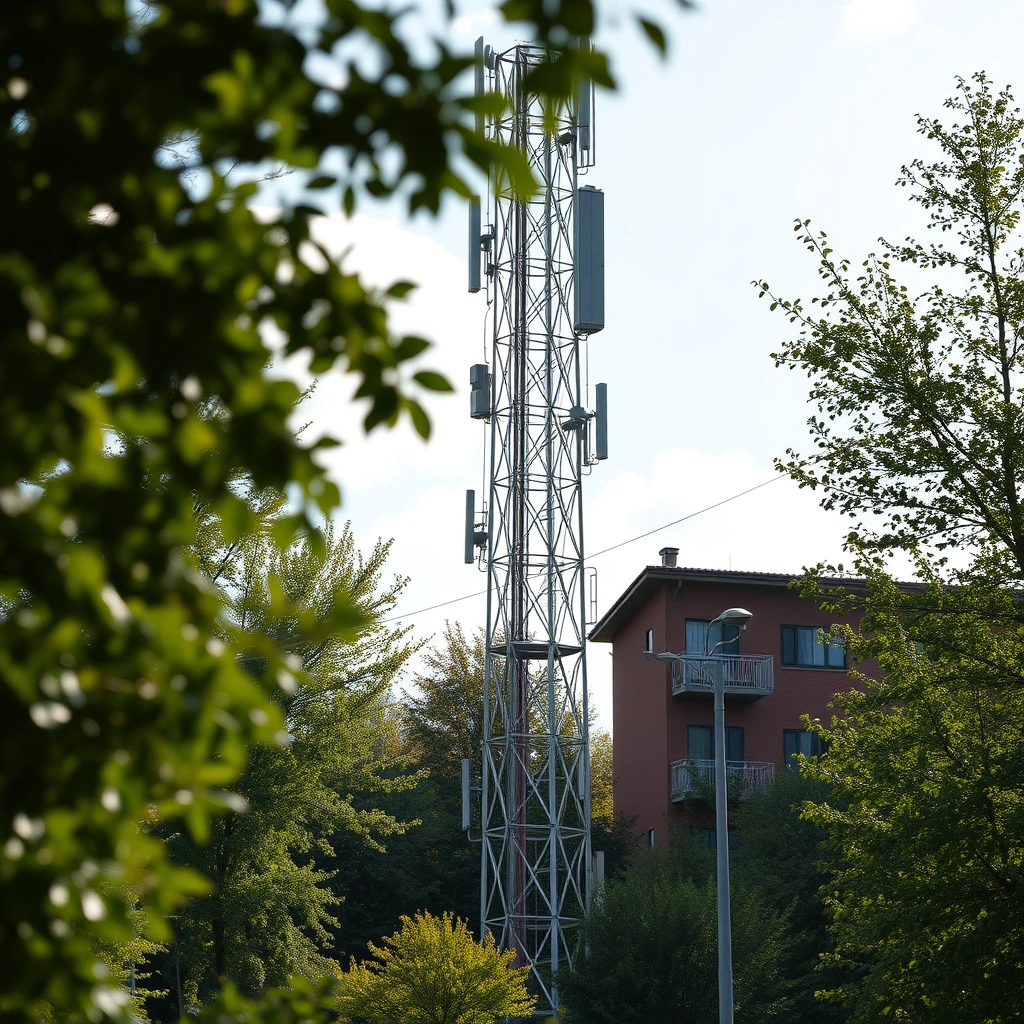
    The era of 5G has quietly arrived—and the changes it brings are all around us. While you might remember the heated debates or see warnings about towering antennas, the reality is that 5G towers are closer than most people realize. In fact, these small but mighty transmitters are embedded in light poles, building rooftops, and even disguised as trees or street furniture in many communities worldwide.

    If you’ve noticed faster data speeds lately, there’s a good chance you’re already benefiting from 5G. But beyond blazing-fast downloads, the reach of 5G is about much more than streaming at higher resolutions or posting social media updates in seconds. The network’s explosion is reshaping everything from how cities operate to the way emergency responders save lives. Let’s explore the 5G facts you need to know, how this next-gen network is woven into your environment, and why its proximity truly matters.

    Understanding 5G: More than Just Faster Internet

    What Sets 5G Apart from Previous Generations?

    To grasp why people make a fuss over 5G towers, it’s crucial to understand what makes 5G different. Unlike 4G, which revolutionized mobile browsing, 5G is built upon entirely new principles and technologies. This includes:

    – Ultra-high frequencies (millimeter waves) that support massive bandwidth
    – Densely packed antennas for greater coverage
    – Low latency that allows near-instantaneous communication
    – Network slicing, which creates custom sub-networks for specialized uses

    Each of these innovations helps explain why deploying more towers or “small cells” is essential. 5G’s high-frequency signals don’t travel as far as older 4G waves. That’s why carriers like Verizon, AT&T, and T-Mobile have installed thousands of 5G transmitters in both dense urban centers and quiet suburban neighborhoods.

    5G Facts: Speed, Coverage, and Capability

    Curious about the numbers behind the hype? Here are some striking 5G facts:

    – Peak download speeds can exceed 10 Gbps (gigabits per second)
    – Latency can be as low as 1 millisecond, compared to 30–50 milliseconds for 4G
    – In major U.S. cities, 5G coverage reached over 89% of the urban population as of 2023
    – According to GSMA, more than 30% of the world’s population will have regular access to 5G by 2025

    Many of these stats are possible only with a denser network of 5G towers. The widespread infrastructure is quietly knitting together your phone, your smart home, and even the connected cars on your street.

    Where Are 5G Towers Hiding? The Invisible Network

    The Rise of Small Cells and Camouflaged Antennas

    Unlike the tall, unmistakable cell sites of earlier generations, 5G often arrives in “small cells”—compact transmitters designed to blend into their surroundings. Modern cities are host to an army of these unobtrusive devices, often installed on:

    – Existing utility and light poles
    – Building rooftops and sides
    – Bus stops, signs, and even traffic signals
    – Decorative street furniture or artificial “trees”

    In neighborhoods, you may see a new streetlight or boxy structure and never realize it’s broadcasting 5G signals. This rollout strategy is what places 5G towers closer than you think—sometimes just outside your front door.

    5G in Rural and Suburban Settings

    While urban centers get most of the attention, another 5G fact is its rapid spread to rural areas. Thanks to mid-band (Sub-6 GHz) and low-band spectrums, carriers are able to cover wide, less dense populations with longer-range, albeit lower-speed, 5G. In many small towns, local water towers or barns now sport antennas that connect remote communities to the latest technology.

    Why Closer 5G Towers Matter: Beyond Mobile Phones

    Smart Cities and Critical Infrastructure

    One of the most important 5G facts is how it powers a new generation of urban development. Cities now connect traffic signals, surveillance cameras, and parking meters through ultra-fast, cloud-based platforms. The city of San Diego, for example, has implemented over 4,200 smart sensors and 3,200 new streetlights with 5G connectivity (source: [San Diego’s Smart City Program](https://www.sandiego.gov/sustainability/programs/smart-city)).

    Benefits of 5G-powered cities include:

    – Real-time monitoring of air quality and water leaks
    – Adaptive lighting and traffic management to reduce congestion
    – Faster, more coordinated emergency response
    – Enhanced public Wi-Fi and accessibility for residents

    By having 5G towers near critical zones—hospitals, schools, government buildings—municipalities ensure that vital data gets where it needs to go with lightning speed.

    The Internet of Things (IoT) Revolution

    5G is the backbone of the expanding “Internet of Things.” Everything from smart appliances to industrial robots now relies on close-proximity 5G towers for ultra-reliable connections. Here’s how it looks in practice:

    – Smart thermostats and security cameras in homes respond instantly, even when you’re miles away
    – Utility companies manage the power grid by analyzing millions of sensors in real time
    – Fleet operators track vehicles, reroute deliveries, and optimize logistics dynamically

    Each scenario is powered by a web of local 5G transmitters that keep the conversation going—even as the number of connected devices per household reaches 20 or more.

    Health and Safety: Addressing the 5G Conversation

    Debunking Common Myths

    With any major technology rollout, rumors and fears can spread quickly. Some people worry about health effects from the proximity of 5G towers. However, the World Health Organization and U.S. Food and Drug Administration have stated that 5G radio frequencies are well within safety limits for human exposure ([WHO 5G Fact Sheet](https://www.who.int/news-room/questions-and-answers/item/radiation-5g-mobile-networks-and-health)).

    Key 5G facts on safety:

    – 5G uses non-ionizing radiation: it cannot damage DNA or cause cancer
    – Power levels from 5G antennas drop dramatically with distance
    – Strict federal and international guidelines regulate tower installations, ensuring public safety

    Authorities conduct rigorous reviews for each 5G deployment—especially as towers and small cells are found closer to homes and schools.

    Safeguarding Data and Privacy

    As 5G networks proliferate, so do concerns about cybersecurity. Faster speeds and more connected devices mean a wider “attack surface.” Service providers are responding by:

    – Enabling advanced encryption across 5G communications
    – Launching “network slicing” to create isolated sub-networks for critical users
    – Partnering with cybersecurity experts to identify and quickly patch vulnerabilities

    Users should follow best practices such as keeping devices updated, using strong passwords, and being alert for phishing scams—especially as 5G enables new kinds of smart gadgets.

    The Economic Impact: Jobs, Innovation, and Opportunity

    5G’s Role in Driving Business Growth

    The deployment of 5G towers close to your workplace or home isn’t just about consumer convenience—it’s an economic engine. Analysts estimate that 5G will add $13.2 trillion to global GDP and create 22.3 million jobs by 2035 (source: IHS Markit).

    Where 5G towers are deployed:

    – Local construction, telecom, and engineering jobs surge
    – Startups and established tech companies launch innovative applications—from remote medical diagnostics to autonomous vehicles
    – Rural and underserved communities gain the digital infrastructure critical for participating in the modern economy

    Industries on the cutting edge of 5G include:

    – Healthcare: Telemedicine, connected ambulances, and wearable health monitors
    – Manufacturing: Real-time automation, quality control, and supply chain management
    – Entertainment: AR/VR experiences, cloud gaming, and interactive media

    Having 5G towers closer than ever accelerates this cycle—making sure no region or entrepreneur is left behind.

    5G Facts for Consumers: Real-World Benefits

    To bring these high-level trends closer to home, here are ways ordinary consumers benefit:

    – Seamless video calls and ultra-HD streaming on the go
    – Faster downloads—full-length movies in seconds, not minutes
    – Smoother online gaming and low-latency experiences
    – Reliable connections in crowded places (think stadiums, airports, festivals)
    – More robust smart home devices that work together effortlessly

    As more 5G towers light up nearby neighborhoods, these benefits are no longer futuristic—they’re available to you now.

    Challenges and Considerations with Dense 5G Networks

    Regulatory and Infrastructure Hurdles

    Deploying a dense network of 5G towers requires cooperation between city governments, telecom companies, and local residents. Regulations on tower placement, power levels, and aesthetic design vary by jurisdiction. Some common issues include:

    – Zoning disputes over tower locations
    – Concerns about visual clutter or property values
    – The cost and complexity of retrofitting old infrastructure

    Despite these challenges, nearly all major cities are racing to expand 5G infrastructure. Clear communication, community input, and careful planning are key to smooth rollouts.

    Environmental Considerations

    Another frequently discussed 5G fact is the environmental impact of a massive increase in electronic equipment. The telecom industry is working to address this through:

    – Deploying energy-efficient hardware
    – Sharing infrastructure between multiple providers to reduce redundancy
    – Recycling obsolete equipment and using sustainable materials

    Consumers can help by recycling old devices and supporting companies committed to green networking.

    The Future: What Happens When 5G Towers Get Even Closer?

    As you absorb these 5G facts, it’s worth noting that the story doesn’t end here. Technologies like Wi-Fi 7, 6G, and next-generation IoT will demand even more robust and local networks. Researchers are already exploring:

    – “Edge computing” facilities embedded within 5G towers, processing data locally for ultra-low-latency applications
    – Private 5G networks powering factories, stadiums, or university campuses
    – Satellite-5G hybrids that can bring high-speed connectivity to previously unreachable places

    Proximity is the future of wireless: the closer the towers, the more seamlessly your world connects—often without you even noticing.

    Key Takeaways: Why 5G Towers Matter in Your Everyday Life

    Now that you’ve discovered how 5G towers are closer than you think, it’s clear why this matters for tech, society, and your day-to-day experience. The most important 5G facts? These towers aren’t just about faster phones. They’re the invisible thread tying together smart cities, cutting-edge healthcare, efficient industries, and seamless interconnection.

    As deployment expands, so do questions about privacy, safety, and equitable access—which communities, companies, and individuals must navigate together. The best way forward is to stay informed about the technology shaping your environment.

    Curious about how 5G changes your life, business, or community? Reach out anytime at khmuhtadin.com to get your questions answered and explore the possibilities of a truly connected future.

  • The Surprising Origins of Bluetooth You Never Knew

    The Surprising Origins of Bluetooth You Never Knew

    The Unlikely Story Behind the Name “Bluetooth”

    Imagine a world where wireless headsets, smart home gadgets, or car infotainment systems had to rely on clunky cords and complex connections. Odds are, one of your favorite features—being instantly connected via Bluetooth—is something you take for granted. The Bluetooth history, however, is far from ordinary. In fact, it’s filled with Nordic kings, ambitious engineers, and a bit of historical serendipity that might surprise you.

    This wireless technology powers much of our digital life today, but how did it get that unusual name? Why did Danish royalty enter the equation? As we trace the roots of Bluetooth, prepare to have your assumptions challenged and your appreciation deepened for this essential technology.

    The Technological Landscape Before Bluetooth

    Short-Range Communication and Its Challenges

    Before the rise of Bluetooth, electronic devices relied heavily on physical cables or expensive and limited wireless solutions. Consumers longed for an easy, universal way to connect devices without the mess or technical hiccups of wires.

    – Infrared (IrDA): Early digital devices like PDAs and laptops used infrared technology, which required a direct line of sight.
    – Proprietary RF Solutions: Some companies developed unique solutions, but these lacked compatibility across brands and devices.
    – Serial Cables & Connectors: Most computers and mobile phones were still tethered to accessories and other hardware via cables.

    By the mid-1990s, tech companies saw a growing need: a universal, low-power, and affordable way to connect devices wirelessly.

    The Search for Universal Wireless Connectivity

    The task was clear: create a system simple enough for consumers and robust enough for manufacturers. Companies experimented with various radio communication protocols. However, they were still missing the secret sauce—interoperability, affordability, and reliability.

    Bluetooth history began to take shape against this crowded and technologically challenging backdrop.

    A Collaborative Breakthrough: From Concept to Technology

    The Originators: Ericsson’s Role

    The seeds of Bluetooth were planted at Ericsson, the renowned Swedish telecommunications giant. In 1989, Dr. Nils Rydbeck, CTO of Ericsson Mobile, assigned engineer Jaap Haartsen the mission to design a short-range radio technology to replace cables connecting mobile phones to accessories.

    Haartsen, together with Sven Mattisson, outlined a way for devices to communicate over unlicensed 2.4 GHz industrial, scientific, and medical (ISM) radio bands. Their solution aimed to balance data speed, reliability, and low power consumption.

    – 1994: Prototypes for the first version of Bluetooth begin to emerge at Ericsson’s Lund facility in Sweden.
    – Core Principles: Multipoint capability (one device can talk to many), low interference, and low battery usage.

    Gathering Industry Allies: The Bluetooth Special Interest Group

    Ericsson understood that industry-wide adoption required more than just technical excellence. In 1998, they joined forces with tech heavyweights IBM, Intel, Nokia, and Toshiba to establish the Bluetooth Special Interest Group (Bluetooth SIG).

    What did this move accomplish?
    – Ensured interoperability across manufacturers and devices.
    – Provided a standardized framework and royalty-free specification.
    – Boosted market confidence for future implementation.

    Today, the Bluetooth SIG boasts over 36,000 member companies worldwide, continuing to steward Bluetooth history toward greater innovation.

    The Surprising Nordic Inspiration for “Bluetooth”

    Who Was Harald “Bluetooth” Gormsson?

    The most surprising twist in Bluetooth history is the namesake itself: King Harald “Bluetooth” Gormsson. Harald was a 10th-century Danish king known for uniting Denmark and Norway through diplomacy and communication.

    But why call this modern technology “Bluetooth”?

    – During development, SIG members used the code name “Bluetooth” as a placeholder.
    – Jim Kardach, an Intel engineer, suggested the name after reading about Harald in a historical novel.
    – The metaphor: Like the king who united warring factions, Bluetooth technology’s goal was to unite diverse devices under one wireless standard.

    The word “Bluetooth” stuck, transforming from an internal joke into one of the most recognizable tech brands in history.

    The Iconic Logo’s Hidden Meaning

    Bluetooth’s logo is more than just a simple mark. It cleverly merges the Nordic runes for “H” (Haglaz) and “B” (Berkanan), honoring Harald Bluetooth’s initials.

    A few facts:
    – The combination of the runes not only forms the logo aesthetically but also reflects the technology’s roots in Scandinavian history.
    – This rune-inspired design has become synonymous with wireless freedom worldwide.

    For more on this fascinating symbolism, you can check out the Bluetooth SIG’s official history page: https://www.bluetooth.com/learn-about-bluetooth/bluetooth-technology/bluetooth-history/.

    The Launch and Global Proliferation of Bluetooth

    Bluetooth Version 1.0: Hype Meets Reality

    Bluetooth’s official public debut arrived in 1999 with Version 1.0. Though hailed as revolutionary, early versions faced several technical hurdles:

    – Unstable connections.
    – Incompatibility across early devices.
    – Complex pairing processes.

    Regardless, the promise of Bluetooth history was clear. Developers raced to refine the standard and devices swiftly began to adopt the technology.

    First Consumer Devices and Adoption Boom

    The first real-world Bluetooth device was a hands-free headset, made by Ericsson, which hit the market in 2000. Soon after, laptops, mobile phones, and printers were incorporating Bluetooth chips.

    By 2003:
    – Over a billion Bluetooth-enabled devices had shipped.
    – Consumers praised the transition from tangled wires to seamless wireless connectivity.
    – Tech companies poured resources into new use cases, from streaming audio to sending files.

    Bluetooth History: Evolution Through Key Milestones

    Driving Innovation With Each Version

    Bluetooth technology has grown enormously since its initial launch. Here are some critical milestones in Bluetooth history:

    – Bluetooth 2.0 (2004): Introduced Enhanced Data Rate (EDR), doubling the speed while reducing power consumption.
    – Bluetooth 3.0 (2009): Added “High Speed” transfers (using Wi-Fi as a bearer for large files).
    – Bluetooth 4.0 (2010): Brought in Bluetooth Low Energy (BLE), enabling fitness trackers, wearables, and IoT devices.
    – Bluetooth 5 (2016): Quadrupled range and doubled speed, supporting smart homes and industrial IoT.

    Each leap reflects growing demands for faster data, longer battery life, and higher reliability.

    Shaping Everyday Life and Industry

    Bluetooth is truly everywhere:
    – Audio: Headphones, earbuds, speakers.
    – Automotive: In-car hands-free systems, diagnostics.
    – Medical: Wireless health monitors and implants.
    – Smart Home: Locks, security, thermostats, lighting.
    – Industry: Warehousing, robotics, asset tracking.

    The ability to connect vast ecosystems of devices is now a given—thanks to decades of trailblazing work and thoughtful standardization.

    Influence of Bluetooth on Modern Tech Ecosystems

    Competing Standards and the Triumph of Bluetooth

    Bluetooth history is also about overcoming rivals such as Wi-Fi, Zigbee, NFC, and proprietary wireless connectors. Why did Bluetooth win?

    – Ubiquity: Available in everything from smartphones to toys.
    – Versatility: Supports a wide range of devices, from low-data sensors to high-fidelity audio.
    – Standardization: Open and interoperable, thanks to the SIG’s active management.
    – Affordability: Royalty-free model encouraged rapid, mass adoption.

    Today, it’s estimated that over 5 billion Bluetooth devices ship annually, making it one of the most prolific wireless standards.

    Expanding Horizons: Bluetooth in Emerging Technologies

    Bluetooth continues to evolve for a rapidly changing world:
    – Bluetooth Mesh (2017): Enables large-scale networks, perfect for smart buildings and industrial automation.
    – Direction Finding: Powers indoor navigation and asset tracking by pinpointing exact device locations.
    – Auracast Broadcast Audio: Recently launched, letting venues broadcast audio streams for shared listening experiences.

    Read more about these cutting-edge features directly from the Bluetooth SIG at https://www.bluetooth.com/.

    Challenges and Controversies Along the Way

    Security Concerns Over the Years

    As Bluetooth adoption skyrocketed, so did concerns about its security. Examples include:
    – Eavesdropping or “Bluesnarfing” attacks on early devices.
    – Vulnerabilities in pairing processes allowing unauthorized access.
    – Fast-evolving threats prompting regular updates to Bluetooth standards.

    Today, the SIG works closely with device manufacturers to ensure timely security patches and robust encryption protocols.

    Compatibility and Fragmentation

    Bluetooth’s universality is also its biggest headache. With thousands of manufacturers worldwide, compatibility can sometimes lag behind invention.

    Common complaints:
    – Pairing trouble between devices from different brands.
    – Unexpected dropouts or disconnects.
    – Old devices lacking support for newer features.

    Organizations like Bluetooth SIG tackle these problems with rigorous certification and continual protocol refinement.

    The Surprising Legacy of Bluetooth History

    The story of Bluetooth history is a global saga of innovation, unexpected inspiration, and relentless teamwork. From its humble beginnings at Ericsson’s Swedish lab to its iconic Viking branding, Bluetooth has changed our relationship with technology forever.

    The next time you connect your earbuds, unlock your smart door, or transfer a file with a tap, remember the surprising, Nordic-flavored journey woven into Bluetooth’s DNA.

    Want to connect over more fascinating tech history—or need expert advice for your digital projects? Reach out via khmuhtadin.com. Stay curious, stay connected!

  • Why AI Chatbots Are Revolutionizing Customer Service

    Why AI Chatbots Are Revolutionizing Customer Service

    The Rapid Rise of AI Chatbots in Customer Service

    AI chatbots are transforming the landscape of customer service in ways that were once unimaginable. Modern businesses, from retail giants to nimble startups, are adopting these sophisticated digital assistants to meet the ever-evolving demands of consumers. Why this surge? Customers today expect immediate responses, 24/7 access, and personalized experiences—expectations that traditional models struggle to fulfill. AI chatbots step in to bridge these gaps, delivering seamless, efficient, and engaging interactions at scale.

    What was once seen as a tech novelty has now become essential for brands striving to stay competitive. Industry data suggests that over 67% of consumers worldwide interacted with a chatbot for support in the last year, and this percentage is climbing. With the supported benefits of cutting-edge AI, companies can ensure consistency and satisfaction while optimizing operational costs. In this article, we’ll explore how AI chatbots have become a game-changer for customer service, their practical applications, and what your business can do to harness their full potential.

    How AI Chatbots Enhance the Customer Experience

    Instant Support, Anytime and Anywhere

    One of the main reasons AI chatbots are revolutionizing customer service is their tireless availability. Unlike traditional support agents, AI chatbots operate around the clock. Whether it’s midday or midnight, customers can get help whenever they need it. This level of accessibility means customers don’t have to wait until regular business hours for answers, leading to increased satisfaction and loyalty.

    Additionally, AI chatbots can handle multiple conversations simultaneously, eliminating long wait times and queues. Customers no longer have to deal with frustrating phone hold music or delayed email responses. The result is a smoother, more efficient support journey that respects customers’ time.

    Personalization at Scale

    Another area where AI chatbots shine is personalized engagement. Leveraging customer data, chatbots tailor responses to each individual’s needs, making each interaction feel unique. For example:
    – Addressing customers by name
    – Recommending relevant products based on purchase history
    – Providing order status updates
    Personalization not only improves the user experience but also drives sales and builds stronger brand relationships. AI-powered systems can analyze past interactions, anticipate needs, and proactively resolve issues, making every customer feel valued.

    The Business Benefits of AI Chatbots

    Cost Efficiency and Scalability

    Implementing AI chatbots can significantly reduce customer service costs. A single chatbot can manage thousands of interactions that would otherwise require a large team of human agents. This scalability allows businesses to handle spikes in demand without a proportional increase in expenses.

    Major retailers report up to 30% reductions in support center costs after deploying AI chatbots. For startups or growing businesses, this means offering high-quality support at a fraction of the traditional cost, with resources redirected into growth initiatives and innovation.

    Faster Problem Resolution

    Time is critical in customer service. AI chatbots rapidly sift through databases and knowledge bases to provide accurate answers in seconds. They can instantly process returns, troubleshoot technical issues, or guide users through processes without hesitation.

    Moreover, AI chatbots improve over time. Machine learning enables them to refine their accuracy, learn from past interactions, and predict common issues—sometimes before the customer even articulates the problem. This adaptability further streamlines service delivery.

    Use Cases Transforming Customer Service

    Streamlined Order Management and Tracking

    E-commerce businesses frequently use AI chatbots to automate order-related queries. Chatbots can:
    – Check order statuses in real time
    – Provide tracking numbers
    – Initiate order returns or exchanges
    This automation not only creates a frictionless shopping experience but also frees up human agents to focus on high-impact, complex tasks.

    Appointment Scheduling and Reminders

    Healthcare providers, salons, and service industries are integrating AI chatbots for appointment booking and reminders. Customers can:
    – View available slots and book appointments
    – Receive automated notifications
    – Reschedule or cancel appointments effortlessly
    Such features increase appointment attendance rates and reduce administrative workload, benefitting both businesses and their clients.

    Technical and Product Support

    Tech companies leverage AI chatbots to deliver troubleshooting guides and step-by-step resolutions to customer problems. For example, internet providers use chatbots for connection diagnostics, while software companies employ them to walk users through installation or problem-solving routines.

    Lead Generation and Qualification

    Beyond support, AI chatbots are powerful marketing tools. By asking targeted questions and collecting key data, chatbots qualify leads in real time. They seamlessly hand off primed prospects to sales teams for follow-up, dramatically increasing conversion rates.

    AI Chatbots and Human Agents: Collaboration, Not Competition

    Augmenting Human Skills

    It’s a common misconception that AI chatbots are here to replace human customer service agents. In reality, the best solutions use chatbots to handle routine queries and enable humans to focus on complex, nuanced interactions. This symbiosis leads to:
    – Reduced burnout and higher morale among staff
    – Increased first-contact resolution rates
    – Enhanced quality of service on escalation cases

    Chatbots efficiently gather information before connecting customers to a live agent, ensuring agents have all necessary context to resolve matters swiftly.

    Seamless Handoffs for Better Outcomes

    Modern AI chatbots are designed to recognize when an issue exceeds their programmed capabilities. At this point, they can smoothly hand off the conversation to a human agent, along with conversation transcripts and user data. This reduces customer frustration and leads to higher satisfaction, especially in sensitive or complicated scenarios.

    Key Features of Successful AI Chatbots

    Natural Language Understanding (NLU)

    Sophisticated NLU capabilities are crucial for effective AI chatbots. By understanding the intent behind user input—regardless of spelling, slang, or grammar—chatbots can hold meaningful, fluid conversations. Gartner predicts that by 2025, natural language processing will be embedded in over 75% of customer service interactions.

    Multichannel Integration

    Today’s customers expect fluid experiences across channels. Top-performing AI chatbots can engage customers on:
    – Websites
    – Mobile apps
    – Social media platforms (Facebook Messenger, WhatsApp)
    – Voice assistants (Google Assistant, Alexa)
    This omnichannel support creates consistent interactions, regardless of where users initiate contact.

    Continuous Learning and Improvement

    AI chatbots progressively become smarter. Through machine learning, they:
    – Analyze customer feedback
    – Identify knowledge gaps
    – Update their databases and scripts
    In turn, these enhancements ensure chatbots remain relevant and effective, adapting to evolving customer expectations and business needs.

    Overcoming Common Myths and Challenges

    Dispelling Myths About AI Chatbots

    Despite their proven value, some myths still persist:
    – “Chatbots are impersonal.” In fact, well-designed AI chatbots offer personalized service and can build rapport.
    – “They can’t handle complex requests.” While it’s true that nuanced cases sometimes require human agents, AI chatbots excel at recognizing such instances and escalating appropriately.
    – “Chatbots are only for big companies.” Many affordable chatbot platforms are tailored for small and medium businesses, democratizing access to AI-driven support.

    Addressing Key Implementation Challenges

    Deploying effective AI chatbots requires thoughtful planning:
    – Define clear use cases and success metrics from the outset.
    – Start with commonly asked questions and service requests, then expand capabilities over time.
    – Regularly review chatbot conversations to identify improvement areas.
    Partnering with reputable providers and following guidelines from industry experts—like the recommendations from the [IBM Watson Blog](https://www.ibm.com/blog/how-chatbots-improve-customer-service/)—can help companies avoid missteps and maximize ROI.

    The Future of AI Chatbots in Customer Service

    Deeper Personalization Through AI Advancements

    As AI models become more powerful, chatbots will deliver even greater personalization. Real-time sentiment analysis, voice recognition, and context awareness will enable conversations that mimic human empathy and understanding.

    Imagine a future where AI chatbots greet customers by name, recall previous discussions, and adapt their tone based on emotional cues—all without human intervention.

    Bots as Brand Ambassadors

    AI chatbots are increasingly becoming the “first face” of a brand. The quality of these interactions plays a crucial role in shaping customer perceptions and loyalty. Companies that invest in chatbot design, tone, and user experience are reaping rewards in terms of brand differentiation and Net Promoter Score growth.

    Steps to Harness the Power of AI Chatbots for Your Business

    Assess Your Customer Service Needs

    Evaluate your current support channels and identify high-volume, repetitive tasks. These are perfect starting points for automation via AI chatbots.

    Select the Right Chatbot Platform

    Choose a chatbot provider that aligns with your business goals, technical requirements, and budget. Consider platforms that offer:
    – Intuitive setup and management tools
    – Integration with existing systems (CRM, e-commerce, ticketing)
    – Advanced analytics and reporting

    Design for Both Automation and Escalation

    A successful chatbot strategy balances automation with seamless escalation to human agents. Map workflow processes for smooth handoffs, ensuring complex cases get the attention they deserve.

    Iterate and Optimize

    Regularly review performance data and customer feedback. Update chatbot scripts, add new capabilities, and address any identified pain points to keep the experience fresh and relevant.

    Summary and Next Steps

    AI chatbots are not just a passing trend—they’re a foundational element of modern customer service. By offering instant, personalized, and scalable support, they help businesses win customer loyalty and stand out in competitive markets. Customers, in turn, enjoy faster responses, meaningful interactions, and consistent support—leading to true win-win outcomes.

    If you’re ready to transform your customer service with the latest in AI-driven technology, there’s never been a better time to start. Embrace the benefits of AI chatbots and see how they can boost your bottom line. For personalized advice, tailored implementation strategies, or to take the next step, don’t hesitate to [contact me at khmuhtadin.com](https://khmuhtadin.com) today.

  • The Most Exciting Tech Trends Coming in 2025

    The Most Exciting Tech Trends Coming in 2025

    Meta description: Discover the most exciting tech trends coming in 2025. Explore breakthroughs in AI, quantum computing, 5G, green tech, and more for a smarter future.

    Revolutionary Advances in Artificial Intelligence

    Artificial intelligence is set to dominate tech trends in 2025, with transformative improvements in both capability and accessibility. As AI technologies mature and integrate deeper into daily life and business, their impact will ripple across every industry.

    Generative AI Redefines Creativity and Productivity

    By 2025, generative AI will have moved far beyond text and image creation. Expect to see more sophisticated AI tools capable of producing music, video, and even immersive virtual worlds with minimal human input. Businesses will rely on AI-driven content creation to supercharge marketing, training, and customer support. For creators and solopreneurs, these tools will democratize the creative process, speeding up workflows and slashing production costs.

    – Example: AI-powered video editors will enable brands to produce personalized advertisements in minutes rather than days.
    – Leading platforms like OpenAI and Google are already rolling out multimodal systems that blend text, images, and audio seamlessly.

    AI in Everyday Work and Decision-Making

    Tech trends in the workplace forecast a surge in AI-powered productivity tools. Expect smarter assistants that can manage emails, schedule meetings, and analyze large data sets in real time, freeing professionals to focus on higher-value tasks. AI will also play a more significant role in decision-making by forecasting trends, optimizing resource allocation, and identifying risks before they materialize.

    – Predictive analytics will inform supply chain management, saving billions by reducing delays and losses.
    – Digital twins powered by AI will simulate entire business operations for scenario planning and efficiency testing.

    Quantum Computing: Nearing Practical Breakthroughs

    The long-awaited quantum revolution is on the cusp of real-world impact. In 2025, advances in quantum hardware and software will bring tangible breakthroughs, particularly in fields where classical computers struggle.

    Solving Previously Impossible Problems

    Quantum computers are expected to tackle challenges like protein folding, financial modeling, and materials discovery at unprecedented speed. For industries ranging from pharmaceuticals to aerospace, this means shorter timelines for innovation and major market shifts.

    – Pharmaceutical companies will leverage quantum simulations to identify new drug candidates and optimize their properties, dramatically accelerating R&D.
    – Material science firms will use quantum models to develop lighter, stronger materials with applications in energy, transport, and infrastructure.

    Integration with Classical Systems

    Rather than replacing today’s computers, quantum devices will work alongside traditional infrastructure. Companies are developing cloud-based quantum services, making their power accessible without massive upfront investment.

    – For example, IBM’s Quantum Network (https://www.ibm.com/quantum) is already connecting businesses and researchers to early quantum hardware for pilot programs.
    – Hybrid algorithms will maximize strengths of both quantum and classical systems, ensuring a smooth transition as this tech trend unfolds.

    The Era of Hyper-Connected 5G and 6G Networks

    Tech trends for 2025 will be fueled by lightning-fast, ultra-reliable connectivity as 5G network coverage becomes universal and early 6G pilots emerge. This new connectivity backbone will unlock innovation across mobility, IoT, and immersive experiences.

    5G Powers IoT and Smart Cities

    The explosive growth of connected devices will reach new heights. Expect smarter homes, offices, and cities as billions of sensors transmit data in real time, enabling optimized traffic flows, energy use, and public safety.

    – Transportation networks will reduce congestion and emissions with connected traffic signals and vehicle-to-infrastructure communication.
    – Environmental monitoring systems will detect changes in air quality or water safety instantly, triggering rapid responses.

    6G on the Horizon

    While mainstream adoption is a few years away, the first 6G testbeds will begin operation. With data rates up to 100 times faster than 5G and sub-millisecond latency, 6G will enable advanced AR/VR, real-time holographic communication, and novel applications previously unimagined.

    – Example: Remote-controlled medical procedures and training using real-time, high-fidelity holographic projections.
    – The race is on among countries and tech giants to set the global standard—as discussed by industry leader Ericsson (https://www.ericsson.com/en/6g).

    Sustainable Technology: Greener and Smarter Solutions

    With climate concerns taking center stage, tech trends in 2025 will sharply pivot toward sustainability. Emerging technologies are helping businesses and governments reduce their carbon footprint without sacrificing performance.

    Green Data Centers and Efficient Computing

    Data centers currently consume massive amounts of energy, but by 2025, advances in chip design and cooling systems will make them greener and cheaper to operate. AI-powered energy management platforms will optimize performance and reduce waste.

    – Google has pledged to run carbon-free data centers by 2030, investing in cutting-edge cooling and renewables.
    – Hardware advances, like ARM-based processors and photonic chips, will provide better performance-per-watt for any workload.

    Clean Tech and Circular Economy

    Innovation will accelerate in battery technology, solar panels, and green hydrogen, lowering costs and making clean energy more widely accessible. Tech companies will also scale up circular economy initiatives, designing products for longer life cycles, easy repairs, and full recyclability.

    – Electric vehicles with faster-charging, longer-lasting batteries will become the new standard.
    – Major brands will offer take-back and refurbish programs, echoing initiatives like Apple’s recycling effort (https://www.apple.com/environment/).

    Immersive Experiences: Extended Reality Goes Mainstream

    Augmented and virtual reality are poised for a breakout year in 2025, breaking down previous barriers of cost, comfort, and usefulness. This will transform both entertainment and remote collaboration.

    VR and AR in Entertainment and Learning

    Filmmakers, game studios, and educators are embracing VR and AR for creating lifelike, interactive journeys. These experiences will become more affordable and accessible as headset prices drop and software becomes easier to use.

    – Schools will deploy VR field trips and science labs, making abstract concepts tangible.
    – Events and sports will offer virtual front-row seats and interactive extras for fans at home.

    Remote Work and Collaboration Tools

    As hybrid work normalizes, tech trends point to new XR (Extended Reality) platforms enhancing remote meetings and teamwork. Expect immersive digital workspaces where collaboration happens across continents with a sense of presence nearly indistinguishable from in-person.

    – Companies like Microsoft and Meta are expanding their enterprise XR offerings.
    – Health and safety training will benefit from realistic, risk-free simulations in regulated industries.

    Personalized Health and Biotechnology Innovations

    Medical technology has always been at the forefront of change, but 2025 will see an explosion of personalized and preventive care powered by biotechnology and smart devices.

    Wearable Health Tech and Real-Time Diagnostics

    Smartwatches and biosensors will monitor not just activity and heart rate but sleep quality, hydration, blood sugar, and stress—all in real time. These devices will share data securely with doctors, leading to earlier diagnoses and more tailored treatment.

    – Diabetes management will be revolutionized by continuous glucose monitors and AI-driven insulin delivery systems.
    – Fitness and mental health trackers will offer adaptive coaching based on daily biometrics.

    Biotech Breakthroughs for a Healthier Tomorrow

    Gene editing, custom therapeutics, and rapid vaccine development (a legacy of the COVID-19 pandemic) are moving mainstream. Tech trends in this sector include accessible diagnostic tools and affordable therapies built on CRISPR and other next-gen platforms.

    – Cancer treatments and rare disease therapies will become more targeted, minimizing side effects and improving outcomes.
    – Home testing kits will enable early diagnosis for a wide range of conditions, empowering patients with actionable information.

    Tech Trends in Cybersecurity and Digital Trust

    As digital transformation accelerates, so do the risks. The tech trends shaping cybersecurity in 2025 are all about staying ahead of evolving threats with smarter defenses and greater transparency.

    Zero Trust Architecture and AI Defenders

    Organizations will move beyond perimeter-based security to zero trust models, verifying every user and device at every step. AI-powered threat detection and response systems will spot anomalies in network behavior and foil attacks before they cause harm.

    – Machine learning will be key for identifying subtle malicious activity in growing oceans of data.
    – Companies will share threat intelligence across industries, enabling faster response to new risks.

    Privacy-First Technology for Consumers

    Enhanced privacy controls will be a major selling point for tech products in 2025. Apps and devices will enable granular permissions, clear data usage policies, and robust encryption by default.

    – End-to-end encrypted messaging and private searches will become standard, putting control back in users’ hands.
    – Regulatory pressure (like the European Union’s GDPR) will further accelerate “privacy by design” in tech development.

    Preparing for the Future: Practical Steps You Can Take

    The coming wave of tech trends is thrilling but can seem daunting. Rather than wait passively, individuals and organizations can take several steps today to harness the power of technology in 2025.

    – Continuously learn: Stay curious and proactive about new tools and platforms relevant to your goals.
    – Collaborate widely: Join online communities, attend virtual events, and connect with thought leaders in your field.
    – Prioritize security: Update passwords, use multi-factor authentication, and understand privacy settings on your key devices and apps.
    – Think green: Opt for energy-efficient devices, recycle electronics, and advocate for sustainability initiatives at work and home.

    Adopting a future-ready mindset will ensure you’re not left behind as tech trends accelerate.

    Staying ahead of these trends will unlock unprecedented opportunities in business, education, and everyday life. From AI-powered productivity and quantum breakthroughs to greener technology and personalized healthcare, the future is brighter—and more connected—than ever. Dive deeper, experiment boldly, and prepare to capitalize on the most exciting tech trends of 2025.

    Ready to lead the way into the future or need expert guidance for your organization? Connect at khmuhtadin.com and explore how you can harness these trends today!

  • From ENIAC to AI: The Surprising Milestones That Shaped Modern Computers

    From ENIAC to AI: The Surprising Milestones That Shaped Modern Computers

    The Dawn of Electronic Computation: ENIAC and Its Peers

    The annals of computer history are marked by a dazzling array of milestones, but perhaps none more pivotal than the creation of the Electronic Numerical Integrator and Computer (ENIAC) in 1945. Before ENIAC, calculations relied on mechanical or electromechanical devices, which were painfully slow and error-prone. ENIAC changed everything—it was the first general-purpose electronic computer, capable of performing thousands of calculations per second.

    ENIAC’s Groundbreaking Impact

    – ENIAC filled a 1,800-square-foot room and weighed 30 tons, yet its speed dazzled the world.
    – It was programmable via patch cables and switches, making it highly flexible for different tasks.
    – Developed to calculate artillery trajectories for the U.S. Army during World War II, ENIAC later found applications in weather prediction, atomic energy calculations, and more.

    ENIAC’s creators, J. Presper Eckert and John Mauchly, set the stage for the computer revolution. While it seems primitive compared to our modern devices, ENIAC’s massive scale and immense potential showed just how far electronic intelligence could go.

    Other Early Computing Trailblazers

    ENIAC was not alone in the quest for computational power. Around the same time, devices like Britain’s Colossus and the German Z3 quietly pushed the boundaries:

    – Colossus: First programmable digital computer, used to break wartime codes.
    – Z3: World’s first working programmable, fully automatic digital computer, built by Konrad Zuse.

    These accomplishments collectively form the bedrock of computer history—a lineage that continues to inspire today’s innovations.

    The Golden Age of Mainframes and Minicomputers

    By the 1950s and 1960s, the field of computer history witnessed rapid evolution. Electronics miniaturization and innovation allowed computers to shrink in size while growing dramatically in power.

    IBM’s Ascendancy and the Mainframe Revolution

    Most notably, IBM emerged as a key player. Its 1401 and System/360 models redefined business, government, and scientific computation:

    – IBM mainframes enabled vast data processing for tasks like payroll, banking, and logistics.
    – System/360 (launched in 1964) introduced compatibility across a family of machines, standardizing software and hardware—a historic breakthrough.
    – NASA relied on these mainframes for Apollo mission calculations.

    The mainframe era made computation scalable, leading large organizations to rely on computers for critical operations. The concept of batch processing, brought by these systems, allowed jobs to run sequentially overnight or across networks of terminals.

    The Rise of Minicomputers

    While mainframes ruled the big leagues, the 1960s and 1970s saw the emergence of minicomputers. Companies like Digital Equipment Corporation (DEC) brought computational capability to laboratories, research centers, and small businesses:

    – DEC’s PDP series proved especially influential, bringing computers into places previously unthinkable.
    – Minicomputers enabled interactive processing, real-time applications, and, eventually, time-sharing, paving the way for more personal computing experiences.

    This shift democratized access, setting the stage for the personal computer revolution—a crucial inflection point in computer history.

    The Birth and Explosion of Personal Computing

    The bold leap from corporate mainframe rooms to desktops forever changed computer history. The 1970s and 1980s were a hotbed of innovation, driven by visionaries, tinkerers, and entrepreneurial zeal.

    Altair 8800 and the Hobbyist Wave

    The 1975 release of the Altair 8800 marked a cultural shift. Though it required users to flip switches and check LED lights, it ignited the imaginations of a generation. Stephen Wozniak and Steve Jobs, inspired by this revolution, developed the Apple I—introducing assembled personal computers to the world.

    – Apple II brought color graphics and was a favorite in schools.
    – Microsoft, founded in 1975, began supplying software for these emerging machines.
    – Magazines like “Byte” fueled a vibrant community of home developers.

    IBM PC and Standardization

    IBM’s entry with the IBM 5150 in 1981 brought standardization and credibility. With MS-DOS as its operating system, the IBM PC shaped the software and hardware ecosystem for decades.

    – Clone manufacturers embraced IBM-compatible architecture, driving down costs.
    – The PC helped introduce “windows and icons” interfaces, especially with Microsoft Windows and Apple’s Macintosh.
    – By the late 1980s, millions of homes and offices worldwide featured personal computers.

    The personal computer generation turned computing personal and interactive, laying critical groundwork in computer history for the digital age.

    Networking and the Internet: Linking the World

    Personal computers laid the foundation, but connecting them set the stage for a true information revolution. The history of computers is deeply entwined with networking—first local, then global.

    From ARPANET to the World Wide Web

    – ARPANET’s debut in 1969 demonstrated that remote computers could talk to each other, sending rudimentary electronic messages (the forerunner to email).
    – Protocols like TCP/IP, developed in the 1970s and 80s, allowed different kinds of computers to communicate over standardized “language.”
    – In 1991, Tim Berners-Lee unveiled the World Wide Web, making the Internet user-friendly and unleashing a digital gold rush.

    Email, web browsers, and e-commerce transformed how people worked, learned, and interacted—key turning points in computer history.

    The Rise of Personal and Mobile Connectivity

    By the late 1990s and early 2000s, home broadband, Wi-Fi, and mobile data connected billions:

    – Laptops offered portable computing anytime, anywhere.
    – Wi-Fi untethered devices from cables, setting the stage for mobile computing.
    – Smartphones like the iPhone, debuting in 2007, blended mobile telephony with computer power.

    Access to information became instant and global, highlighting how advances in computer history have redefined modern society.

    The Software Renaissance: Operating Systems, Apps, and User Experience

    The journey of computer history isn’t just about hardware; software innovations have equally shaped our daily interactions, efficiency, and creativity.

    Operating Systems that Changed Everything

    Operating systems (OS) are the unseen layer making computers usable by non-experts. Pioneering software includes:

    – UNIX (1970): Basis for countless systems, from Linux to macOS.
    – Microsoft Windows (1985): Brought graphical user interfaces (GUIs) to the masses.
    – Apple’s macOS: Known for its elegance and user focus.
    – Android and iOS: Revolutionized the smartphone experience.

    With GUIs, users could simply click icons, making the complex beautifully simple.

    The Software Explosion and App Ecosystem

    From spreadsheets and word processors to graphic design and gaming, diverse software ecosystems encouraged specialized innovation:

    – The arrival of cloud computing in the 2000s (ex: Salesforce, Google Docs) made applications accessible over the internet.
    – Open-source movements accelerated development (ex: Linux kernel, Firefox browser).
    – The App Store and Google Play turned smartphones into infinitely customizable devices.

    Apps have made nearly every task—work, play, learning—easier, propelling advances across every field.

    From Artificial Intelligence Dreams to Everyday Reality

    Perhaps the most astonishing leap in computer history is the rise of artificial intelligence (AI). Concepts first sketched by Alan Turing and other pioneers seemed like science fiction for decades. Yet, today, AI is embedded in everything from smartphones to space exploration.

    Foundations: Turing, Chess, and Learning Machines

    – Alan Turing’s question—“Can machines think?”—sparked a field.
    – Early AI systems played checkers and chess, solved algebraic problems, and even attempted language translation.
    – By the 1990s, IBM’s Deep Blue shocked the world by defeating chess champion Garry Kasparov.

    These highlights trace a remarkable arc in computer history, showing how AI moved from simple rule-based systems to sophisticated learning machines.

    AI in the Modern Era

    Today’s AI applications are both visible and invisible:

    – Virtual assistants (like Siri and Alexa) understand speech and manage daily tasks.
    – Computer vision enables facial recognition, medical diagnostics, and autonomous vehicles.
    – Generative AI, such as large language models and DALL-E, creates text and art indistinguishable from human effort.
    – Businesses use machine learning for predictive analytics, customer service, and personalization.

    This transformation, documented in detail by organizations like the [Allen Institute for AI](https://allenai.org/), continues to influence every corner of life and industry.

    The Ongoing Revolution: Quantum, Cloud, and Edge Computing

    The story of computer history isn’t over; in fact, it’s accelerating. Fresh paradigms redefine our notion of what computers can do.

    Quantum Leap

    Quantum computing, still in its infancy, promises exponential speed-ups for certain problems:

    – Quantum bits (qubits) can represent multiple states, allowing for parallel processing on an unimaginable scale.
    – Companies like IBM, Google, and startups such as Rigetti are steadily advancing toward practical quantum computers.

    While not ready for general use, quantum breakthroughs could revolutionize cryptography, chemistry, and logistics.

    The Expansion of Cloud and Edge Computing

    Cloud computers offer virtualized resources, making infrastructure affordable and scalable:

    – Enterprises scale up or down with demand—no more buying countless servers.
    – Cloud services (ex: Amazon AWS, Microsoft Azure) host information, run analyses, and power apps for billions.
    – Edge computing processes data near its source (think self-driving cars or IoT sensors), reducing latency.

    These advances empower new industries and experiences, continuing the legacy chronicled in computer history.

    Looking Ahead: Lessons from a Storied Past

    From the labyrinthine wiring of ENIAC to AI assistants in your pocket, computer history is an unfolding narrative of bold experiments, accidental discoveries, and persistent innovation. Each milestone—no matter how technical or obscure—has shaped the world as we know it.

    Computers have evolved from room-sized calculators to powerful, interconnected tools that help solve humanity’s greatest challenges. This epic journey showcases the power of collaboration, curiosity, and determination.

    As technology advances, so too does our ability—and responsibility—to harness it for good.

    Have a question or want to explore the history of computers further? Reach out through khmuhtadin.com—let’s discuss how yesterday’s breakthroughs can empower your tomorrow!

  • The Untold Story of the First Smartphone You Never Heard About

    The Untold Story of the First Smartphone You Never Heard About

    The Forgotten Dawn of Mobile: A Different Beginning in Tech History

    Before iPhones dazzled crowds and Android became a household name, there was another device at the genesis of mobile innovation—one whose legacy is all but erased from mainstream memory. The story of the world’s first true smartphone is woven with ambition, competition, and bold experiments that changed the course of tech history. But despite its early arrival and game-changing features, most have never even heard of this technological trailblazer. Join us as we uncover the untold saga of the IBM Simon Personal Communicator—a device that shaped the foundation of mobile communication and set the course for everything to come.

    What Was the IBM Simon? The Precursor That Changed Everything

    The IBM Simon Personal Communicator, often referred to simply as “Simon,” was released in 1994. Long before the sleek touchscreens and app stores, Simon introduced the world to the possibility of a pocket-sized device that combined telephony with computing—years ahead of its time.

    Breaking Down Simon’s Features

    Before Simon, cell phones and personal digital assistants (PDAs) existed—but separately. IBM merged these concepts into one device:

    – Touchscreen with stylus: An early resistive LCD touchscreen allowed users to navigate menus or jot notes.
    – Built-in apps: Calendar, address book, calculator, email, and even a sketch pad.
    – Faxing and emailing: Yes, it could send not just emails but also faxes—directly from your hand.
    – Modular design: Expansion slots enabled third-party software and accessories.

    User Experience: Early Days in Mobile Usability

    Simon was revolutionary but not without flaws. The device weighed over a pound and offered an hour of battery life under normal use. Still, for its time, the ambition was unmatched.

    Consider these user experience milestones:
    – A simple, icon-driven menu made navigation intuitive in an era dominated by buttons.
    – Handwritten notes could be saved and sent—predating stylus-based note apps by decades.
    – An included cradle let users sync Simon with their PC, pushing the envelope for convergence.

    Why Simon Faded Away: Market Forces and Missed Moments

    Despite a splashy debut, Simon quickly vanished from the market. To understand why, we have to look at the interplay of competition, price, and timing—a pivotal section in tech history.

    Challenges of the Early Mobile Market

    The Simon sold only around 50,000 units. Key factors contributed:

    – High retail price: At $899 (about $1,700 in today’s money), Simon was out of reach for the average consumer.
    – Limited carrier support: Restricted mainly to BellSouth in the U.S. Southeast.
    – Short battery life and bulky form factor discouraged continuous mobile use.

    Competitors and the Evolving Landscape

    Just as Simon struggled, newer, sleeker phones from Motorola and Nokia began to dominate the cellular market. PDAs like the Palm Pilot emerged, offering robust organization tools without a phone. The market wasn’t ready for convergence.

    A quote from David Hough, an IBM engineer involved in the project, sums it up: “We had a window onto the future, but the world wasn’t quite looking in yet.”

    Tech History in Context: How Simon Set the Stage

    While Simon’s commercial impact was limited, its influence in tech history is undeniable. The device’s DNA runs through every modern smartphone—making it a silent architect of today’s mobile ecosystem.

    Pioneering Mobile Integration

    Simon’s “all-in-one” approach was revolutionary in these ways:

    – Software ecosystems: The first taste of extensible mobile platforms, eventually realized in app stores.
    – Mobile messaging: Early experimentation with mobile email paved the way for today’s instant communication.
    – Touch interaction: While crude, it set expectations for one-handed, finger-driven device navigation.

    Tech History’s Overlooked Trailblazer

    In the annals of tech history, devices such as the iPhone get well-deserved attention for perfecting the smartphone formula. But without forerunners like Simon testing boundaries and making mistakes, our current digital landscape might look very different.

    To explore more early mobile device history, check out [Computer History Museum’s IBM Simon page](https://computerhistory.org/blog/the-birth-of-the-smartphone-ibm-simon/).

    The Evolution: What Came Next After Simon?

    Simon may have faded, but its spark ignited a wave of innovation. The mid- to late-90s became a hotbed for personal mobile devices, as manufacturers raced to refine the formulas Simon had started.

    Palm, BlackBerry, and the Later Revolution

    Following Simon, new devices entered the spotlight:

    – Palm Pilot (1996): Focused solely on digital organization, fast, lightweight, and built a loyal following.
    – Nokia 9000 Communicator (1996): A mobile phone with an integrated keyboard and office suite, responding directly to Simon’s vision.
    – BlackBerry (1999): The first to seamlessly combine email, messaging, and phone features in a compact, network-centric device.
    – Early Windows Mobile phones: Brought color screens, better apps, and more robust email capability.

    Each device borrowed elements from Simon’s blueprint—a central role in tech history, even if unheralded.

    The iPhone Effect and Simon’s Indirect Legacy

    When Apple unveiled the iPhone in 2007, tech history shifted dramatically—yet many of its “innovations” had roots in Simon:

    – Multi-touch navigation: Simon offered touch input, even if basic by comparison.
    – All-in-one suite: Calendar, notes, email—first pioneered by Simon.
    – App expansion: An ecosystem vision started with Simon’s modularity and continued with modern app stores.

    Why the IBM Simon Remains Unknown: Lessons from Tech History

    Despite its groundbreaking impact, Simon is a footnote in tech history textbooks. Why?

    Marketing and Memory

    Tech history teaches that innovation alone doesn’t guarantee remembrance:

    – Name recognition: “IBM Simon” never became synonymous with “mobile phone.”
    – Short run: With limited adoption, there were simply fewer units out in the world.
    – Cultural timing: Smartphones didn’t become status symbols—or a necessity—until the mid-2000s.

    The Power of Storytelling in Tech History

    Success stories endure when they become part of culture. The iPhone and Android changed the way we think about mobility, endlessly discussed in media and marketing. Simon, unfortunately, had no successor, no ecosystem, and no myth built up over time.

    But its story still matters. As Smithsonian curator Paul E. Ceruzzi notes: “Simon is the missing link, the evidence that the all-purpose smartphone was long envisioned, even when the market wasn’t ready.”

    The Simon Effect: Influencing Future Innovators

    Even if their name fades, first movers lay the groundwork for future breakthroughs in tech history.

    Lessons for Innovators Today

    Simon’s journey offers critical insights:

    – Innovation timing matters: Sometimes the world isn’t ready for what’s next.
    – User experience is as vital as technology: Weight and battery life can make or break an idea.
    – Storytelling propels products: Public perception and media coverage influence which inventions stick around in tech history.

    The Broader Impact

    The Simon’s quiet legacy reminds us to dig deeper in our tech history research. Forgotten gadgets often contain clues to the next big innovation.

    Some of the best resources on uncovering these stories include:
    – [Smithsonian Magazine: The First Smartphone Was Born in the Early 1990s](https://www.smithsonianmag.com/innovation/first-smartphone-was-born-in-the-early-1990s-180967116/)
    – [Museum of Obsolete Media – IBM Simon section](https://www.obsoletemedia.org/ibm-simon/)

    Revisiting lost inventions fosters humility and curiosity—core qualities for anyone interested in shaping what’s next.

    Bringing the Past to Life: Preserving Forgotten Tech History

    Stories like Simon’s matter, not only for nostalgia but for understanding how innovation truly happens. Preserving these chapters of tech history guards against repeating mistakes and lets us build smarter, more inclusive futures.

    – Collectors, museums, and online archivists now seek early smartphones like Simon to display, study, and inspire.
    – Retro tech enthusiasts on forums and YouTube uncover, repair, and demo these devices—fueling a new wave of appreciation.

    As we celebrate today’s advances, it’s vital to honor these pioneers and keep their stories alive.

    Looking Back to Move Forward in Tech History

    To sum up, the IBM Simon Personal Communicator was so far ahead of its time that it slipped through the cracks of tech history. It attempted to blend voice, data, and organization into one bold device—laying the groundwork for the world’s smartphones and forever altering the digital landscape.

    Remembering Simon is about more than nostalgia: it’s a reminder that true innovation sometimes requires a second look and a deeper appreciation of what came before. Let’s honor the dreamers who dared to imagine pocket-sized computing—and recognize that today’s smartphones stand on the shoulders of forgotten giants.

    Ready to explore more untold chapters of tech history or share your own mobile memories? Reach out anytime at khmuhtadin.com—let’s keep the conversation (and the curiosity) alive!