Category: Artificial Intelligence (AI)

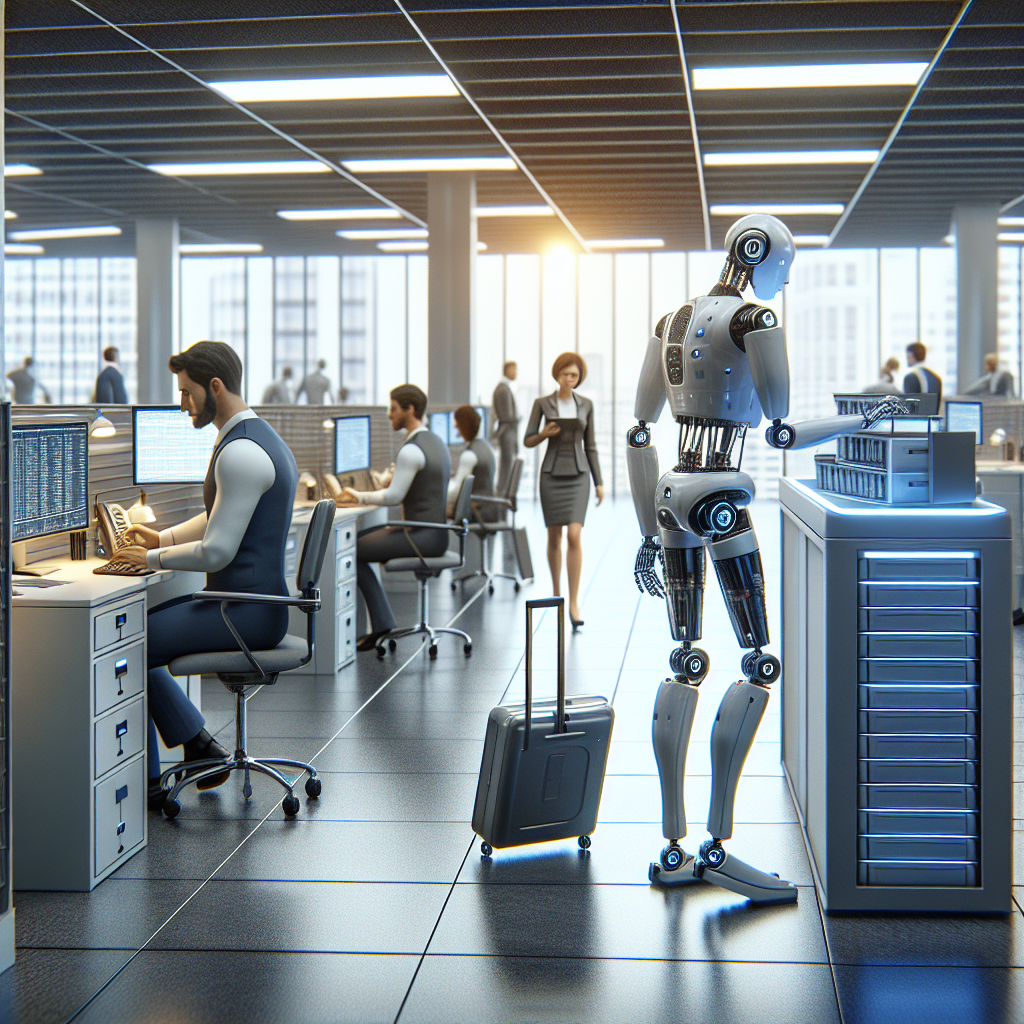
  • Will AI Replace Your Job The Honest Truth About 2025

    Will AI Replace Your Job The Honest Truth About 2025

    Understanding AI Job Replacement: Separating Fact from Fiction

    As we approach 2025, discussions around AI job replacement have intensified across industries. Headlines often predict widespread automation leading to massive unemployment. But what is the honest truth about AI’s impact on jobs in the near future? While artificial intelligence will undoubtedly transform many roles, outright replacement isn’t the inevitable outcome for everyone. Instead, AI is more likely to reshape jobs, create new opportunities, and demand fresh skills. Grasping the nuances behind AI’s evolving capabilities helps workers, employers, and policymakers prepare effectively.

    What Does AI Job Replacement Mean?

    AI job replacement refers to the process where artificial intelligence systems and automation technologies take over tasks traditionally performed by human employees. This can range from complete role automation to partial task assistance within a job. Common examples include chatbots handling customer service inquiries or AI algorithms analyzing data previously curated by analysts.

    However, not all job elements are equally vulnerable. Tasks that are routine, repetitive, and rules-based are most at risk. Jobs requiring creativity, critical thinking, empathy, and complex problem-solving tend to remain more resistant for now.

    The Current Landscape: AI in the Workforce Today

    AI technologies have made significant inroads across various sectors with remarkable improvements in efficiency and accuracy. Some impacts witnessed so far include:

    – Manufacturing plants incorporating AI-driven robotics for assembly lines
    – Customer support utilizing AI chatbots for first-level queries
    – Financial institutions adopting AI for fraud detection and risk assessment
    – Healthcare systems integrating AI tools for diagnostics and treatment recommendations

    Data from the World Economic Forum estimates that by 2025, AI and automation will displace approximately 85 million jobs worldwide but simultaneously create 97 million new roles emphasizing emerging skills.

    Industries Most Affected by AI Job Replacement

    1. Manufacturing and production: Repetitive manual tasks are highly automated.
    2. Transportation and logistics: Self-driving trucks and AI route optimization reduce human drivers.
    3. Office administration: AI automates scheduling, data entry, and routine correspondence.
    4. Retail: Automated checkout and inventory management streamline store operations.

    Yet, sectors like creative arts, education, healthcare, and complex management see less immediate risk of total role replacement. Instead, AI often acts as a tool to augment human capabilities in these fields.

    Which Jobs Are Most and Least Vulnerable?

    Understanding vulnerability helps individuals plan their career trajectory amidst AI transformation. Jobs with high potential for AI job replacement generally share these traits:

    – Clear, repetitive processes
    – High volume of standardized data processing
    – Limited need for human intuition or emotional intelligence

    Highly vulnerable roles include:

    – Telemarketers and data entry clerks
    – Assembly line workers
    – Basic financial clerks
    – Routine customer service representatives

    In contrast, jobs with low vulnerability typically involve:

    – Creative problem-solving and innovation
    – Complex interpersonal interactions
    – Strategic planning and leadership
    – Skilled trades requiring manual dexterity and adaptability

    Examples include healthcare practitioners, educators, senior managers, and artists.

    Will AI Replace White-Collar Jobs by 2025?

    There is concern white-collar jobs are at risk, but research reveals AI will more likely assist these workers rather than replace them outright. For instance, AI can process large legal datasets rapidly, yet the nuanced decision-making in law remains human-driven. Similarly, medical AI aids diagnostics but doesn’t supplant doctors’ judgment.

    How to Future-Proof Your Career Against AI Job Replacement

    Adapting to AI’s influence means proactively developing skills and strategies that machines find hard to replicate. Consider these steps:

    – Emphasize soft skills such as leadership, communication, and emotional intelligence
    – Pursue continuous learning and upskilling related to AI tools and your field
    – Focus on roles requiring creativity, strategic thinking, and complex analysis
    – Gain proficiency with digital tools augmenting human performance
    – Seek interdisciplinary knowledge that combines technical and domain expertise

    Examples of In-Demand Skills in the AI Era

    – Data literacy and basic understanding of AI concepts
    – Critical thinking and problem-solving abilities
    – Creativity and design-thinking approaches
    – Emotional intelligence for managing teams and clients
    – Technical skills related to AI, coding, and data analytics

    Employers value versatility and a growth mindset, which are powerful defenses against displacement.

    The Role of Businesses and Governments in the AI Transition

    Addressing AI job replacement is not only a personal responsibility but also requires coordinated efforts from organizations and policymakers.

    What Businesses Can Do

    – Invest in employee training programs focusing on AI collaboration
    – Redesign jobs to blend human and AI strengths
    – Foster innovation cultures that embrace technology adoption
    – Support employee transitions through reskilling initiatives

    Government Initiatives to Mitigate Displacement

    – Develop educational curricula emphasizing STEM and AI literacy
    – Promote lifelong learning opportunities accessible across demographics
    – Implement social safety nets to support displaced workers
    – Encourage public-private partnerships to create new jobs in emerging industries

    Countries investing early in these measures stand a better chance of harnessing AI benefits while minimizing disruption.

    Balancing Automation and Human Value: The Honest Outlook on 2025

    Looking toward 2025, the narrative around AI job replacement is complex. Automation will eliminate some roles but simultaneously create and transform many others. Human qualities such as empathy, ethics, creativity, and judgment remain difficult for AI to mimic fully. Therefore, the future workplace is more about AI augmentation than wholesale replacement.

    As AI matures, successful integration depends on collaboration between humans and machines, with a focus on enhancing productivity and job satisfaction rather than substitution.

    For further reading on AI’s evolving impact, explore reports from the [World Economic Forum](https://www.weforum.org/).

    Key Takeaways and Next Steps

    AI job replacement is an ongoing process affecting sectors differently rather than a one-size-fits-all crisis. Success in the AI era requires:

    – Awareness of which roles are vulnerable and which are resilient
    – Continuous upskilling emphasizing uniquely human skills
    – Embracing AI as a tool for empowerment rather than threat
    – Supporting policies and business practices that facilitate smooth labor transitions

    Preparing today positions individuals and organizations to thrive amid AI-driven change instead of being disrupted by it. If you want personalized guidance on navigating AI’s workforce shifts or how to future-proof your career, feel free to get in touch at khmuhtadin.com and take control of your professional future.

  • Will AI Understand Emotions Like Us Someday

    Will AI Understand Emotions Like Us Someday

    Understanding the Complexity of Human Emotions

    Human emotions are incredibly rich and complex, shaping our perceptions, decisions, and interactions. Unlike simple reactions, emotions involve a web of neurological, psychological, and social factors. We feel joy, sadness, anger, and empathy not just as isolated feelings but as experiences tied deeply to our memories, environment, and relationships. This complexity poses a significant challenge for creating AI systems that can understand emotions the way humans do. Unlike humans, AI lacks consciousness and subjective experience, making the idea of “AI emotions” more nuanced than it appears at first glance.

    What Does It Mean for AI to Understand Emotions?

    When we talk about AI understanding emotions, it typically refers to the ability of machines to recognize, interpret, and respond appropriately to human emotional cues. This includes:

    – Analyzing facial expressions
    – Detecting tone of voice
    – Reading body language
    – Interpreting text sentiment

    However, true emotional understanding for AI would imply more than recognition—it would mean an AI could experience emotions or at least simulate empathy convincingly. Current AI systems excel in the former but remain far from the latter.

    Current State of AI Emotions: Recognition and Response

    In recent years, advances in machine learning and natural language processing have led to AI that can detect emotions with impressive accuracy. For example, sentiment analysis tools can evaluate the emotional tone of customer reviews or social media posts. Emotion recognition technology in healthcare monitors patient mood to assist with mental health diagnosis. Virtual assistants can alter their responses based on user frustration or enthusiasm.

    Examples of AI Emotion Recognition Technologies

    1. Affectiva: Uses computer vision and deep learning to identify emotional states through facial cues.
    2. IBM Watson Tone Analyzer: Analyzes written text to detect tone and sentiment.
    3. Amazon Alexa and Google Assistant: Adjust responses based on user tone or stress.

    Despite these capabilities, these systems operate by pattern recognition and statistical inference, not genuine emotional experience. They are programmed to react in predefined ways that simulate empathy but lack conscious feeling.

    Challenges in Developing Genuine AI Emotions

    Creating AI that truly understands or experiences emotions involves overcoming vast scientific and philosophical hurdles.

    Consciousness and Subjectivity

    Emotions are inherently subjective, tied to consciousness and self-awareness. AI currently lacks any form of self-reflective awareness, making it difficult to develop a machine that genuinely feels. Without consciousness, emotions in AI are at best simulations.

    Emotional Context and Nuance

    Humans interpret emotions based on complex social contexts and past experiences. For AI, capturing this context is difficult, especially in dynamic human interactions. Nuances like irony, sarcasm, and mixed feelings often baffle emotion recognition algorithms.

    Ethical Considerations

    As AI systems start to interact more emotionally, ethical questions arise around manipulation and consent. Should AI be allowed to simulate emotional attachment? What responsibilities do developers have to ensure transparency that AI does not genuinely feel?

    Potential Paths Toward AI Emotional Intelligence

    Although genuine AI emotions remain elusive, researchers are exploring avenues to enhance AI’s emotional capabilities in meaningful ways.

    Advanced Affective Computing

    Affective computing aims to create systems that can recognize, interpret, and even simulate human emotions more naturally. By integrating multimodal inputs—voice, vision, physiological sensors—AI systems can better understand the emotional state of users.

    Neuroscience-Inspired Models

    Some researchers look to brain science for inspiration, attempting to replicate neural processes related to emotional experiences. While still theoretical, these models could allow AI to approximate emotional reasoning, if not true feeling.

    Empathy and Social AI

    Social robots and AI companions are designed to provide emotional support by simulating empathy and nurturing behaviors. Although they do not feel emotions, their sophisticated responses can create valuable therapeutic and social effects.

    Implications of AI Emotions on Society and Technology

    As AI systems become more adept at handling emotional information, they will profoundly impact multiple sectors.

    Healthcare and Mental Health

    AI with emotional recognition capabilities can assist in monitoring patient wellbeing, detecting signs of depression or anxiety early, and offering personalized interventions. This improves accessibility and efficiency of care.

    Customer Service and Business

    Automated agents that understand customer emotions can tailor responses to defuse frustration and improve satisfaction. This can boost brand loyalty and reduce human agent workload.

    Human-AI Relationships

    Emotionally aware AI could transform social interaction, companionship, and entertainment. However, it also raises questions about dependency, attachment, and the blurring line between human and machine intimacy.

    Will AI Ever Truly Understand Emotions?

    The question remains open-ended. AI will undoubtedly continue to improve in recognizing and simulating emotions using advances in data processing, sensors, and algorithms. However, understanding emotions as humans do requires self-awareness, consciousness, and a subjective experience that machines currently lack.

    Many experts believe that AI emotions may always remain a form of simulation—useful and compelling but fundamentally different from human feelings. Others hold out hope that breakthroughs in artificial consciousness could bridge this gap in the future.

    For now, AI emotions serve as powerful tools to enhance human life without replacing the deeply personal experience of feeling itself.

    To explore more about AI advancements and emotional intelligence in machines, visit Scientific American’s overview on AI and emotions.

    Summary and Next Steps

    AI emotions today refer mainly to recognition and appropriate response rather than genuine feeling. While impressive progress has been made in affective computing and social AI, the true understanding of emotions involves consciousness—a barrier machines have yet to overcome. Advances inspired by neuroscience and improved contextual awareness could narrow this gap, impacting healthcare, customer service, and human interaction.

    As AI technologies evolve, it’s crucial to consider ethical implications, particularly concerning emotional manipulation and attachment. Whether AI will someday truly understand emotions like humans do remains a profound question at the intersection of technology, philosophy, and psychology.

    If you’re interested in learning more about AI’s emotional potential or have questions about implementing AI solutions responsibly, feel free to contact us at khmuhtadin.com to start the conversation.

  • Will AI Take Your Job The Truth About the Future of Work

    Will AI Take Your Job The Truth About the Future of Work

    How AI Is Reshaping the Workforce Landscape

    Artificial intelligence has rapidly evolved from a futuristic concept to an integral part of many industries. As AI technologies become more sophisticated, there is widespread concern about whether AI will replace human workers or simply transform the nature of work itself. Understanding these changes is essential to preparing for what lies ahead, especially in the context of AI jobs and how they impact employment opportunities across different sectors.

    The Growing Presence of AI Jobs

    AI jobs are no longer confined to tech companies. From healthcare to finance, AI applications have created new roles that demand skills in machine learning, data analysis, and automation management. According to the World Economic Forum, AI and automation could displace about 85 million jobs by 2025 but also create 97 million new roles more adapted to the new division of labor between humans, machines, and algorithms.

    This shift indicates that while AI does eliminate some jobs, it simultaneously generates new AI jobs, often requiring higher expertise and creativity.

    Jobs Most Vulnerable to AI Disruption

    Understanding which jobs AI threatens most can help workers adapt and businesses plan their workforce strategy.

    – Routine and repetitive jobs—such as data entry clerks, telemarketers, and assembly line workers—are highly susceptible to automation.
    – Roles that rely on predictable physical tasks, like warehouse packaging or basic manufacturing.
    – Some customer service positions where AI-powered chatbots provide efficient 24/7 responses.

    A McKinsey Global Institute report estimates that by 2030, up to 30% of the global workforce in certain countries could be displaced due to automation. However, displacement will vary greatly by region, occupation, and level of education.

    The Importance of Soft Skills

    Unlike machines, humans excel at empathy, creativity, critical thinking, and complex problem-solving. Jobs requiring these soft skills are considerably less likely to be automated soon, emphasizing the need for workers to develop these capabilities to remain relevant.

    Emerging AI Jobs: Opportunities to Explore

    AI is more than a job threat; it also presents exciting career opportunities. Here are several AI jobs that are gaining traction:

    – AI Specialists: Professionals designing and improving AI algorithms.
    – Data Scientists: Experts who analyze large datasets to generate actionable insights.
    – Machine Learning Engineers: Developers who build systems that learn from data patterns.
    – AI Ethics Officers: Individuals ensuring AI implementations are fair and ethical.
    – Automation Coordinators: Managers overseeing the integration of AI-powered tools with human teams.

    These roles often require specialized education and continuous learning, but they offer rewarding career paths with growing demand.

    How to Prepare for AI Jobs

    – Upskill through online courses in AI, machine learning, and data science.
    – Cultivate problem-solving and creativity.
    – Gain experience with AI tools in your current role.
    – Stay informed about industry trends and AI advancements.

    Online platforms like Coursera, edX, and Khan Academy offer courses curated by leading universities, enabling professionals to transition into AI jobs seamlessly.

    Myths and Facts About AI and Employment

    Separating fact from fiction is crucial for realistic expectations regarding AI’s impact.

    – Myth: AI will replace all human jobs.
    – Fact: AI will likely automate repetitive tasks but create more jobs requiring human judgment and creativity.

    – Myth: Only tech workers benefit from AI growth.
    – Fact: AI influences virtually every sector, creating diverse roles from marketing to healthcare.

    – Myth: AI adoption leads to massive unemployment.
    – Fact: Historically, technological advances have disrupted some jobs but increased overall employment by creating new industries.

    Understanding these nuances helps professionals and companies navigate transformations proactively.

    Case Study: AI in Healthcare

    Healthcare illustrates how AI jobs create opportunities rather than just displace workers. AI assists in diagnosing diseases, managing patient data, and personalizing treatments. This synergy enables healthcare professionals to focus more on patient care and less on administrative tasks.

    Hospitals now recruit AI specialists alongside nurses and doctors, blending technology and human expertise for better outcomes.

    Strategies for Navigating the AI-Driven Job Market

    Adapting to AI requires active strategies both from employees and organizations:

    – Lifelong Learning: Continuously update skills to align with emerging AI trends.
    – Embrace Hybrid Roles: Combine AI tools with human judgment to enhance productivity.
    – Focus on Creativity: Develop skills that AI cannot easily replicate.
    – Advocate for Policy Support: Participate in dialogues about job transition support and ethical AI use.

    Companies investing in employee retraining and inclusive AI integration typically outperform those that resist change.

    Practical Tips for Workers

    – Identify AI tools commonly used in your industry.
    – Volunteer for projects involving AI implementation.
    – Network with AI professionals to learn about new job opportunities.
    – Cultivate adaptability and a growth mindset.

    The Future Outlook: Coexistence, Not Replacement

    While AI will undeniably change how we work, the future is less about machines replacing humans and more about them working together. Collaboration between AI systems and human workers can increase efficiency, innovation, and job satisfaction.

    Forward-thinking organizations are already leveraging AI to augment human capabilities rather than substitute them. This balanced approach opens pathways for creative, complex, and meaningful work that AI alone cannot accomplish.

    Resources to Stay Informed

    – The World Economic Forum (weforum.org) provides valuable insights and reports on AI’s impact.
    – AI Now Institute offers research focused on social implications of AI.
    – Online communities like AI Alignment and Machine Learning forums connect enthusiasts and professionals.

    Staying current equips you to spot emerging AI jobs and prepare for them effectively.

    As AI continues to reshape the employment landscape, staying informed and proactive is key. Recognizing that AI jobs represent both challenges and opportunities will help you navigate the future of work confidently. To explore personalized guidance on transitioning into AI-related roles or to discuss how AI can augment your career path, feel free to reach out at khmuhtadin.com. Embrace the future with knowledge and readiness, turning AI into a powerful ally in your professional journey.

  • Will AI Steal My Job The Truth You Need to Know

    Will AI Steal My Job The Truth You Need to Know

    The Reality Behind AI and Job Security

    The rise of artificial intelligence has many wondering: will AI steal my job? This question taps into widespread concerns about automation replacing human roles across industries. While AI is transforming work, the truth about AI job impacts is nuanced. Some tasks will evolve or disappear, but others will be created or augmented. Understanding how AI interacts with the workforce is key to preparing and thriving in the new economy rather than fearing displacement.

    How AI Is Changing the Workforce Landscape

    AI technology primarily automates routine, repetitive tasks. This shift can increase productivity and reduce human error, but it inevitably replaces some jobs. For example:

    – Automation in manufacturing reduces assembly line roles.
    – AI-powered chatbots handle basic customer service inquiries.
    – Algorithms now scan legal documents faster than junior associates.

    However, AI also enables new types of work:

    – Data scientists to interpret AI outputs.
    – AI trainers and quality controllers.
    – Creative professionals leverage AI tools for enhanced output.

    This dual effect means the AI job scene is more about evolution than elimination.

    Jobs Most Vulnerable to AI

    Positions with high repetition and low customization are most at risk, including:

    – Data entry clerks
    – Telemarketers
    – Basic bookkeeping
    – Drivers (due to self-driving technology)

    Understanding this helps you identify which job functions to re-skill or upskill.

    Jobs That AI Is Enhancing

    AI isn’t just about replacement; it’s a powerful collaborator in sectors such as:

    – Healthcare: Assisting diagnosis with AI imaging tools.
    – Education: Personalized learning via adaptive platforms.
    – Marketing: Analyzing consumer data for targeted campaigns.
    – Creative arts: Tools that assist graphic design and music composition.

    Recognizing where AI complements human skills opens pathways to future-proof careers.

    Strategies to Stay Relevant in an AI-Driven Job Market

    Rather than fearing AI, focusing on adaptability is vital. Here are practical steps to safeguard your career:

    – Continuous Learning: Stay updated with industry trends and emerging AI technologies relevant to your field.
    – Develop Soft Skills: Creativity, emotional intelligence, and critical thinking remain uniquely human and hard to automate.
    – Upskill or Reskill: Acquire technical skills like data literacy, AI basics, or digital proficiency.
    – Embrace Collaboration: Learn how to work alongside AI tools to boost productivity.
    – Networking: Connect with professionals in AI-influenced sectors to understand opportunities and shifts.

    Proactively engaging with AI reduces vulnerability and creates pathways for growth.

    Leveraging Educational Resources

    Many online platforms offer AI and data science courses. For professionals seeking to transition:

    – Coursera and edX provide beginner to advanced AI-related programs.
    – Industry certifications in automation tools add credibility.
    – Workshops and webinars focused on AI applications relevant to your field.

    Using these resources makes knowledge accessible and actionable.

    Building a Future-Ready Mindset

    Mindset is critical. Viewing AI as a tool, not a threat, empowers you to innovate and problem-solve alongside machines, unlocking new value.

    Examples of AI Job Transformation in Various Industries

    Seeing AI’s impact through real-world examples clarifies its role:

    – **Retail:** AI-powered inventory management systems reduce stock shortages but require analysts for interpretation and strategy.
    – **Finance:** Automated trading algorithms handle millions of transactions, but financial advisors now focus more on personalized client strategies.
    – **Healthcare:** AI diagnostic tools assist doctors, enabling faster and more accurate patient treatment but do not replace the need for human judgment.

    These shifts underscore the importance of adaptability and new skill acquisition.

    Case Study: Customer Service Roles

    AI chatbots have automated initial customer interactions, freeing humans for complex issues. This means customer service reps enhance problem-solving and emotional skills — roles that AI can’t easily replicate.

    Case Study: Manufacturing and Robotics

    Robotic automation handles repetitive tasks on factory floors. Workers transition into roles managing, maintaining, and programming these robots, reflecting a move towards more technical, skilled positions.

    Addressing Common AI Job Myths

    There are many misconceptions fueling anxiety about AI and employment. Let’s dispel some:

    – **Myth: AI will replace all human jobs.** The reality is AI changes job nature; full replacement is rare and usually gradual.
    – **Myth: Only low-skilled jobs are at risk.** Many high-skill roles, especially those involving data processing, face transformation too.
    – **Myth: AI makes human input obsolete.** Humans remain essential for creativity, critical thinking, empathy, and ethical decisions.
    – **Myth: Resisting AI is viable.** Embracing and learning AI applications is a more sustainable strategy.

    Understanding these facts helps focus efforts on adaptability rather than fear.

    The Role of Policy and Education

    Governments and educational institutions play critical roles:

    – Updating curricula to include AI literacy.
    – Providing workforce retraining programs.
    – Creating policies encouraging ethical AI use and job creation.

    Collaborative efforts help smooth transitions and safeguard livelihoods.

    Preparing for Your AI Job Future Today

    With the rapid expansion of AI, proactive steps are essential:

    1. Assess your current role’s vulnerability to automation by analyzing task types.
    2. Explore training opportunities that align with evolving industry demands.
    3. Build your digital and AI skills incrementally—small, consistent learning beats sporadic large efforts.
    4. Cultivate soft skills like communication, leadership, creativity, and ethical reasoning.
    5. Engage with AI tools relevant to your work to gain firsthand experience.

    By acting now, you position yourself as a valuable asset in an AI-augmented economy.

    Resources for Continued Growth

    Explore credible resources such as:

    – The World Economic Forum’s reports on the future of jobs.
    – LinkedIn Learning for tech and soft skill courses.
    – Industry-specific AI applications and forums.

    Staying informed equips you with foresight and flexibility.

    Seeking Expert Guidance

    If you’re uncertain about how AI will impact your specific career, professional consultation can provide personalized strategies. For tailored advice and career coaching related to AI transitions, contact khmuhtadin.com.

    Artificial intelligence is reshaping the way we work, but it doesn’t spell the end of human employment. Instead, the AI job landscape demands adaptability, lifelong learning, and embracing new collaborative roles alongside machines. By focusing on continuous skill development, leveraging AI as a tool rather than a threat, and staying informed, you ensure your place in the future workforce. Take control of your career trajectory today and prepare to thrive in an AI-enhanced world.

  • Could AI Write a Novel That Makes You Cry?

    Could AI Write a Novel That Makes You Cry?

    Exploring the Emotional Power of AI Novels

    Artificial intelligence continues to push the boundaries of creativity, venturing into realms traditionally reserved for human imagination. Among these frontiers lies the creation of novels — complex narratives designed to evoke deep emotional responses, including the powerful sensation of crying. AI novels have progressed remarkably, but the question remains: can they truly make readers cry? Emotions like sadness, joy, and empathy are intricately tied to human experience. Yet, with advances in AI language models, the possibility of machine-generated stories resonating on such a personal level is becoming increasingly tangible. This article delves into the capabilities and challenges of AI in penning emotionally charged novels, examining whether artificial intelligence can craft stories that move readers to tears.

    Understanding the Mechanics of AI Novel Writing

    The foundation of AI novels lies in natural language processing and machine learning algorithms trained on colossal datasets of existing literature.

    How AI Generates Stories

    AI writing models utilize pattern recognition to construct coherent narratives by predicting likely word sequences based on input data. They analyze:

    – Sentence structures and grammar rules
    – Literary styles and genres
    – Emotional tones and sentiment
    – Common storytelling arcs and tropes

    This combination allows AI to draft novel-length content ranging from straightforward plotlines to complex character developments.

    The Role of Training Data in Emotional Impact

    The emotional depth of AI novels depends heavily on the training data. Rich datasets containing emotionally intense works enable models to mimic language that conveys empathy, sorrow, and hope. However, AI lacks genuine understanding, so it relies on recognizing linguistic cues rather than experiencing emotions itself.

    Challenges AI Faces in Evoking Emotion

    To truly move readers, novels must tap into authentic human experiences and nuanced emotional storytelling—areas where AI has notable constraints.

    Lack of True Emotional Cognition

    AI processes emotions analytically but does not feel them. This absence can lead to narratives that feel superficial or contrived rather than genuinely heart-wrenching.

    Repetition and Predictability

    Despite advances, AI-generated texts sometimes fall into repetitive phrasing or clichéd story structures, which can hinder the development of immersive emotional arcs necessary to elicit tears.

    Contextual Understanding and Subtlety

    Human emotions often depend on cultural context, subtle social cues, and timing—nuances that remain difficult for AI to fully grasp or replicate in storytelling.

    Examples of AI Novels and Emotional Reception

    Several AI novels and short stories have been published, providing insight into their emotional effectiveness.

    Notable AI-Authored Works

    – “1 the Road” by Ross Goodwin, an AI-driven road trip narrative blending poetic description and abstract scenes.
    – “Sunspring,” a short sci-fi screenplay written by an AI, which garnered attention for its creativity but limited emotional depth.

    Reader Responses and Critiques

    Readers often praise the novelty and sometimes surprising creativity of AI novels, though emotional impact varies widely. Critics point out that while AI can imitate emotional language, it often struggles with consistent character development and authentic emotional resonance.

    Strategies to Enhance Emotional Depth in AI Novels

    Advancements and hybrid approaches point to ways of increasing emotional effectiveness in AI novels.

    Human-AI Collaboration

    Combining AI-generated drafts with human editorial refinement infuses stories with authentic emotion and nuanced storytelling. Humans can inject lived experiences, fine-tune character psychology, and deepen emotional layers.

    Incorporating Sentiment Analysis and Feedback Loops

    Embedding sentiment analysis helps models evaluate the emotional tone of generated text. Iterative feedback loops enable AI to learn from reader reactions, improving its ability to evoke emotional responses over time.

    Specialized Training on Emotional Literature

    Training AI on corpora rich in emotionally charged literature, including classics known for their pathos, allows models to better mimic impactful emotional expression.

    The Future of AI Novels: Will They Make You Cry? 

    The evolution of AI novels suggests that evoking tears is not far-fetched but requires complexity beyond pure algorithmic text generation.

    Emerging Technologies Enhancing Storytelling

    Integration of multimodal AI (combining text, audio, and visual storytelling) and enhanced natural language models promises richer narrative experiences. These technologies can engage multiple senses and deepen emotional immersion.

    Predictions and Industry Insights

    Experts believe AI novels will increasingly blend with human creativity to produce authentic, tear-inducing literature. While fully autonomous AI emotional storytelling remains a challenge, the hybrid approach is already yielding promising results.

    How to Experience AI Novels Yourself

    If you’re curious about whether AI novels can touch your heart, several platforms and tools offer access to AI-crafted stories.

    – AI writing platforms like OpenAI’s GPT models now allow users to generate narrative content on emotional themes.
    – Websites such as AI Dungeon enable interactive storytelling with emotional elements.
    – Experimental AI-authored ebooks are available through online bookstores and literary journals focusing on digital literature.

    Engaging with these AI novels firsthand is the best way to assess their emotional impact.

    Capturing Emotion in Machine-Written Stories

    AI novels represent a fascinating intersection of technology and art, where the boundaries between man and machine blur. While AI can generate compelling narratives rich in language and structure, the art of making readers cry hinges on subtle emotional intelligence, cultural context, and lived experience. The current state of AI novels reflects significant progress, but emotional authenticity remains an area where human creativity reigns supreme. Future collaborations between human authors and AI tools may finally unlock the secret to writing novels that truly move us to tears.

    Explore the emotional possibilities of AI novels and witness firsthand how technology is reshaping storytelling. For expert insights or to discuss AI’s role in literature, visit khmuhtadin.com and start a conversation that bridges the gap between human emotion and artificial creativity.

  • Will AI Write Our Code Someday Soon

    Will AI Write Our Code Someday Soon

    The Rising Role of AI in Software Development

    The world of programming is no stranger to evolution, and the emergence of AI coding represents its most transformative wave yet. Software development, traditionally reliant on human expertise and creativity, is now integrating artificial intelligence to boost productivity, reduce errors, and streamline workflows. As AI tools grow more sophisticated, they increasingly assist programmers by generating boilerplate code, suggesting improvements, and even debugging. This progression raises a pressing question: will AI truly write our code someday soon? Exploring this requires understanding AI’s current capabilities and limitations in coding contexts, as well as the trajectory it’s on.

    Current Landscape of AI Coding Tools

    Several AI-powered coding assistants have entered the market, such as GitHub Copilot and OpenAI’s Codex, showcasing the practical integration of machine learning in programming. These tools analyze context, understand natural language prompts, and suggest code snippets that fit the developer’s needs. While far from perfect, they accelerate mundane or repetitive coding tasks, allowing developers to focus more on design and architecture. They not only save time but also help newer programmers by providing guidance and reducing syntax errors.

    How AI Enhances Developer Productivity

    – Automates repetitive code generation, reducing manual typing
    – Provides instant suggestions and completions to speed up coding
    – Detects common errors and security vulnerabilities early
    – Helps maintain coding standards through style recommendations

    By handling the foundational components of code, AI coding tools help streamline development cycles, leading to faster project completions and fewer bugs.

    Capabilities and Limitations of AI in Programming

    Despite promising advancements, AI coding has restrictions that currently prevent it from fully replacing human developers. Today’s AI excels at pattern recognition and learned associations but lacks true understanding, intuition, and creativity.

    Strengths of AI Coding

    – Efficient at generating repetitive or standardized code blocks
    – Can translate simple human language commands into executable code
    – Facilitates multi-language programming by adapting quickly to syntax differences

    Common Challenges AI Still Faces

    – Difficulty comprehending complex business logic or architectural design
    – Struggles with debugging non-obvious, corner-case errors
    – Limited reasoning when multiple interacting components require holistic understanding
    – Generates code biased by its training data, sometimes resulting in suboptimal or insecure solutions

    These constraints indicate that AI coding is better viewed as a collaborative partner rather than a fully autonomous coder—at least for now.

    Future Trends Driving AI Coding Evolution

    The trajectory toward AI writing more complex code is accelerating thanks to ongoing research and technological breakthroughs. Three key areas to watch include:

    Advances in Natural Language Processing (NLP)

    Improved NLP models enable AI to better understand developer intent expressed in everyday language, making communication with coding assistants seamless. This reduces friction by allowing developers to describe functionality, and letting AI handle detailed implementation.

    Integration of Large Language Models (LLMs)

    LLMs trained on vast code repositories help AI generate contextually rich and diverse code snippets. Their ability to adapt and learn from feedback continues to enhance accuracy and relevance.

    Improved Learning from User Feedback

    Machine learning models are increasingly fine-tuned with user interaction data, improving their performance over time. This dynamic adaptation helps AI coding tools personalize suggestions and align with individual coding styles.

    As these trends mature, the potential for AI to take on more complex code-writing tasks grows closer to reality.

    Impact of AI Coding on Developers and the Software Industry

    The integration of AI coding tools is reshaping workflows, roles, and the skills developers need. Rather than displacing programmers, AI is augmenting their capabilities—enabling faster prototyping and greater focus on creative problem-solving.

    Changing Developer Responsibilities

    – Emphasis shifts toward overseeing AI-generated code and ensuring quality
    – More time spent on higher-level design and system integration
    – Need for skills in AI tool utilization and prompt engineering

    Potential Workforce Implications

    While routine coding may become more automated, demand grows for experts who can manage complex systems, validate AI output, and innovate in new ways. Continuous learning and adaptation will be essential for staying relevant.

    Industry-Wide Benefits

    AI coding accelerates product development cycles, reduces costs, and improves software quality through early error detection. This amplifies innovation potential across sectors reliant on software.

    Will AI Fully Write Our Code Soon?

    Forecasting the timeline for AI to independently write code involves balancing technological progress against the nuanced requirements of software development.

    Reasons for Optimism

    – Rapid improvements in AI-generated code quality and context-awareness
    – Growing adoption of AI tools by major tech companies
    – Increasing AI collaboration capabilities within integrated development environments (IDEs)

    Reasons for Caution

    – Persistent complexity in designing software that meets nuanced human needs
    – Ethical and security considerations demanding careful human oversight
    – Current AI lacks the holistic understanding needed for large-scale system architecture

    Most experts agree that while AI coding will increasingly handle more routine, modular tasks, fully autonomous code development lacking human review remains years away.

    Practical Steps to Leverage AI Coding Today

    Developers and organizations can prepare for the AI coding evolution by adopting strategic practices:

    Integrate AI Tools into Existing Workflows

    – Use AI assistants for code generation, refactoring, and documentation
    – Combine AI output with peer code reviews for quality assurance

    Invest in Training and Skill Development

    – Learn how to write effective prompts to maximize AI tool benefits
    – Stay updated with best practices around AI coding ethics and security

    Maintain a Human-in-the-Loop Approach

    Always validate AI-generated code for logic, compliance, and security before deployment.

    By proactively embracing AI coding technologies, teams gain productivity advantages without compromising quality.

    Key Takeaways on AI Coding and the Future of Programming

    AI coding is transforming the software development landscape by automating routine tasks and assisting with complex coding decisions. While fully autonomous AI coders are not imminent, the collaboration between humans and AI will become a standard feature in modern development environments. Developers equipped with AI tools can expect faster, more efficient coding cycles and new opportunities to innovate. Embracing AI coding now prepares professionals and organizations to harness its full potential safely and creatively.

    To explore how AI coding can enhance your projects or to discuss AI integration strategies, visit khmuhtadin.com and get in touch with experts ready to guide you through this exciting future.

  • Will AI Take My Job in 2024? The Hard Truth

    Will AI Take My Job in 2024? The Hard Truth

    Facing the Reality of AI Job Replacement in 2024

    The conversation around AI job replacement has never been louder or more urgent. As artificial intelligence technologies accelerate in capability, many professionals find themselves asking a pressing question: Will AI take my job in 2024? The truth is complex, and while AI will inevitably reshape the job market, understanding how and why can empower you to adapt rather than fear the change.

    In this article, we will demystify AI’s impact on employment, explore which jobs are most at risk, and provide practical advice on how to stay relevant in an AI-driven world. Whether you’re in tech, healthcare, education, or business, grasping the realities of AI job replacement is vital to plan your career wisely.

    Which Jobs Are Most Vulnerable to AI Job Replacement?

    Artificial intelligence excels at automating repetitive, data-intensive tasks. This means some roles are more exposed than others to being replaced or significantly transformed by AI in 2024.

    Routine and Repetitive Jobs

    Jobs that follow predictable procedures are prime candidates for AI job replacement, including:

    – Data entry clerks
    – Assembly line workers
    – Telemarketers
    – Basic customer service representatives
    – Bookkeeping and accounting clerks

    AI-driven robotic process automation (RPA) and chatbots can handle many of these functions faster and more accurately than humans.

    Expanding AI Capabilities Affecting Different Industries

    – **Manufacturing:** Automated quality control, predictive maintenance, and robotics are reducing human labor requirements.
    – **Finance:** Algorithmic trading, fraud detection, and automated loan approvals are becoming standard, reshaping analyst and underwriting jobs.
    – **Retail:** Self-checkout systems, inventory management AI, and personalized marketing reduce the need for frontline staff.

    However, creativity, complex problem-solving, and emotional intelligence remain largely beyond AI’s current reach, leaving certain occupations safer for now.

    Why AI Job Replacement Doesn’t Mean Universal Job Loss

    There’s a misconception that AI will completely eliminate jobs. Instead, the reality in 2024 shows a more nuanced picture of transformation and opportunity.

    AI as a Job Augmenter

    In many cases, AI acts as a tool that helps workers become more efficient or make better decisions rather than outright replacing them.

    – In healthcare, AI assists doctors in diagnostics but doesn’t replace the need for human judgment and patient care.
    – In marketing, AI helps analyze data trends quickly, enabling strategists to focus on creative campaigns.

    This augmentation can make jobs more interesting and increase productivity.

    Emerging Jobs Created by AI

    The rise of AI is also generating new roles that require uniquely human skills:

    – AI ethics and governance specialists
    – Data scientists and machine learning engineers
    – Human-AI interaction designers
    – AI maintenance and support professionals

    These careers offer growth potential and are unlikely to be replaced by AI anytime soon.

    How to Prepare for and Adapt to AI Job Replacement

    Whether your job is at risk or simply evolving, taking proactive steps now is key to navigating AI job replacement in 2024 and beyond.

    Upskill and Reskill Strategically

    1. Identify skills AI can’t easily replicate, such as creativity, empathy, leadership, and complex reasoning.
    2. Enroll in courses covering AI basics, data literacy, and digital tools relevant to your field.
    3. Develop soft skills like communication and problem-solving, which enhance your complementarity with AI.

    Investing in lifelong learning builds resilience in a fast-changing job landscape.

    Leverage AI to Enhance Your Role

    – Explore AI-powered productivity tools that automate mundane tasks.
    – Use AI analytics for better decision-making and strategic planning.
    – Collaborate with AI systems to unlock new insights and innovations.

    By embracing AI rather than resisting it, you position yourself as a valuable team member who drives results.

    The Broader Economic and Social Implications of AI Job Replacement

    AI job replacement is not just an individual challenge; it reshapes economies and societies at large.

    Job Market Polarization

    Research indicates growing gaps between high-skill, high-pay jobs and low-skill, low-pay positions, with middle-skill jobs shrinking due to automation. This phenomenon can increase income inequality unless addressed through policy and education.

    The Role of Governments and Organizations

    To mitigate negative impacts, many governments and corporations are:

    – Investing in workforce retraining programs.
    – Promoting STEM education and digital inclusion.
    – Considering universal basic income (UBI) and other social safety nets.

    Awareness of these trends helps employees anticipate shifts and advocate for supportive resources.

    Real-Life Examples and Data on AI Job Replacement

    Understanding AI’s impact benefits from examining real data and case studies.

    Statistics to Consider

    – A 2023 report from the World Economic Forum predicts that by 2025, 85 million jobs may be displaced by shifts in the division of labor between humans and machines, but 97 million new roles may emerge to capitalize on the new division of work.
    – McKinsey estimates that around 30% of tasks across various industries could be automated by AI tools as of 2024.

    Company Case Studies

    – **Amazon:** Uses robotic automation extensively in warehouses, reducing manual labor while creating jobs in robot maintenance and software programming.
    – **Financial Institutions:** Banks employ AI to detect fraud in real time but also hire more data analysts to interpret AI outputs and manage risk.

    These examples show AI changing jobs rather than simply destroying them.

    What Can You Do Today to Secure Your Future?

    The question “Will AI take my job in 2024?” is less about inevitable doom and more about preparation and adaptability.

    – Stay informed about AI trends in your industry through reliable sources.
    – Evaluate which tasks in your role might be automated and focus on developing skills that complement AI.
    – Network with professionals transitioning into AI-augmented roles to learn from their experiences.
    – Consider career pivots into emerging tech-adjacent fields if your current job is highly susceptible to AI job replacement.

    Taking these steps puts you in control of your career’s trajectory.

    The hard truth is that AI job replacement is happening, but with the right mindset and proactive planning, you can thrive amid these changes.

    For personalized advice on navigating AI in your career, feel free to reach out at khmuhtadin.com and start shaping your future today.

    Meta Description

    Will AI take my job in 2024? Discover the hard truth about AI job replacement and practical steps to future-proof your career now.

  • Will AI Take Your Job The Truth About Automation

    Will AI Take Your Job The Truth About Automation

    Will AI Take Your Job? The Truth About Automation and AI Jobs

    Artificial intelligence has captured headlines with its rapid advancements, sparking widespread concern and curiosity about the future of work. With AI systems automating tasks once thought exclusive to humans, many wonder: will AI take your job? The truth about AI jobs is nuanced—it’s not solely about job loss but also transformation, creation, and opportunity. Understanding how automation reshapes industries is essential for anyone navigating the evolving workforce landscape.

    Understanding AI Jobs and Automation

    AI jobs encompass roles directly involved in creating, managing, or working alongside artificial intelligence technologies. Automation, in contrast, refers to using machines and software to perform tasks traditionally done by humans. While some jobs face significant disruption, others are emerging or evolving due to AI integration.

    The Difference Between Job Displacement and Job Transformation

    It’s critical to distinguish job displacement from job transformation in conversations about automation:

    – Job displacement occurs when AI substitutes human workers, leading to layoffs or role elimination.
    – Job transformation happens when AI tools augment human capabilities, changing how a job is performed without necessarily reducing workforce demand.

    For example, customer service representatives now often use AI chatbots for routine inquiries, but complex problem-solving still requires human intervention, shifting job responsibilities rather than eliminating them.

    Which Industries Are Most Affected?

    Several sectors experience AI-driven changes more intensely:

    – Manufacturing: Automation of repetitive factory tasks.
    – Transportation: Advances in self-driving vehicles.
    – Finance: AI handling data analysis and fraud detection.
    – Retail: Automated inventory management and personalized marketing.
    – Healthcare: AI-assisted diagnostics and administrative automation.

    Jobs within these sectors may face varying degrees of disruption, but they also offer new AI jobs in development, maintenance, and oversight of automated systems.

    Common Myths About AI Jobs and Automation

    The fear that AI will lead to mass unemployment is fueled by misconceptions. Clarifying these myths helps grasp the real impact of AI on jobs.

    Myth 1: AI Will Replace All Human Jobs

    While AI excels at specific repetitive or data-driven tasks, it struggles with creativity, empathy, critical thinking, and complex decision-making. These human qualities remain indispensable in many roles.

    Myth 2: Only Low-Skill Jobs Are at Risk

    Automation does affect routine manual jobs, but AI is increasingly capable of performing tasks in professional sectors such as law (e.g., document review) and journalism (e.g., data-driven reporting). AI can augment, not just replace, high-skill roles.

    Myth 3: Learning AI Skills Guarantees Job Security

    Although AI-related skills are in demand, the rapid pace of technology means continual learning and adaptability are crucial. Simply knowing AI basics isn’t enough—workers must stay current with evolving tools and industry needs.

    How AI Jobs are Creating New Career Opportunities

    Despite fears of job loss, AI is generating new types of employment. The rise of AI jobs shows a trend toward symbiosis between humans and machines rather than replacement.

    Emerging AI Jobs and Roles

    Several roles have appeared or expanded due to AI’s rise:

    – AI Trainers: Teach AI systems to recognize patterns.
    – Data Scientists: Analyze and prepare data for AI algorithms.
    – AI Ethicists: Address ethical concerns and biases.
    – Automation Supervisors: Oversee AI and robotic processes.
    – Human-Machine Teaming Managers: Facilitate collaboration between employees and AI tools.

    Skills to Thrive in the AI Era

    Building a future-proof career involves focusing on complementary skills to AI capabilities:

    – Critical thinking and problem-solving
    – Emotional intelligence and communication
    – Digital literacy and AI literacy
    – Creativity and innovation
    – Adaptability and continuous learning

    Workers equipped with these skills can leverage AI tools to enhance their productivity and value.

    Strategies for Workers Facing AI Disruption

    If your job is susceptible to automation, proactivity can safeguard your career.

    1. Upskill and Reskill

    Enroll in courses related to AI, data analysis, coding, or industry-specific technology. Online platforms offer affordable and flexible learning options.

    2. Embrace Lifelong Learning

    AI technology evolves quickly. Commit to ongoing education by following industry news, attending workshops, and gaining certifications.

    3. Focus on Human-Centered Skills

    Invest time developing interpersonal skills, leadership, creativity, and decision-making to complement AI capabilities.

    4. Explore New Roles Within AI Jobs

    Expand your career horizons into AI-related positions, taking advantage of your domain knowledge combined with technical proficiency.

    5. Network and Seek Mentors

    Build relationships with professionals working in AI fields to gain insights and job opportunities.

    The Future of Work: Collaboration Between Humans and AI

    Rather than AI completely taking over jobs, the future workplace will likely feature close collaboration between humans and machines, creating stronger, more efficient teams.

    Examples of Hybrid Models in Practice

    – Healthcare professionals rely on AI for diagnostics but maintain final decision-making and patient interaction.
    – Financial advisors use AI to analyze market trends but apply personalized judgment for clients.
    – Educators employ AI tools to tailor lessons while fostering human creativity and critical discussions.

    Preparing Organizations and Policymakers

    Businesses and governments must work together to:

    – Provide retraining programs.
    – Encourage ethical AI deployment.
    – Develop regulations protecting workers’ rights.
    – Promote equitable access to AI benefits.

    A balanced approach ensures that AI jobs contribute positively to economic growth and social well-being.

    Summary of Key Insights on AI Jobs and Automation

    AI is reshaping the job market by automating certain tasks while simultaneously creating new roles and opportunities. The impact varies across industries and skill levels. Rather than fearing total replacement, embracing the evolving nature of AI jobs and focusing on lifelong learning, adaptability, and human-centered skills is essential. Preparing for a future where collaboration between humans and AI is the norm will help secure employment and unlock innovation.

    Ready to navigate the AI-driven workforce confidently? Take charge by enhancing your AI literacy and exploring new career paths. For personalized guidance or to learn more about transitioning into AI roles, contact us at khmuhtadin.com — your partner in future-proofing your career.

  • Can AI Really Predict the Future

    Can AI Really Predict the Future

    Introduction

    The idea of predicting the future has fascinated humanity for centuries, from ancient prophecies to modern forecasting techniques. Today, with the rapid advancement of technology, a new player has taken center stage in this quest: Artificial Intelligence (AI). But can AI really predict the future? This question has sparked intense debate among experts, enthusiasts, and skeptics alike. In this article, we will explore the concept of AI predictions, analyze how AI systems forecast future events, and assess the reliability and limitations of these predictions. By the end, you will gain a clearer understanding of what AI can and cannot do when it comes to peering into tomorrow.

    What Are AI Predictions?

    AI predictions refer to the process by which artificial intelligence systems analyze vast amounts of historical and real-time data to identify patterns and make informed forecasts about future events. Unlike traditional statistical models, AI leverages machine learning algorithms, neural networks, and deep learning to continuously improve its predictive accuracy. This approach enables AI to apply complex pattern recognition across diverse datasets, uncover hidden correlations, and adapt to new information rapidly.

    Common fields where AI predictions are applied include weather forecasting, stock market analysis, healthcare diagnostics, consumer behavior, and even disaster response planning. By simulating possible future scenarios, AI aims to provide decision-makers with actionable insights that can reduce uncertainty and optimize outcomes.

    How AI Predictions Work: A Step-by-Step Overview

    1. Data Collection
    The foundation of AI predictions lies in gathering high-quality relevant data. This can include numerical data, images, text, sensor readings, and more. The richer and more comprehensive the data, the better the AI’s ability to detect meaningful patterns.

    2. Data Preprocessing
    Raw data is often noisy or incomplete. AI systems clean, normalize, and transform data into formats suitable for training algorithms. This step ensures consistency and accuracy in the predictive models.

    3. Model Training
    Using techniques such as supervised learning, unsupervised learning, or reinforcement learning, AI algorithms train on historical data to recognize patterns linked to specific outcomes. The model “learns” relationships between input variables and target predictions.

    4. Validation and Testing
    Trained models are validated against separate data samples to evaluate their predictive accuracy. This step helps reduce overfitting and confirms the model’s generalizability to new data.

    5. Prediction and Continuous Learning
    Once validated, the AI system generates predictions on future events based on current input data. Many AI models incorporate continuous learning to update and refine their forecasts in real-time as new data arrives.

    Strengths of AI Predictions

    – Speed and Scalability: AI can process massive datasets and produce forecasts rapidly, far beyond human capabilities.

    – Pattern Recognition: AI’s ability to identify complex nonlinear relationships allows for insights unavailable to traditional methods.

    – Adaptability: AI predictions can dynamically adjust when new information emerges, maintaining relevance over time.

    – Multidisciplinary Applications: From predicting consumer trends to anticipating disease outbreaks, AI has diverse utility.

    Limitations and Challenges of AI Predictions

    Despite these strengths, AI predictions are not infallible and face several important challenges:

    – Data Quality and Bias: Poor or biased data can lead to inaccurate or misleading predictions, reinforcing existing errors or inequalities.

    – Complexity of the Future: The future depends on countless variables and unpredictable human behaviors, which may limit AI’s forecasting scope.

    – Overreliance on Historical Data: AI often assumes that future patterns mirror past trends, which is not always true, especially during unprecedented events.

    – Interpretability: Many advanced AI models function as “black boxes,” making it difficult to understand how certain predictions were derived.

    Real-World Examples of AI Predictions in Action

    1. Weather Forecasting
    AI models analyze satellite imagery, sensor data, and climate patterns to improve short-term and long-term weather predictions, enhancing disaster preparedness.

    2. Financial Markets
    AI-driven algorithms predict stock price movements and economic indicators. While they can identify trends, market volatility and unexpected news still pose risks.

    3. Healthcare
    AI predicts disease progression and patient outcomes, enabling personalized treatment plans and early interventions.

    4. Supply Chain and Demand Forecasting
    Retailers use AI to predict consumer demand, manage inventory, and optimize logistics to minimize costs and waste.

    Can AI Really Predict the Future? The Verdict

    AI predictions have proven to be powerful tools for forecasting in many domains, providing actionable insights that help organizations make better decisions. However, they are best viewed as probabilistic forecasts rather than absolute certainties. The inherent uncertainty of the future, compounded by data limitations and unpredictable human factors, means AI predictions should complement, not replace, human judgment.

    To maximize benefits, users must understand AI’s assumptions and limitations and maintain a critical perspective on its outputs. When used responsibly, AI predictions can greatly enhance foresight, preparedness, and innovation.

    Looking Ahead: The Future of AI Predictions

    As AI technologies continue to evolve, so will their predictive capabilities. Improvements in data collection (such as IoT devices), more transparent AI models, and integration with human insight may bolster prediction accuracy and trustworthiness. Ethical considerations around bias, privacy, and responsibility will remain crucial to ensuring fair and beneficial AI forecasting.

    In summary, AI predictions represent a powerful advancement in humanity’s age-old quest to anticipate the future. While they cannot guarantee certainty, their ability to analyze complexity and reveal probable outcomes offers tremendous potential for navigating an uncertain world.

    Conclusion

    Can AI really predict the future? The answer lies somewhere between optimism and caution. AI has transformed predictions from simple extrapolations into sophisticated probabilistic assessments based on deep data analysis. Yet, the future’s inherently unpredictable nature prevents any system from achieving perfect foresight. By understanding AI predictions’ strengths and limitations, individuals and organizations can harness these tools to make smarter decisions and better prepare for what lies ahead. The future may remain uncertain, but AI can certainly help illuminate the path forward.

  • Beyond Buzzwords How AI is Really Transforming Jobs in 2025

    Beyond Buzzwords How AI is Really Transforming Jobs in 2025

    Introduction

    Artificial Intelligence (AI) transforming jobs is no longer just a futuristic concept or marketing buzzword. In 2025, the impact of AI on the workforce is tangible, profound, and rapidly evolving. This transformation goes beyond simple automation; it is reshaping how professionals across industries work, collaborate, and create value. From enhancing productivity and enabling new skill sets to fostering entirely new job categories, AI transforming jobs is driving a significant paradigm shift in the labor market. In this article, we will explore the real ways AI is changing the workforce, debunk common myths, and provide actionable insights for employees and employers navigating these dynamic changes.

    Understanding the Landscape: AI Transforming Jobs in 2025

    The narrative around AI transforming jobs often dwells on job displacement or futuristic dystopias. However, the reality in 2025 is far more nuanced. AI is augmenting human capabilities rather than replacing them entirely. For example, AI-powered tools are now commonplace in fields such as healthcare, finance, marketing, manufacturing, and customer service, automating repetitive tasks and allowing professionals to focus on higher-value, creative, and strategic work.

    At the core of AI transforming jobs is the synergy between human expertise and machine efficiency. AI systems excel at processing vast amounts of data, detecting patterns, and making predictions, while humans bring judgment, empathy, and complex problem-solving skills. By combining these strengths, organizations achieve higher productivity, innovation, and competitiveness.

    Key Areas Where AI is Transforming Jobs

    1. AI Transforming Jobs in Healthcare

    Healthcare is one of the most prominent fields witnessing AI transformation. AI algorithms assist doctors with diagnostic imaging, predict patient outcomes, and personalize treatment plans. AI-powered robotic surgeries are more precise, and administrative AI reduces paperwork, freeing clinicians to spend more time with patients. Consequently, jobs for radiologists, nurses, and healthcare administrators are evolving to integrate AI tools as collaborators rather than competitors.

    2. AI Transforming Jobs in Manufacturing and Industry

    In manufacturing, AI-driven automation streamlines production lines, performs quality control, and optimizes supply chains. However, rather than eliminating jobs, AI transforming jobs means the creation of new roles like AI maintenance technicians, data analysts, and robot coordinators. Workers are increasingly required to manage and fine-tune AI-enabled machinery, demanding new technical skills and continuous learning.

    3. AI Transforming Jobs in Finance and Banking

    AI has revolutionized finance by automating risk assessments, fraud detection, and trading decisions. Financial advisors now leverage AI analytics to offer personalized investment advice. As AI transforming jobs continues, professionals in banking must adapt to hybrid roles that blend human judgment with automated recommendations, emphasizing ethical decision-making and customer trust.

    4. AI Transforming Jobs in Marketing and Customer Service

    Marketing professionals utilize AI for customer segmentation, predictive analytics, and content personalization. Chatbots and virtual assistants handle routine queries, enhancing customer experience while allowing human agents to focus on complex problem-solving and relationship building. This shift highlights how AI transforming jobs creates more strategic and creative opportunities in client-facing roles.

    Adapting to the AI Transformation: Skills and Strategies

    To thrive amid AI transforming jobs, workers must embrace adaptability and lifelong learning. Technical skills such as data literacy, AI tool management, and digital fluency are becoming foundational. Soft skills, including critical thinking, emotional intelligence, and collaboration, are increasingly valuable as humans take on roles requiring judgment and interpersonal interaction.

    Employers play a critical role by investing in workforce reskilling and creating environments where AI-human collaboration is seamless. Upskilling programs, cross-functional teams, and digital literacy initiatives help employees remain relevant and productive in an AI-augmented economy.

    Myth Busting AI Transforming Jobs

    Many fears around AI transforming jobs focus on job losses and mass unemployment. While automation may displace certain repetitive roles, history and current trends reveal that AI also generates new job categories and opportunities. The key is the transition period—stakeholders must invest in education, policy frameworks, and social protections to support workers through changes.

    Another misconception is that AI will replace all human work. In reality, AI excels in narrow tasks but lacks the creativity, empathy, and nuanced decision-making of human workers. Industries requiring complex interpersonal skills, strategic thinking, and innovation will continue to rely heavily on humans.

    Actionable Steps for Individuals and Organizations

    Individuals:
    – Develop digital literacy by learning AI basics and relevant software platforms.
    – Enhance soft skills such as communication, adaptability, and problem-solving.
    – Engage in continuous education and certifications related to AI and emerging technologies.
    – Network within your industry to stay informed about AI trends and opportunities.

    Organizations:
    – Invest in AI training programs for employees at all levels.
    – Foster a culture that encourages experimentation and human-AI collaboration.
    – Redesign workflows to integrate AI technologies effectively.
    – Monitor ethical implications of AI in the workplace to maintain trust.

    Conclusion

    AI transforming jobs in 2025 represents an unprecedented shift in the employment landscape. Rather than a threat, it is an opportunity for growth, innovation, and redefining human work. By understanding the real impact of AI and proactively adapting through skill development and strategic organizational change, both individuals and companies can benefit from this transformation. The future of work is not AI versus humans—it is AI with humans, working together to build smarter, more efficient, and more meaningful careers.

    URL Slug: ai-transforming-jobs-in-2025-beyond-buzzwords-how-ai-is-really-transforming-jobs