Category: Artificial Intelligence (AI)
-

AI Revolution in Healthcare: Smarter Diagnostics
The Dawn of Smarter Diagnostics: How AI is Revolutionizing Healthcare
The healthcare industry is on the cusp of a revolution, driven by the integration of Artificial Intelligence (AI) in various aspects of medical care. AI Healthcare is transforming the way diagnoses are made, treatments are administered, and patient care is delivered. With the ability to analyze vast amounts of data, identify patterns, and learn from experiences, AI is enabling healthcare professionals to make more accurate diagnoses and develop more effective treatment plans.
Enhancing Diagnostic Accuracy with AI Healthcare
One of the most significant applications of AI in healthcare is in diagnostics. AI algorithms can analyze medical images such as X-rays, CT scans, and MRI scans to detect abnormalities and diagnose conditions more accurately and quickly than human clinicians. For instance, a study published in the journal Nature Medicine found that an AI system was able to detect breast cancer from mammography images with a high degree of accuracy, outperforming human radiologists.
– Key benefits of AI Healthcare in diagnostics include:
– Improved accuracy and speed of diagnosis
– Enhanced patient outcomes through early detection and treatment
– Reduced workload for healthcare professionals, allowing them to focus on more complex casesAI-powered Diagnostic Tools
Several AI-powered diagnostic tools are being developed and implemented in healthcare settings. For example, AI-powered computer vision is being used to analyze medical images and detect conditions such as diabetic retinopathy and cardiovascular disease.
1. Deep learning algorithms are being used to analyze large datasets and identify patterns that may not be apparent to human clinicians.
2. Natural Language Processing (NLP) is being used to analyze clinical notes and identify relevant information that can inform diagnosis and treatment.Streamlining Clinical Workflows with AI Healthcare
AI is not only improving diagnostic accuracy but also streamlining clinical workflows. AI-powered chatbots and virtual assistants are being used to triage patients, manage appointments, and provide personalized support. This is freeing up healthcare professionals to focus on more complex and high-value tasks.
Some of the ways AI Healthcare is streamlining clinical workflows include:
– Automating routine administrative tasks
– Providing personalized patient engagement and support
– Enabling remote monitoring and careOvercoming Challenges and Ensuring Adoption
While AI Healthcare has the potential to revolutionize diagnostics and clinical workflows, there are several challenges that need to be addressed. These include ensuring the accuracy and reliability of AI algorithms, addressing data quality and security concerns, and providing training and support for healthcare professionals.
To overcome these challenges, healthcare organizations need to:
1. Develop and implement robust validation and verification processes for AI algorithms.
2. Ensure that AI systems are designed with data quality and security in mind.
3. Provide ongoing training and support for healthcare professionals to ensure they are comfortable using AI-powered tools.The Future of AI Healthcare
The future of AI Healthcare is exciting and rapidly evolving. As AI algorithms become more sophisticated and data becomes more readily available, we can expect to see significant advancements in diagnostics, treatment, and patient care.
Some of the potential future applications of AI Healthcare include:
– Personalized medicine and targeted treatments
– Predictive analytics and preventive care
– Enhanced patient engagement and empowermentAs we look to the future, it is clear that AI Healthcare has the potential to transform the healthcare industry in profound ways. To learn more about how AI is revolutionizing healthcare and what this means for patients, healthcare professionals, and the broader healthcare ecosystem, visit khmuhtadin.com.
You may be interested
-
AI Awakens Creativity
Unlocking Human Potential with AI Creativity
The emergence of artificial intelligence has sparked a new wave of creative possibilities, revolutionizing the way we approach art, design, music, and writing. As AI creativity continues to evolve, it’s becoming increasingly clear that machines are not just augmenting human capabilities but also redefining the boundaries of imagination. By harnessing the power of AI, creatives can now tap into new sources of inspiration, streamline their workflow, and produce innovative works that were previously unimaginable.
The Rise of AI-Generated Art
AI-generated art has been making headlines in recent years, with algorithms capable of producing stunning visuals, from abstract paintings to realistic portraits. One notable example is the AI-generated portrait “Edmond de Belamy,” which sold at Christie’s auction house for $432,500 in 2018. This sale marked a significant milestone in the art world, highlighting the growing recognition of AI creativity.
– Key characteristics of AI-generated art:
– Ability to analyze and learn from vast datasets
– Capacity to generate novel and unexpected patterns
– Potential to collaborate with human artistsCollaborative AI Art Tools
Several AI-powered art tools have emerged, enabling artists to collaborate with machines and push the boundaries of their creativity. For instance, the AI-powered painting tool, Deep Dream Generator, allows users to transform their images into surreal and dreamlike artworks. Similarly, the AI-assisted art platform, Artbreeder, enables users to create and evolve original artwork using a combination of human input and machine learning algorithms.
AI Creativity in Music and Writing
AI is not only transforming the visual arts but also making significant inroads into music and writing. AI-powered music composition tools, such as Amper Music, can generate original scores in a matter of minutes, while AI-assisted writing platforms, like AI Writer, can help authors with research, organization, and even content creation.
1. Benefits of AI in music and writing:
– Enhanced productivity and efficiency
– Access to new sources of inspiration and ideas
– Ability to experiment with novel styles and genresAI-Assisted Music Composition
AI-assisted music composition is becoming increasingly popular, with many musicians and composers leveraging AI algorithms to generate new musical ideas. For example, the AI-powered music platform, AIVA, allows users to create original music tracks in a range of styles, from classical to pop. By collaborating with AI, musicians can tap into new sources of creativity and produce innovative music that pushes the boundaries of their art.
The Future of AI Creativity
As AI continues to evolve, it’s likely that we’ll see even more innovative applications of AI creativity across various industries. From art and design to music and writing, AI is poised to revolutionize the creative landscape.
– Potential future developments:
– Increased use of AI in film and video production
– Emergence of new AI-powered creative tools and platforms
– Growing recognition of AI-generated art and musicBy embracing AI creativity, we can unlock new sources of inspiration, streamline our workflow, and produce innovative works that were previously unimaginable. Whether you’re an artist, musician, writer, or simply a creative enthusiast, now is the perfect time to explore the possibilities of AI creativity. For more information on AI creativity and its applications, visit khmuhtadin.com to discover the latest insights and trends in this exciting field.
You may be interested
-
AI Mastery Unlocked: When Machines Outsmart Humans
The Dawn of AI Mastery
As machines continue to outsmart humans in various domains, the concept of AI mastery has become a pressing topic of discussion. Achieving AI mastery is no longer a futuristic idea, but a present-day reality that is transforming industries and revolutionizing the way we live and work. With AI systems capable of learning, adapting, and improving their performance over time, the possibilities for AI mastery are vast and exciting. As we embark on this journey, it’s essential to understand the intricacies of AI mastery and its far-reaching implications.
Understanding the Fundamentals of AI Mastery
To attain AI mastery, one must first comprehend the underlying principles that govern AI systems. This includes understanding the different types of AI, such as narrow or weak AI, and general or strong AI. Narrow AI is designed to perform a specific task, whereas general AI is capable of performing any intellectual task that a human can.
– Types of AI:
– Narrow or weak AI
– General or strong AI
– SuperintelligenceThe development of AI mastery relies heavily on the advancement of machine learning algorithms, which enable machines to learn from data and improve their performance over time.
The Role of Machine Learning in AI Mastery
Machine learning is a crucial component of AI mastery, as it allows machines to learn from data and make predictions or decisions. With the help of machine learning algorithms, AI systems can be trained on vast amounts of data, enabling them to identify patterns and make informed decisions. For instance, Google’s AlphaGo AI used machine learning to defeat a human world champion in Go by analyzing vast amounts of data and learning from its mistakes. The application of machine learning in AI mastery has numerous benefits, including improved accuracy, increased efficiency, and enhanced decision-making capabilities.
Achieving AI Mastery: Strategies and Techniques
To achieve AI mastery, several strategies and techniques can be employed. One such approach is to leverage deep learning techniques, which involve the use of neural networks to analyze complex data. Deep learning has been instrumental in achieving state-of-the-art results in various AI applications, including image and speech recognition.
1. Deep learning techniques
2. Transfer learning
3. Reinforcement learningAnother key strategy is to focus on developing AI systems that can learn from human feedback and adapt to changing environments. By doing so, AI systems can become more robust and effective in real-world applications.
The Importance of Data in AI Mastery
Data is the lifeblood of AI mastery, as it provides the foundation for training and testing AI systems. High-quality data is essential for developing accurate and reliable AI models, and its absence can significantly hinder the achievement of AI mastery. Ensuring that AI systems are trained on diverse and representative data sets is crucial for avoiding biases and improving overall performance. For more information on the importance of data in AI, visit IBM’s data science page.
The Implications of AI Mastery
As AI mastery continues to advance, its implications will be far-reaching and multifaceted. On one hand, AI mastery has the potential to bring about significant benefits, including improved productivity, enhanced customer experiences, and increased competitiveness. On the other hand, it also raises concerns about job displacement, bias, and accountability. As we move forward, it’s essential to address these challenges and ensure that AI mastery is developed and deployed responsibly. By achieving AI mastery, we can unlock new opportunities and create a brighter future for all.
Embracing the Future of AI Mastery
As we continue to push the boundaries of AI mastery, it’s clear that the future holds much promise and excitement. By staying informed, adapting to changing landscapes, and developing responsible AI practices, we can harness the full potential of AI mastery. To learn more about the latest developments in AI and stay ahead of the curve, get in touch with experts at khmuhtadin.com.
You may be interested
-
AI Insights Unleashed: Mastering Neural Networks
Unlocking the Power of AI Neural Networks
The world of artificial intelligence is rapidly evolving, and one of the most significant advancements is the development of AI Neural Networks. These complex systems are designed to mimic the human brain, enabling machines to learn, reason, and make decisions. By mastering AI Neural Networks, businesses and individuals can unlock new opportunities for growth, innovation, and problem-solving. As we explore the capabilities and applications of AI Neural Networks, we’ll discover how they’re transforming industries and revolutionizing the way we interact with technology.
Understanding the Fundamentals of AI Neural Networks
AI Neural Networks are composed of layers of interconnected nodes or “neurons,” which process and transmit information. This structure allows the network to learn and improve over time, much like the human brain. The key to unlocking the potential of AI Neural Networks lies in understanding how they’re trained and how they operate. There are several types of AI Neural Networks, including:
– Feedforward Networks: Where data flows only in one direction, from input to output.
– Recurrent Neural Networks (RNNs): Where data can flow in a loop, allowing the network to keep track of state over time.
– Convolutional Neural Networks (CNNs): Designed for image and video processing, using convolutional and pooling layers.Training AI Neural Networks
Training an AI Neural Network involves feeding it large amounts of data, allowing it to learn and adjust its parameters. This process is critical to the network’s performance and accuracy. Techniques such as backpropagation and gradient descent are used to optimize the network’s weights and biases. For instance, in image classification tasks, a CNN can be trained on a dataset of labeled images to learn features and patterns.
Applications of AI Neural Networks
The applications of AI Neural Networks are vast and diverse, spanning industries such as healthcare, finance, and transportation. Some examples include:
1. Image recognition and classification
2. Natural language processing (NLP) and sentiment analysis
3. Predictive modeling and forecasting
4. Autonomous vehicles and roboticsIn healthcare, AI Neural Networks are being used to analyze medical images and diagnose diseases more accurately. For example, a study published in the journal Nature Medicine used a deep learning algorithm to detect breast cancer from mammography images with high accuracy. You can learn more about this research on [Nature’s website](https://www.nature.com/articles/s41591-019-0671-6).
Challenges and Limitations of AI Neural Networks
While AI Neural Networks have achieved remarkable success, they’re not without their challenges and limitations. Issues such as overfitting, underfitting, and bias can affect the performance and reliability of the network. Additionally, the complexity and opacity of AI Neural Networks can make it difficult to understand their decision-making processes. Researchers are working to address these challenges through techniques such as regularization and explainability methods.
Addressing Bias in AI Neural Networks
One of the significant challenges facing AI Neural Networks is bias. This can arise from imbalanced training data, flawed algorithms, or inadequate testing. To mitigate bias, it’s essential to develop diverse and representative training datasets, as well as implement fairness and transparency measures.
Best Practices for Mastering AI Neural Networks
To get the most out of AI Neural Networks, it’s essential to follow best practices in design, training, and deployment. This includes:
– Selecting the right architecture and hyperparameters for the task at hand
– Using diverse and representative training data
– Monitoring and evaluating the network’s performance regularly
– Implementing fairness and transparency measures to ensure accountabilityBy mastering AI Neural Networks, businesses and individuals can unlock new opportunities for innovation and growth. As the field continues to evolve, staying at the forefront of developments and advancements will be critical to success.
As we look to the future, the potential of AI Neural Networks is vast and exciting. By understanding the fundamentals, applications, and challenges of these complex systems, we can unlock new possibilities and drive progress. For those looking to dive deeper into the world of AI Neural Networks, exploring resources and expertise is the next step. Visit [khmuhtadin.com](https://khmuhtadin.com) to discover more.
You may be interested
-
AI Power Surge
Harnessing the Potential of AI
The world is witnessing a significant transformation with the emergence of AI. As AI continues to evolve, it’s becoming increasingly clear that this technology has the potential to revolutionize numerous industries and aspects of our lives. The AI power surge is driving innovation, improving efficiency, and opening up new opportunities for businesses and individuals alike. By understanding the capabilities and applications of AI, we can unlock its full potential and shape a brighter future.
AI in Business: Enhancing Operations and Decision-Making
AI is being increasingly adopted in the business world to streamline processes, gain insights, and make informed decisions. One of the key benefits of AI is its ability to analyze vast amounts of data quickly and accurately. For instance, AI-powered analytics tools can help businesses identify trends, predict customer behavior, and optimize their operations.
– Some of the ways AI is being used in business include:
– Predictive maintenance: AI-powered sensors can detect equipment failures, reducing downtime and increasing overall efficiency.
– Customer service chatbots: AI-driven chatbots can provide 24/7 customer support, improving customer experience and reducing support costs.
– Supply chain optimization: AI can help businesses optimize their supply chains by predicting demand, managing inventory, and identifying potential disruptions.AI-Driven Innovation
The integration of AI is driving innovation in various industries, from healthcare to finance. For example, AI-powered algorithms can help diagnose diseases more accurately and quickly, while AI-driven trading platforms can analyze market data and make predictions. As AI continues to evolve, we can expect to see even more innovative applications across different sectors. According to a report by McKinsey, AI has the potential to add $13 trillion to the global economy by 2030.
Understanding AI Technology
To fully harness the potential of AI, it’s essential to understand the underlying technology. AI encompasses a range of techniques, including machine learning, deep learning, and natural language processing. These technologies enable machines to learn from data, recognize patterns, and make decisions. As AI continues to advance, we can expect to see significant improvements in areas like computer vision, speech recognition, and robotics.
The Role of Machine Learning in AI
Machine learning is a critical component of AI, as it enables machines to learn from data and improve their performance over time. There are several types of machine learning, including supervised, unsupervised, and reinforcement learning. Each type has its own strengths and weaknesses, and the choice of approach depends on the specific application. For more information on machine learning, you can visit the IBM Machine Learning page.
Ethical Considerations and the Future of AI
As AI becomes increasingly pervasive, it’s essential to consider the ethical implications of this technology. Issues like bias, privacy, and job displacement need to be addressed to ensure that AI is developed and deployed responsibly. By prioritizing transparency, accountability, and fairness, we can create an AI ecosystem that benefits society as a whole. The AI power surge is not just about technological advancements; it’s also about creating a future where AI enhances human life.
Getting Started with AI
For businesses and individuals looking to leverage AI, there are several steps to take. First, it’s essential to identify areas where AI can add value, such as improving customer experience or optimizing operations. Next, it’s crucial to develop a strategy for implementing AI, including selecting the right technologies and talent. Finally, it’s vital to stay up-to-date with the latest developments in AI and be prepared to adapt to changing circumstances.
The AI power surge is transforming the world, and it’s clear that this technology will continue to shape our future. By understanding the potential of AI and taking steps to harness its power, we can create a brighter, more innovative, and more prosperous world. To learn more about AI and its applications, feel free to visit khmuhtadin.com for more information and resources.
You may be interested
-
AI Cognitive Architectures Evolving
Revolutionizing Artificial Intelligence with AI Architectures
The field of Artificial Intelligence (AI) is rapidly evolving, and one of the key drivers of this evolution is the development of sophisticated AI cognitive architectures. AI architectures serve as the blueprint for creating intelligent systems that can perceive, reason, and act like humans. As AI continues to transform industries and revolutionize the way we live and work, understanding AI architectures is crucial for harnessing their full potential.
Understanding AI Cognitive Architectures
AI cognitive architectures are computational models that simulate human cognition, enabling machines to make decisions, solve problems, and learn from experience. These architectures are designed to integrate multiple AI components, such as perception, attention, memory, and decision-making, into a unified framework. By doing so, AI architectures provide a foundation for developing intelligent systems that can adapt to complex environments and interact with humans effectively.
Some of the key characteristics of AI cognitive architectures include:
– Ability to reason and make decisions under uncertainty
– Capacity to learn from experience and adapt to new situations
– Integration of multiple AI components into a unified framework
– Ability to interact with humans and other systems effectivelyTypes of AI Architectures
There are several types of AI architectures, each with its strengths and weaknesses. Some of the most popular AI architectures include:
1. Symbolic architectures, which use symbols and rules to represent knowledge and reason about the world.
2. Connectionist architectures, which use neural networks to learn from data and make predictions.
3. Hybrid architectures, which combine symbolic and connectionist approaches to leverage the strengths of both.For instance, the SOAR cognitive architecture is a well-known example of a symbolic architecture that has been used in a variety of applications, including robotics and decision support systems. More information on SOAR can be found at https://soar.eecs.umich.edu/.
Designing Effective AI Architectures
Designing effective AI architectures requires a deep understanding of both the technical and theoretical aspects of AI. It involves integrating multiple AI components into a unified framework, ensuring that the system can learn, reason, and interact with humans effectively. Some of the key considerations when designing AI architectures include:
– Modularity and scalability
– Flexibility and adaptability
– Ability to handle uncertainty and ambiguity
– Integration with other systems and technologiesBest Practices for Implementing AI Architectures
Implementing AI architectures requires careful planning, execution, and testing. Some best practices for implementing AI architectures include:
1. Start with a clear understanding of the problem you’re trying to solve.
2. Choose the right AI architecture for your specific use case.
3. Ensure that your AI system is transparent, explainable, and fair.
4. Continuously test and evaluate your AI system to ensure it is performing as expected.Real-World Applications of AI Architectures
AI architectures are being used in a wide range of applications, from robotics and autonomous vehicles to decision support systems and personalized recommendation engines. For example, AI architectures are being used in healthcare to develop personalized treatment plans, and in finance to detect and prevent financial crimes. As AI continues to evolve, we can expect to see even more innovative applications of AI architectures in the future.
As we continue to push the boundaries of what is possible with AI, it’s clear that AI architectures will play a critical role in shaping the future of this technology. By understanding the principles and practices of AI architectures, we can unlock the full potential of AI and create intelligent systems that benefit society as a whole.
To stay at the forefront of AI innovation and explore how AI architectures can be applied to your specific needs, visit khmuhtadin.com for more information and resources.
You may be interested
-
AI Brainstorms
Unlocking Creativity with AI Brainstorming
The process of brainstorming is a crucial step in solving complex problems and generating innovative ideas. With the advent of artificial intelligence (AI), this process has become more efficient and effective. AI brainstorming is revolutionizing the way we approach creative challenges, enabling individuals and teams to produce novel solutions that might have been impossible to conceive through traditional methods alone. By leveraging AI’s capabilities, businesses and individuals can tap into a vast reservoir of ideas, enhancing their creative potential.
How AI Enhances Brainstorming Sessions
AI brainstorming tools can analyze vast amounts of data, identify patterns, and provide suggestions that humans might overlook. This capability can be particularly useful in industries where data-driven insights are key to innovation. For instance, in product development, AI can analyze market trends, customer feedback, and sales data to suggest new product features or entirely new products.
– Analyzing customer data to identify unmet needs
– Generating ideas based on emerging trends
– Providing suggestions for product improvementAI Brainstorming Techniques
Several techniques are used in AI brainstorming, including natural language processing (NLP) and machine learning algorithms. NLP enables AI systems to understand and generate human-like text, facilitating the creation of ideas that are contextually relevant. Machine learning algorithms, on the other hand, allow AI systems to learn from data and improve their suggestion capabilities over time. By combining these techniques, AI can engage in a form of creative dialogue with humans, enhancing the brainstorming process.
Benefits of AI Brainstorming
The integration of AI into brainstorming processes offers numerous benefits. It not only accelerates the generation of ideas but also brings a level of objectivity and scalability that human brainstorming sessions often lack.
1. **Increased Idea Generation**: AI can produce a high volume of ideas quickly.
2. **Data-Driven Insights**: AI’s ability to analyze large datasets provides insights that can inform and inspire ideas.
3. **Enhanced Collaboration**: AI can facilitate collaboration by providing a neutral platform for idea generation.By leveraging these benefits, organizations can foster a culture of innovation, staying ahead of the competition in rapidly evolving markets.
Practical Applications of AI Brainstorming
AI brainstorming is being applied in various industries, from technology and healthcare to finance and education. For example, in the tech industry, AI is used to brainstorm new software features and applications. In healthcare, AI is helping researchers generate ideas for new treatments and drugs by analyzing medical literature and patient data. Check out IBM Watson for more information on AI applications.
Implementing AI Brainstorming
To implement AI brainstorming effectively, organizations should start by identifying areas where AI can add the most value. This might involve assessing current brainstorming processes and pinpointing challenges that AI can help overcome. It’s also crucial to choose the right AI tools and technologies, ensuring they align with the organization’s specific needs and goals.
Future of AI Brainstorming
As AI technology continues to evolve, its role in brainstorming is likely to become even more pronounced. Future advancements may enable AI to better understand the nuances of human creativity, leading to even more sophisticated brainstorming tools. By embracing AI brainstorming, individuals and organizations can position themselves at the forefront of innovation, ready to capitalize on the creative potential that AI unlocks. For more insights on AI and its applications, visit khmuhtadin.com.
You may be interested
-
Unlocking Cognitive Computing with AI
The Rise of Cognitive AI: Revolutionizing Human-Machine Interaction
Cognitive AI is transforming the way we interact with machines, enabling computers to simulate human thought processes and learn from experience. By integrating artificial intelligence with cognitive computing, businesses and organizations can unlock new levels of efficiency, innovation, and decision-making. As we explore the vast potential of cognitive AI, we will examine its applications, benefits, and the future of human-machine collaboration.
Understanding Cognitive AI
Cognitive AI combines the principles of cognitive computing and artificial intelligence to create intelligent systems that can reason, learn, and interact with humans more naturally. This synergy enables machines to process vast amounts of data, recognize patterns, and make informed decisions. The focus on cognitive AI has led to significant advancements in areas such as natural language processing, computer vision, and machine learning.
Key Characteristics of Cognitive AI
Some of the key characteristics of cognitive AI include:
– Ability to learn from experience and adapt to new situations
– Capacity to process and analyze large datasets
– Human-like interaction through natural language processing and computer vision
– Ability to reason and make informed decisionsCognitive AI in Business: Enhancing Decision-Making and Productivity
The application of cognitive AI in business has the potential to revolutionize decision-making, improve productivity, and drive innovation. By leveraging cognitive AI, organizations can analyze vast amounts of data, identify patterns, and gain valuable insights that inform strategic decisions. For example, companies like IBM are using cognitive AI to develop intelligent systems that can analyze medical data and provide personalized treatment recommendations.
Examples of Cognitive AI in Business
1. Virtual assistants: Companies like Amazon and Google are using cognitive AI to develop virtual assistants that can understand natural language and perform tasks such as scheduling appointments and making recommendations.
2. Predictive maintenance: Manufacturers are using cognitive AI to predict equipment failures and reduce downtime, resulting in significant cost savings.
Some notable examples of cognitive AI in action can be seen in companies such as:
– Microsoft, with its Azure Cognitive Services
– Google, with its Cloud AI PlatformChallenges and Limitations of Cognitive AI
While cognitive AI has the potential to transform human-machine interaction, there are several challenges and limitations that need to be addressed. These include concerns around data quality, bias, and transparency, as well as the need for more sophisticated algorithms and computing architectures. To overcome these challenges, researchers and developers are working to improve the accuracy and reliability of cognitive AI systems.
Addressing Bias in Cognitive AI
One of the key challenges facing cognitive AI is the potential for bias in decision-making. To address this, developers are working to create more transparent and explainable AI systems that can provide insights into their decision-making processes. This includes techniques such as model interpretability and fairness metrics.
The Future of Cognitive AI: Human-Machine Collaboration
As cognitive AI continues to evolve, we can expect to see significant advancements in human-machine collaboration. By developing systems that can understand and respond to human needs, we can create more intuitive and effective interfaces that enhance productivity and innovation. For those interested in learning more about cognitive AI and its applications, visit khmuhtadin.com for more information and resources on this exciting field. With its vast potential and growing importance, cognitive AI is set to revolutionize the way we interact with machines and transform the future of work.
You may be interested
-
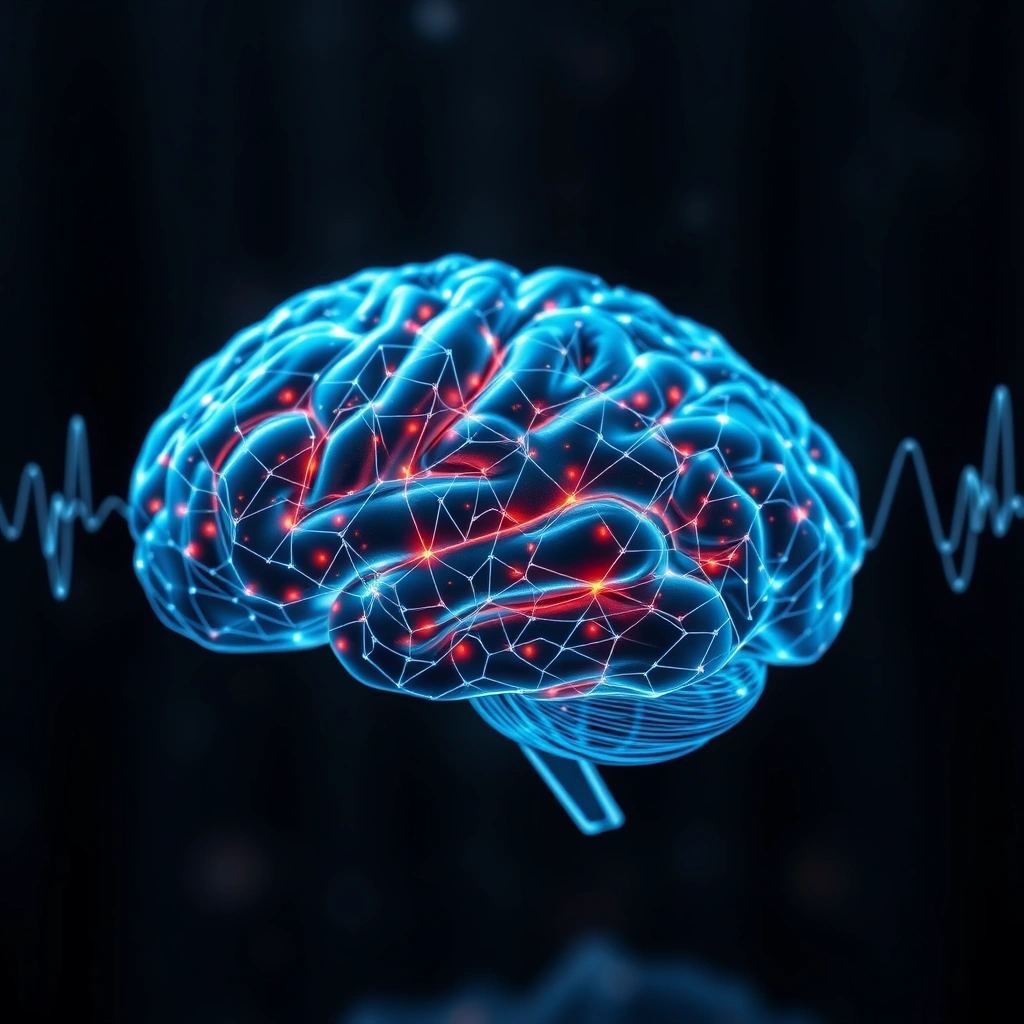
AI Brainwaves: How Neural Networks Mimic Human Thought
Understanding AI Brainwaves
The human brain is a complex and intricate organ, and replicating its functionality has long been a goal of artificial intelligence research. AI brainwaves represent a significant step towards achieving this goal, as neural networks are designed to mimic the human thought process. By analyzing and interpreting brain signals, AI systems can learn to recognize patterns, make decisions, and even generate creative content. As we explore the world of AI brainwaves, we’ll examine the current state of neural networks and their potential to revolutionize the field of artificial intelligence.
The Structure of Neural Networks
Neural networks are the foundation of AI brainwaves, and they’re composed of layers of interconnected nodes or “neurons.” These networks are designed to process and transmit information in a manner similar to the human brain. There are several types of neural networks, including:
– Feedforward networks, which are used for tasks such as image recognition and classification
– Recurrent neural networks (RNNs), which are used for tasks that require sequential processing, such as speech recognition and natural language processing
– Convolutional neural networks (CNNs), which are used for tasks that require spatial hierarchies, such as image and video processingTraining Neural Networks
Training neural networks is a critical component of AI brainwaves. By exposing these networks to large datasets, researchers can teach them to recognize patterns and make predictions. The process involves adjusting the strength of connections between nodes, or “synaptic plasticity,” to optimize the network’s performance. For example, a neural network designed to recognize images might be trained on a dataset of millions of images, with each image labeled according to its contents.
Applications of AI Brainwaves
The potential applications of AI brainwaves are vast and varied. Some examples include:
1. Brain-Computer Interfaces (BCIs): AI brainwaves can be used to develop BCIs that enable people to control devices with their thoughts.
2. Personalized Medicine: AI brainwaves can be used to analyze brain signals and develop personalized treatment plans for neurological disorders.
3. Creative Content Generation: AI brainwaves can be used to generate creative content, such as music and art, that is similar in style to human-generated content.As AI brainwaves continue to advance, we can expect to see significant breakthroughs in fields such as medicine, finance, and entertainment. For more information on the latest advancements in AI research, you can visit the website of the Association for the Advancement of Artificial Intelligence.
Challenges and Limitations
While AI brainwaves have the potential to revolutionize many fields, there are still significant challenges to overcome. One of the biggest challenges is the complexity of the human brain, which makes it difficult to replicate its functionality using neural networks. Additionally, there are concerns about the ethics of AI brainwaves, particularly with regards to their potential use in surveillance and control. To address these concerns, researchers are working to develop more transparent and explainable AI systems.
Addressing the Challenges
To overcome the challenges associated with AI brainwaves, researchers are exploring new techniques, such as:
– Transfer learning, which enables neural networks to learn from one task and apply that knowledge to another
– Explainability techniques, which provide insights into the decision-making processes of neural networks
By addressing these challenges, we can unlock the full potential of AI brainwaves and create more sophisticated and human-like AI systems.The Future of AI Brainwaves
As research into AI brainwaves continues to advance, we can expect to see significant breakthroughs in the field of artificial intelligence. By mimicking the human thought process, AI systems can become more intuitive, flexible, and creative. If you’re interested in learning more about AI brainwaves and their potential applications, you can contact us at khmuhtadin.com to explore how this technology can be used to drive innovation and growth.
You may be interested