Author: Dax

  • The Unexpected Origin of USB and How It Changed Computing

    The Unexpected Origin of USB and How It Changed Computing

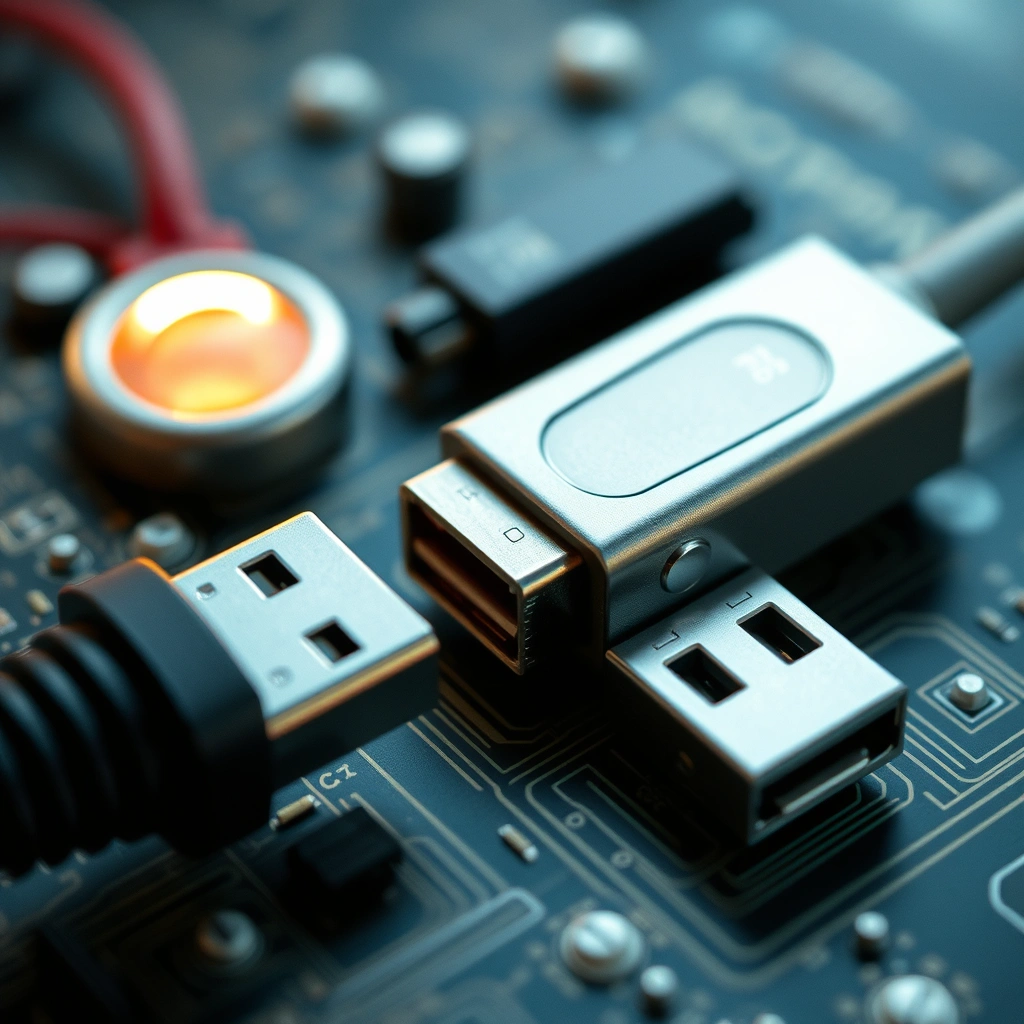
    The Dawn of USB: What Sparked Its Invention?

    Imagine a cluttered desktop in the late 1990s, cables tangling across surfaces, each device needing its own dedicated port and driver. Before USB, connecting a printer, mouse, or external drive was a headache. This everyday frustration laid the groundwork for the USB origin—a foundational shift in how humans and machines interacted.

    A Chaotic Pre-USB Landscape

    Devices like keyboards, mice, printers, and scanners each used unique connectors: serial ports, parallel ports, PS/2 interfaces, and more. Installation involved manual driver updates and elaborate configuration steps. Plug-and-play was a dream, not a reality.

    – Serial ports were slow and limited to simple peripherals.
    – Parallel ports required chunky cables and frequently caused conflicts.
    – Proprietary connectors for almost every brand or class of device.

    This disjointed setup stifled both user productivity and device innovation.

    Triggering Change: Industry Frustrations

    In 1994, a group of engineers at Intel led by Ajay Bhatt decided enough was enough. With backing from tech giants including Microsoft, IBM, Compaq, and others, Bhatt’s team sought a universal connection that could standardize device compatibility, boost data transfer rates, and deliver power—all while drastically simplifying usability.

    The Unexpected Origin Story: How USB Came to Life

    The USB origin wasn’t a corporate assignment; it was, essentially, a passion project openly born from engineer frustration and daily inconveniences.

    The Visionaries Behind USB

    Ajay Bhatt, now dubbed the “Father of USB,” assembled a team at Intel to address not just technical issues, but also the user experience. As Bhatt explained in a 2009 NPR interview:
    “We wanted to create something so simple, so universal, that even your grandmother could plug it in without worry.”

    This vision attracted industry-wide support. By 1995, the USB Implementers Forum (USB-IF) was founded by seven major companies: Intel, Microsoft, IBM, Compaq, NEC, Nortel, and DEC.

    – Collaboration, not competition, was at the heart of the USB origin.
    – Consensus-driven standards paved the way for broad adoption.

    Engineering Feats and Early Hurdles

    Creating USB was more than drawing up a new cable. Every detail—shape, wiring, communication protocols—had to be standardized. Key early design decisions:

    – A rectangular, easy-to-use connector (Type-A) to eliminate reversibility errors.
    – Providing enough power for basic peripherals (up to 2.5W in USB 1.0).
    – “Hot swapping,” the ability to plug and unplug devices without rebooting.
    – Backward compatibility, ensuring older devices wouldn’t become obsolete.

    Yet, change came slowly. Many manufacturers hesitated, fearing the costs of redesigning hardware and software.

    Breaking Through: Early Devices and Adoption

    The first computers with onboard USB ports appeared in 1996–1997. By 1998, Apple’s all-USB iMac became a landmark in pushing the standard forward. Other leading brands soon followed, and “USB” became synonymous with compatibility.

    To read more on the personal history and industry accounts, check out Ajay Bhatt’s interview with NPR: https://www.npr.org/templates/story/story.php?storyId=106687834

    How USB Revolutionized Computing

    The USB origin soon yielded results that transformed technology for businesses and households alike.

    Plug-and-Play Power

    Suddenly, connecting a new device was effortless—no complicated setup, no installation nightmares. Even non-technical users could connect everything from flash drives to webcams with confidence.

    – Reduced the need for multiple types of cores, eliminating compatibility puzzles.
    – Enabled straightforward peripheral sharing and office setups.
    – Redefined user expectations for convenience and accessibility.

    The Rise of Universality

    USB was not just for computers. Its universal design quickly found applications across consumer electronics:

    – Digital cameras and MP3 players began using USB for charging and data sync.
    – Game consoles and TVs adopted USB ports for expansion and upgrades.
    – The first ‘thumb drives’ replaced floppy disks for portable storage.

    Soon, one cable type became the gateway to a world of devices.

    USB’s Impact on Hardware Design and Industry Standards

    The USB origin sparked a wave of innovation and standardization across the hardware industry.

    Influence on Device Ecosystems

    By 2000, most manufacturers supported the USB standard, allowing effortless interoperability. This led to:

    – A dramatic reduction in proprietary connectors, lowering design costs.
    – A more reliable marketplace for third-party accessories.
    – Extended device lifespans, as new computers and peripherals remained compatible for years.

    The Evolution of USB: From 1.0 to Type-C

    USB has gone through several iterations, each building on the lessons of its unexpected origin.

    – USB 1.0 (1996): 1.5–12 Mbps, enough for mice, keyboards, and printers.
    – USB 2.0 (2000): Increased to 480 Mbps, supporting cameras, flash drives, external storage.
    – USB 3.0/3.1 (2008–2013): Up to 5–10 Gbps, introducing “SuperSpeed.”
    – USB-C (2014): Fully reversible, supports data, video, and up to 100W charging, enabling device convergence.

    Today, USB-C is poised to become the single port standard for everything from phones to docking stations and display connections.

    How the USB Origin Changed Everyday Technology

    The influence of USB extends beyond computers—it transformed entire industries and daily lives around the globe.

    Portable Storage Revolution

    Floppy disks and even CDs quickly gave way to USB flash drives: small, affordable, rewritable, and endlessly more reliable. For the first time, carrying gigabytes of data on a keychain became ordinary.

    – Corporate IT departments adopted flash drives for quick data transfers and software updates.
    – Students embraced USB drives for presentations and assignments.
    – Photographers and designers used them to share massive image and video files.

    Beyond Data: Powering Devices Everywhere

    Charging smartphones, tablets, and even wearables is now universally managed via USB. This removed the chaos of proprietary chargers and allowed standardization across myriad manufacturers.

    – Travel became easier without bags of tangled cords.
    – Hotels, airports, and cars added USB outlets to attract customers.
    – It set the stage for greener e-waste management, as outdated cables became less common.

    Understanding Why USB Succeeded Where Others Failed

    Reflecting on the USB origin unveils why this standard triumphed over other ill-fated “universal connectors.”

    Industry Collaboration and Open Standards

    The USB-IF kept licensing affordable and specification documents public, inviting innovation from any interested party. This inclusive approach accelerated global adoption:

    – Hardware and operating system makers aligned early, integrating USB support natively.
    – The open architecture empowered developers to build new types of peripherals rapidly.
    – Competitive devices like Apple’s FireWire faltered due to higher licensing fees and stricter proprietary rules.

    Continuous Improvement and Responsiveness

    USB’s designers listened closely to user needs, frequently updating the standard to solve pain points and add new features. That responsiveness:

    – Ensured backward compatibility at every stage.
    – Helped USB leapfrog competitors with speed and flexibility.
    – Preserved its relevance in the fast-changing landscape of personal technology.

    For a look at current USB-IF efforts and standards, visit https://www.usb.org.

    The Surprising Legacy and Future of USB

    The improbable USB origin left a global legacy, touching almost everything with a circuit board.

    From Workspaces to IoT: Ubiquity of USB

    Today, more than 10 billion USB-enabled devices are in use. It’s the backbone for everything from desktop workstations to smart home gadgets and medical equipment.

    – USB’s affordability and reliability empowered the rapid spread of digital technology to developing countries.
    – It catalyzed the Maker Movement, as hobbyists used USB to connect and power their inventions.
    – Companies changed how they source, repair, and upgrade technology thanks to a shared standard.

    Looking Ahead: USB’s Next Evolution

    USB4 and Power Delivery upgrades are already pushing what’s possible—combining ultra-fast data, massive charging capability, and unprecedented versatility.

    Future USB standards promise:

    – Even higher speeds and video support for AR, VR, and multimedia.
    – Universal compatibility across vehicles, gaming consoles, and household appliances.
    – Greener, more robust specifications aimed at reducing global electronic waste.

    Key Takeaways and Your Role in USB’s Continuing Impact

    The unexpected origin of USB was fueled by real-world problems and inventive collaboration. Today, it’s a silent facilitator of progress, connecting billions of people and devices effortlessly.

    Understanding the USB origin reveals why open standards, user-centric design, and industry teamwork are crucial to solving technology’s biggest challenges. As we move towards a future where everything is connected, USB’s story exemplifies how purposeful innovation can have global impact.

    Curious about how advancements like USB can improve your digital workflow or looking for expert tech insights? Reach out anytime at khmuhtadin.com—let’s shape the next breakthrough, together.


  • AI That Understands You Better Than Your Best Friend

    AI That Understands You Better Than Your Best Friend

    The Rise of Intelligent AI: More Than Just a Digital Assistant

    Picture a world where your devices know you so well that they anticipate your needs, understand your mood, and offer meaningful support—sometimes before you even ask. This isn’t science fiction anymore. Intelligent AI systems are evolving at a pace that blurs the line between programmed machine and personalized companion. By understanding not only what you say but how you feel and why you act, these platforms are becoming more attuned to their users—often surpassing human friends in their awareness and responsiveness.

    Today’s intelligent AI can read nuances in your voice, pick up on subtle emotional cues, and analyze your habits with the depth of a lifelong confidante. But how did we arrive at this point? And what does it actually mean for your everyday life? Let’s dive into the technologies, breakthroughs, and real-world impacts of intelligent AI that truly understands you.

    How Intelligent AI Learns to Understand You

    True understanding requires more than memorizing facts or executing commands. To approach the level of empathy and insight shown by a best friend, intelligent AI must process enormous amounts of information and learn adaptable behavior.

    The Data That Fuels Personalization

    Your interactions—typed messages, spoken words, browsing habits, even the music you skip—are data points for AI. Intelligent AI leverages:

    – Social media activity: Likes, follows, comments, and search history provide clues about interests.
    – Communication patterns: Email response times, texting habits, and language usage hint at mood and priorities.
    – Biometrics: Smartwatches and wearables track sleep, movement, heart rate, and more.
    – Smart home devices: Thermostats, speakers, and lights reveal daily routines.

    By weaving these together, AI forms a highly nuanced understanding of your preferences, behaviors, and emotional states.

    Machine Learning: From Rules to Relationships

    The magic behind intelligent AI lies in advanced machine learning:

    – Natural Language Processing (NLP): Enables AI to grasp slang, sarcasm, sentiment, and context.
    – Deep Learning: Mimics neural networks to identify subtle patterns across massive datasets.
    – Reinforcement Learning: Adapts strategies based on your real-time feedback and changes in behavior.

    This blend allows AI to not only execute instructions but also tailor its responses, much like a close friend who gets to know you over time.

    Emotional Intelligence in AI: The Empathy Factor

    Most friends know when you’re upset, even if you say everything’s fine. The next wave of intelligent AI is learning to do the same, translating digital signals into emotional awareness.

    Detecting and Responding to Human Emotion

    With advanced analytics, intelligent AI can:

    – Detect tone of voice in calls and voice notes.
    – Read facial expressions through webcams or smartphone cameras.
    – Analyze word choice, punctuation, and typing speed to gauge emotional state.

    These systems respond with empathy by adjusting their tone, language, or the suggestions they make. For example:

    – If stress is detected, your AI assistant might suggest a short meditation.
    – When happiness is identified, it could play celebratory music or send positive quotes.

    Real-World Applications of Emotional AI

    Big companies are already deploying emotional AI technologies to enhance user experience:

    – Mental health support: Apps like Woebot use NLP and empathetic responses to provide conversational therapy and support.
    – Customer service: Chatbots can de-escalate angry customers by recognizing frustration and responding with tailored solutions.
    – Education: Intelligent tutors track emotional engagement to adapt lessons and improve motivation.

    AI that truly “gets” its user—emotionally as well as rationally—opens the door to more meaningful, helpful interactions.

    Personalized Experiences: Life with an AI That Knows You

    What happens when intelligent AI moves beyond awareness to deliver proactive support? Let’s look at some practical scenarios.

    Day-to-Day Interactions Enhanced by Intelligent AI

    Imagine these everyday experiences:

    – Your calendar suggests moving a meeting because it notices you haven’t slept well.
    – Online shopping results adapt not just to your taste but also to your current mood, suggesting cozy clothes on stressful days.
    – Meal planning apps tailor recommendations to your dietary needs and recent workout routines.

    These systems mirror the thoughtful anticipation of a best friend, making life smoother and more fulfilling.

    Never Forget an Important Date Again

    An intelligent AI doesn’t just send generic reminders. It might:

    – Check your past celebrations to suggest a unique gift for a partner.
    – Remind you to call a friend on their birthday—before you even check your calendar.
    – Recognize sentimental anniversaries based on chat history, photos, or even voice memos.

    By anticipating your social needs, this technology brings a touch of humanity to digital interactions.

    Privacy and Ethics: Challenges of Personal AI Companions

    With great insight comes great responsibility. Intelligent AI’s deep understanding of users raises important privacy, ethical, and psychological questions.

    Ensuring Data Security and Transparency

    The wealth of information required for hyper-personalization is a double-edged sword. Users must trust their AI won’t misuse or leak sensitive details. Key strategies for protecting privacy include:

    – End-to-end encryption for messages, recordings, and biometric data.
    – Transparent user controls for customizing how much information is shared.
    – Regular updates on data policies and consent options.

    Leading AI organizations, like OpenAI or Google, are continuously evolving security and privacy measures to address these challenges. For more on ethical AI development, see [Partnership on AI](https://www.partnershiponai.org/).

    Balancing Connection and Autonomy

    As intelligent AI gets better at meeting our emotional needs, is there a risk we rely on digital companionship at the expense of human relationships? Experts suggest:

    – Using AI as a supplement to, not a substitute for, real interactions.
    – Setting healthy boundaries, just as you would with any friend or confidante.
    – Fostering digital literacy about the limitations and biases of AI companions.

    These strategies can help harness the benefits of intelligent AI while sustaining authentic personal connections offline.

    The Future of Intelligent AI: What’s Next?

    As technology continues to evolve, so does the potential for even deeper, more intuitive digital companionship. The next frontier includes systems that don’t just learn from you—they learn with you.

    Adaptive AI That Grows Alongside You

    Soon, intelligent AI won’t only be reactive. Through continuous learning, your AI companion might:

    – Develop new skills based on your changing interests—picking up a new language with you, for example.
    – Recall context from years past to help you reflect and plan.
    – Suggest new routines or experiences to support personal development.

    These advancements promise a future where human growth is mirrored—and enhanced—by supportive, adaptive technology.

    AI Augmented Relationships

    Researchers are also exploring AI’s role in enhancing relationships between people, not just between human and machine. Examples include:

    – AI-powered communication tools that help couples resolve misunderstandings by highlighting emotional cues.
    – Smart scheduling that finds shared interests and coordinates group activities.
    – Empathy-driven chatbots that mediate family conflicts or facilitate collaborative projects.

    Such applications could transform how we connect, collaborate, and grow together.

    How to Get the Most Out of Your Intelligent AI

    Maximizing intelligent AI requires a mix of curiosity, intention, and digital savvy.

    Tips for Nurturing Your Digital Relationship

    – Explore your AI’s features: Voice commands, chat interfaces, and integrations with other services.
    – Give feedback: Let your AI know what works—and what doesn’t—to refine personalization.
    – Protect privacy: Regularly review data settings and permission levels.
    – Use alongside real-world interactions: Let AI support, not replace, your social connections.

    Recommended Intelligent AI Platforms to Explore

    – Google Assistant and Amazon Alexa: Home automation and personal routines.
    – Replika: An AI chatbot designed for deeper conversations and personal wellness.
    – Siri: Seamless integration across Apple devices for daily tasks.
    – Woebot: AI-powered mental health and mindfulness support.

    Remember, every tool brings its own strengths and limitations. Try a few, compare experiences, and focus on the systems that genuinely add value to your life.

    Empowering Your Life with a Truly Intelligent AI

    The journey from simple digital assistants to intelligent AI that understands you better than your best friend is changing the way we live, work, and relate. By tapping into emotional intelligence, rich personalization, and ethical data use, these advanced systems are quickly becoming indispensable companions—balancing productivity, well-being, and genuine connection.

    As you navigate this new era, approach intelligent AI with curiosity and care. Embrace the opportunities for personal growth, but remember to ground your digital experiences in real-world relationships and mindful practices.

    Ready to explore what intelligent AI can do for you? Take the first step—reach out via khmuhtadin.com for guidance on finding or developing a digital companion tailored to your unique life. Your new AI best friend is waiting to understand you better than ever.

  • The Fastest Supercomputer Is Faster Than Your Wildest Dreams

    The Fastest Supercomputer Is Faster Than Your Wildest Dreams

    The Unprecedented Rise of Supercomputers

    Supercomputers have always captured the imagination—those colossal machines filling entire rooms, calculating at speeds ordinary desktops can only dream of. But today, the fastest supercomputers are outpacing not just previous generations, but the wildest dreams of both scientists and science fiction authors. The scale and complexity of these technological giants are not just about size; they’re about mind-bending supercomputer speed. Whether it’s breaking scientific ground, simulating the universe, or unlocking new frontiers of artificial intelligence, today’s fastest supercomputers are truly extraordinary. Let’s explore the fascinating world of these computing marvels and understand what makes supercomputer speed such a hot topic in tech today.

    How Supercomputer Speed is Measured

    To appreciate what “fastest” means, it’s important to break down how supercomputer speed is actually measured. The industry standard for this is FLOPS—Floating Point Operations Per Second.

    FLOPS Explained

    – A FLOP is one mathematical calculation using floating-point numbers (decimals).
    – Supercomputer scores are expressed in thousands of trillions of FLOPS, called petaflops, and now even exaflops.
    – 1 petaflop = 1,000,000,000,000,000 (one quadrillion) FLOPS.
    – For perspective, your high-end gaming PC might perform in teraflops (one trillion FLOPS) at best.

    The speed testing is not just theoretical. The LINPACK benchmark is a real-world test that measures how fast a supercomputer solves massive systems of linear equations. This is the basis for the celebrated TOP500 supercomputer rankings (https://www.top500.org/).

    The Leap to Exascale Computing

    The move from petaflop to exaflop performance marks a pivotal technological leap. An exaflop-capable machine performs a mind-boggling one quintillion calculations per second. This transition is as monumental as moving from a horse and buggy to a rocket ship.

    The Fastest Supercomputers: Breaking Records and Boundaries

    Who holds the crown when it comes to supercomputer speed? The list is continuously evolving, but as of 2024, Frontier at Oak Ridge National Laboratory has redefined what is possible.

    Frontier: The Current Champion

    – Frontier, built by HPE and AMD, is the first true exascale system.
    – It clocked in at over 1.2 exaflops, setting a world record in the TOP500 ranking.
    – That’s more than double the speed of its nearest competitors—Japan’s Fugaku and China’s Sunway TaihuLight.

    With 8.7 million CPU cores and advanced GPUs, Frontier tackles everything from cancer research to climate modeling.

    Pushing the Boundaries: Other Supercomputer Giants

    – Fugaku (Japan): Former champion, designed by RIKEN and Fujitsu, still runs vital COVID-19 modeling.
    – LUMI (Finland): Europe’s fastest, built to support science across the continent.
    – Sunway TaihuLight and Tianhe-2A (China): Powerhouses in materials science, healthcare, and AI.

    The race for supercomputer speed is global, with the U.S., China, Japan, and the EU fiercely competing for leadership.

    Why Supercomputer Speed Matters

    It’s easy to be dazzled by raw stats, but supercomputer speed translates into real-world breakthroughs. These machines are revolutionizing countless industries and research fields.

    Accelerating Scientific Discovery

    – Drug discovery is now orders of magnitude faster thanks to rapid molecular modeling.
    – Simulating nuclear reactions or predicting earthquakes becomes feasible at exascale speeds.
    – Weather prediction models are more accurate, saving lives by providing earlier warnings.

    Pioneering Artificial Intelligence

    Training AI models, especially large language or image recognition systems, demands extraordinary supercomputer speed.
    – The world’s largest AIs—like OpenAI’s GPT family or Google’s research projects—rely on cutting-edge supercomputers.
    – Supercomputers can process datasets in hours that would take smaller machines months or years.

    The Architecture Behind Supercomputer Speed

    What propels these mighty machines to such staggering speed? It’s not just one ultra-fast processor, but a finely orchestrated dance of millions of components.

    Massive Parallelism

    – Supercomputers harness thousands or even millions of processor cores—each working on a tiny part of a colossal problem.
    – GPUs (Graphics Processing Units), once reserved for gaming, are now central, accelerating deep learning and data analysis.

    Innovative Networking and Cooling

    – The internal network ties together racks of CPUs and GPUs. Lightning-fast switches minimize bottlenecks.
    – Liquid cooling systems whisk away the heat generated, allowing safe nonstop operation.

    Custom Software and Optimization

    – Specialized operating systems, compilers, and scheduling tools squeeze every possible calculation from the hardware.
    – Many scientific codes must be rewritten to benefit from supercomputer speed, a field known as high-performance computing (HPC) optimization.

    Supercomputer Speed and the Future of Innovation

    Supercomputers are not just scientific curiosities; they’re at the heart of 21st-century innovation.

    Advancing Healthcare and Genomics

    – Genomic analysis that once took months now takes mere hours, allowing faster diagnostic and personalized cancer therapies.
    – Epidemic forecasting and vaccine design leverage rapid protein folding simulations, as seen during the COVID-19 pandemic.

    Driving Sustainable Energy Solutions

    – Modeling nuclear fusion reactors, critical to the future of clean energy, depends on the fastest available supercomputer speed.
    – Wind farm optimization, climate modeling, and solar energy forecasting all benefit from high-speed computation.

    Transforming Economics, Finance, and Security

    – Financial markets are modeled at unprecedented depth and speed.
    – National security agencies use supercomputers for cryptographic analysis, surveillance, and defense simulation.

    The Everyday Impact of Supercomputer Speed

    While you may never own a supercomputer, their speed touches your life more than you might think.

    Improved Forecasting and Public Safety

    – Modern weather forecasts are more accurate and localized, often saving lives during storms or wildfires.
    – Disaster response logistics (for floods, earthquakes) can be planned in real time.

    Enhancing Entertainment and Technology

    – Visual effects in blockbuster movies often utilize supercomputer farms for rendering.
    – Advancements in personal devices often begin as prototypes simulated on supercomputers.

    Enabling Scientific Collaboration

    – Researchers worldwide collaborate on gigantic projects—like the Human Brain Project and Earth system models—thanks to shared supercomputing resources.
    – Open data initiatives foster innovation by making results available to global teams via cloud supercomputing. For more, visit [The Open Data Institute](https://theodi.org/).

    The Challenges of Achieving Supercomputer Speed

    Breaking performance records is never easy; each leap forward comes with major challenges.

    Energy Consumption and Sustainability

    – Top “green” supercomputers now focus on maximum performance per watt.
    – U.S. Department of Energy labs are pioneering renewable energy use in supercomputer infrastructure.

    Software Bottlenecks

    – Many legacy programs cannot fully leverage new architectures; rewriting and optimization is a huge task.
    – Security remains a concern, as vulnerabilities could compromise vast amounts of sensitive research.

    Cost and Accessibility

    – Exascale machines cost billions to build and millions annually to operate.
    – Global initiatives like the EuroHPC Joint Undertaking in Europe aim to democratize access for smaller nations and institutions.

    What the Future Holds for Supercomputer Speed

    The future will see not just faster supercomputers, but a transformation in how we use and access their power.

    HPC in the Cloud

    – Amazon, Microsoft, and Google—through cloud HPC platforms—are offering supercomputer speed as a scalable service.
    – Startups and small businesses can now access massive computational power on demand.

    The Rise of Quantum Computing

    – Companies like IBM, Google, and D-Wave are working on quantum computers that, while not yet faster in every way, could solve problems even the fastest classical supercomputers cannot.
    – The convergence of quantum and classical supercomputing is on the horizon.

    AI and Automated Discovery Systems

    – AI-driven systems are now optimizing supercomputers’ own operations, making them “smarter” and more efficient.
    – Automated scientific discovery will accelerate as machine learning and supercomputer speed combine.

    How You Can Benefit From Supercomputer Speed

    Supercomputer advancements can boost anyone’s career or research, not just elite scientists.

    Learning and Remote Access Programs

    – Many universities and labs offer remote access to high-performance computing clusters for students and researchers.
    – Online training resources are available, including the [HPC Training Portal at PRACE](https://training.prace-ri.eu/).

    Stay Informed and Connected

    – Follow updates from TOP500, DOE supercomputing centers, and leading manufacturers like Nvidia and AMD.
    – Engage in citizen science projects that leverage supercomputing, such as Folding@Home.

    Explore new ways your industry or passion can leverage supercomputer speed to bring innovation and efficiency to your work.

    Key Takeaways and Next Steps

    The journey from room-sized mainframes to modern exascale systems has been nothing short of astonishing. Supercomputer speed is now redefining what’s possible in science, technology, healthcare, and beyond. The fastest machines achieve more in a single second than most people do in a lifetime of math. As new advances come on the scene—from AI-based automation to quantum computing—the pace shows no sign of slowing down.

    Stay curious and keep exploring: the next supercomputing breakthrough could be closer, faster, and more transformational than you’ve ever imagined. Want to dive deeper, partner on a project, or have questions about how supercomputer speed could help your organization? Reach out at khmuhtadin.com—let’s unlock the next level of innovation together!

  • Supercharge Your Digital Security with These 5 Easy Tricks

    Supercharge Your Digital Security with These 5 Easy Tricks

    Why Digital Security Matters More Than Ever

    In today’s hyper-connected world, digital security isn’t just a concern for IT professionals—it’s essential for everyone. From the mobile apps we use daily to sensitive emails and online banking, our digital lives are full of personal and financial information. Hackers and scammers are constantly devising new tactics, making it vital to stay a step ahead. If protecting your identity, finances, and privacy seems overwhelming, don’t worry. There are simple, effective tricks anyone can use to supercharge their digital security and enjoy greater peace of mind.

    1. Strengthen Your Passwords the Smart Way

    Creating strong, unique passwords is your first line of defense, but most people still rely on predictable patterns. Fortunately, modern techniques make this easier and more effective than ever.

    Embrace Passphrases for Maximum Protection

    Short passwords are easy to break, especially if they use common words or numbers. Instead, try using a passphrase: a combination of unrelated words, numbers, and symbols. For example, “Tree$Running5!Laptop” is far more secure than “password123.”

    – Longer passwords are harder to crack.
    – Use at least 12 characters, mixing uppercase, lowercase, numbers, and special symbols.
    – Avoid using personally identifiable information, such as birthdays or names.

    Leverage Password Managers

    Remembering dozens of complex passwords can be daunting. Password managers like LastPass, 1Password, or Bitwarden generate, store, and autofill your credentials safely.

    – Password managers protect your passwords with strong encryption.
    – You only need to remember one master password.
    – Many offer tools to generate super-strong, unique passwords for every account you use.

    By strengthening your passwords and letting a trusted tool handle the rest, you seriously boost your digital security without all the hassle.

    2. Master Two-Factor Authentication (2FA)

    Even the toughest password isn’t foolproof. That’s where two-factor authentication (2FA) comes in—it adds a powerful extra layer of protection to your online life.

    How 2FA Shields Your Most Important Accounts

    With 2FA, logging in requires your password plus a second proof of identity. This could be:

    – A code sent to your phone via SMS
    – An authentication app like Google Authenticator or Authy
    – A biometric scan (fingerprint or facial recognition)

    Many online services, from Gmail to Facebook and your bank, now offer 2FA as a free option. Enable it wherever possible, especially on email accounts, financial portals, and cloud storage platforms.

    Best Practices for Using 2FA

    – Avoid SMS-based 2FA when possible; app-based or hardware keys like YubiKey are more secure.
    – Regularly back up your authentication codes in a safe place.
    – Never share your 2FA codes with anyone.

    By mastering 2FA, you’ll significantly decrease the chances of unauthorized access—an invaluable step towards airtight digital security.

    3. Recognize—and Outsmart—Digital Scams

    Sophisticated phishing scams and online cons are on the rise. Learning to spot these threats is key to maintaining digital security for yourself and your family.

    Common Phishing Tactics to Watch For

    Cybercriminals use emails, texts, and fake websites to trick you into revealing personal information. Classic signs of a scam include:

    – Unexpected “urgent” requests
    – Misspelled emails or strange sender addresses
    – Unusual links or attachments
    – Offers that seem too good to be true

    Always verify suspicious messages through a separate channel (for example, call your bank directly instead of using a link in the email).

    Upgrade Your Scam Detection Skills

    – Hover over links to preview URLs before clicking.
    – Never download attachments from unknown sources.
    – Use browser extensions or security software that flags known phishing sites.
    – Teach friends and family, especially kids and seniors, about these tricks.

    If you receive a suspicious communication involving your accounts, contact the organization through their official website. For updates and real-life examples, sites like the Federal Trade Commission (https://consumer.ftc.gov/) provide excellent resources.

    4. Lock Down Your Devices with Smart Settings

    Your phone, laptop, and tablet are literal gateways to your digital life. A few quick tweaks can make a huge difference in digital security.

    Activate Built-In Security Features

    Most devices include security tools—use them!

    – Set up screen locks (PINs, passcodes, biometrics).
    – Turn on device encryption in your settings.
    – Enable “Find My Device” features to locate or wipe lost gadgets.
    – Keep software up to date with automatic system and app updates enabled.

    Control App and System Permissions

    Many mobile apps ask for more access than they need. Review permissions regularly and restrict access to sensitive data like contacts, camera, and location.

    – Remove older or unused apps—these can be security holes.
    – Only download apps from official stores like Google Play or the App Store.
    – Seek out privacy-oriented alternatives for messaging, browsing, and search.

    Locking down your devices is an easy habit that pays off every day by keeping your digital security tight, even if a device is lost or stolen.

    5. Stay Safe on Public Wi-Fi Networks

    Public Wi-Fi is convenient, but it can be a digital security minefield if you’re not careful. Hackers often lurk on unsecured networks, waiting to intercept your data.

    Use VPNs and Secure Connections

    A Virtual Private Network (VPN) encrypts your internet traffic, making it unreadable to eavesdroppers—even on risky public connections.

    – Popular VPN services include NordVPN, ExpressVPN, and ProtonVPN.
    – Always check that websites use HTTPS, indicated by a padlock in your browser.

    Smart Wi-Fi Habits for Everyday Safety

    – Avoid logging into financial or sensitive accounts while on public Wi-Fi.
    – Disable auto-connect to open networks in your device settings.
    – Forget public Wi-Fi networks after use.
    – Turn off shared folders and Bluetooth while in public spaces.

    By practicing smart network habits and using trustworthy VPNs, you make yourself a much harder target for cybercriminals looking to exploit open Wi-Fi.

    Keep Learning: Evolving Your Digital Security Mindset

    Digital security isn’t a one-and-done deal—it’s an ongoing process. As technology and threats evolve, so should your strategies. Subscribe to trustworthy blogs, cybersecurity newsletters, and the latest security alerts from your device manufacturer or software providers.

    Recommended Resources:

    – Educate yourself with guides from the Electronic Frontier Foundation at https://www.eff.org/
    – Stay informed about major breaches on sites like https://haveibeenpwned.com/
    – Check security settings on all your new devices and accounts right away

    Remaining proactive, not reactive, is the cornerstone of effective digital security.

    You’re In Control—Take the Next Step

    Developing strong digital security habits doesn’t require technical expertise—just a few mindful, easy-to-implement practices. By strengthening passwords, enabling 2FA, recognizing scams, locking devices, and using secure networks, anyone can protect their digital life from common threats.

    Want personalized advice or assistance with your digital security setup? Don’t hesitate to get in touch at khmuhtadin.com—your safer online journey starts today!

  • The Forgotten Inventions That Changed Modern Computing

    The Forgotten Inventions That Changed Modern Computing

    The Unsung Architects: Early Foundations of Modern Computing

    Every era has its unseen visionaries—those whose work builds the scaffolding for revolutions to come. In tech history, countless inventions paved the path to our modern digital world, yet some remain little more than footnotes. Behind every familiar screen, interface, and digital service lies a constellation of breakthroughs—often overlooked—that transformed how we process, share, and interact with information.

    It’s easy to recognize the legends—think Alan Turing or Steve Jobs—but what about the exiled punch card, the humble vacuum tube, or even the first attempts at hyperlinking knowledge? Let’s journey through some forgotten inventions that forever altered the arc of tech history, illuminating the invisible threads that still shape computing today.

    Punch Cards: The Mechanical Code That Powered the Digital Age

    The world’s earliest computer languages weren’t lines of code, but holes in stiff paper. Punch cards, introduced in the 1890s, became the backbone of computation for nearly a century.

    The Mechanics and Legacy of Punch Cards

    Punch cards allowed machines like Herman Hollerith’s tabulators to automate the 1890 US Census. These stiff, rectangular slips encoded information with a pattern of holes, which machines could “read” mechanically.

    – Reliable, repeatable input revolutionized data processing
    – Paved the way for the concept of software as stored instructions
    – Standardized by IBM, punch cards infiltrated banks, businesses, and universities globally

    Though superseded by magnetic storage, the punch card ethos—the separation of hardware and data—unchained software’s potential. This tech history milestone embedded programmability at the heart of computers.

    Punch Cards in Modern Perspective

    Today’s user interfaces and programming languages seem distant from punch cards. Yet, their influence echoes in data formatting, batch processing, and the persistent idea of encoding information for repeatable analysis. IBM’s punch card standards even informed barcode development—a testament to their enduring legacy.

    The Vacuum Tube: Enabling Electronic Brains

    Before silicon, before microchips, there was the vacuum tube: the switch at the core of every early electronic computer. Often dismissed as primitive, vacuum tubes were essential for turning abstract computation into blazing-fast reality.

    How Vacuum Tubes Powered the First Computers

    Vacuum tubes amplified electrical signals and acted as on/off switches—the fundamental binary action needed for digital logic.

    – ENIAC, the world’s first general-purpose digital computer, used over 17,000 vacuum tubes
    – Tubes allowed processing speeds nearly 1,000 times faster than mechanical relays
    – The technology made electronic memory and instant arithmetic operations possible

    Vacuum tubes unfortunately consumed vast amounts of power and generated intense heat, rendering early computers massive and maintenance-heavy. Nonetheless, they proved computation could leap beyond the mechanical and into the electronic age.

    The Shift to Solid-State

    In the 1950s, the transistor—a direct descendent of vacuum tube design—ushered in a new era of computing. Still, without the vacuum tube, there would be no model for the physical manifestation of digital logic, and the leap to the “solid-state” would have been unimaginable without this foundational chapter in tech history.

    The Magnetic Drum: Spinning Toward Modern Memory

    Long before hard disks and flash drives, magnetic drums defined the concept of computer memory and storage.

    The Mechanics and Impact of Magnetic Drums

    Magnetic drums were rotating cylinders coated in ferromagnetic material, able to store bits via magnetic fields.

    – Provided both storage and a precursor to random access memory
    – Popularized by machines like the IBM 650 and early UNIVAC models
    – Enabled simultaneous program execution and data storage

    Magnetic drums replaced human-laborious punch card stacks, allowing computers to run full programs autonomously. These devices introduced real-time data manipulation, setting the stage for modern operating systems and interactive computing.

    From Drums to Disks: The Evolution of Memory

    Though superseded by magnetic disks, the magnetic drum’s focus on physical positioning and serial access can be seen in today’s hard drives and SSDs. Its impact on tech history is echoed wherever data demands both speed and persistence.

    The Mouse and the Graphical User Interface (GUI): Pointing the Way

    Today’s computing experience is inseparable from the mouse and graphical interfaces, yet their origins are surprisingly humble—and initially, ignored.

    The Birth of the Mouse

    Invented by Douglas Engelbart in 1964, the mouse was a wooden shell on wheels, frequently dismissed as a curiosity.

    – Enabled intuitive navigation through digital space
    – First demonstrated at “The Mother of All Demos” in 1968
    – Shunned in early commercial computing, only gaining traction years later with Apple’s Lisa and Macintosh

    The Rise and Evolution of GUIs

    Engelbart’s Augmentation Research Center at Stanford laid groundwork for the GUI, later refined at Xerox PARC. The concept of “windows,” icons, and click-based navigation—now universal—was once almost overlooked.

    – Early GUIs (Xerox Alto, Apple Lisa) made digital work environments visually navigable
    – Replaced intimidating command lines with accessible, user-friendly interfaces
    – Set the standard for personal computing across platforms

    This section of tech history reminds us that ease of use—now a demand—was a revolution in itself.

    The Hyperlink: Web-Like Thinking Before the Web

    The hyperlink defines online navigation, but its conceptual roots predate the World Wide Web by decades.

    Hypertext and “Memex” in Visionary Tech History

    In 1945, Vannevar Bush proposed the “Memex,” a desk-like device to connect resources through associative trails—essentially the first hyperlinked information system.

    – Ted Nelson further advanced these ideas with “Project Xanadu,” coining “hypertext”
    – Douglas Engelbart implemented practical hyperlinking in NLS, allowing instant digital jumps between documents
    – These systems, though never broad commercial hits, laid the groundwork for HTML and HTTP

    The Web’s Forgotten Forerunners

    By the time Tim Berners-Lee created the World Wide Web in the 1990s (see [W3C History](https://www.w3.org/History.html)), the concept of hyperlinked knowledge was ripe for realization. Early hyperlinks, overlooked at their inception, fundamentally redefined learning and information retrieval—transforming tech history for researchers, students, and everyday users.

    The Modem: Bringing the World Online

    While we now take instant connectivity for granted, the early modem was nothing short of magic—translating digital impulses into audible signals and back again across ordinary phone lines.

    The Humble Origins of the Modem

    – Developed by Bell Labs in the 1950s for military communications
    – Commercialized for computer-to-computer communications in the 1960s and 1970s
    – Popularized with the rise of bulletin board systems and consumer internet in the 1980s and 1990s

    Modems democratized access to computing resources, paving the way for ubiquitous remote work, online communities, and the explosion of the web.

    Lasting Impact of the Modem in Tech History

    Though hidden behind broadband and wireless routers today, the modem’s original job—bridging distance—remains core to our digital lives. Its role in interconnecting networks echoes in everything from IoT devices to global asset tracking.

    Object-Oriented Programming: A Mindset Shift in Software

    Many revolutionary ideas in tech history aren’t physical inventions, but cognitive breakthroughs. Object-oriented programming (OOP) forever changed how software is written and maintained.

    The Genesis of OOP

    – Conceived in the SIMULA language (mid-1960s) by Ole-Johan Dahl and Kristen Nygaard
    – Popularized by Smalltalk and later C++ and Java
    – Emphasized the modeling of software as interacting objects, rather than procedures or functions

    OOP’s abstraction made software more reusable, modular, and easier to reason about—unlocking everything from scalable business systems to immersive games.

    Why OOP Still Matters

    Although new programming paradigms continue to evolve, OOP principles underpin much of today’s code—demonstrating how influential but often unheralded ideas can echo for generations in tech history.

    Forgotten Innovations with Lasting Influence

    In the rush toward the next big thing, today’s tech community often overlooks the subtle, sometimes unsung innovations that fuel progress. Let’s explore a few more that shaped our computing world.

    The Floppy Disk: Compact Portability

    – Introduced by IBM in the 1970s as an alternative to bulky, rigid disks
    – Revolutionized file sharing, software distribution, and incremental backups
    – Its standardization brought interoperability to the personal computing boom

    The ROM Cartridge: Gaming and Beyond

    – Used in early video game consoles (Atari, Nintendo) for quick, reliable game loading
    – Kept data unaltered, setting the template for secure, durable software delivery
    – Inspired today’s SD cards, USB sticks, and modular accessories

    CRT Monitors: First Windows to the Digital World

    – Cathode Ray Tube (CRT) displays brought GUIs to life throughout the late 20th century
    – Fostered innovations in resolution, color rendering, and interactive graphics
    – Set the standards and expectations for the visual computing experiences of today

    Why Forgotten Inventions Matter in Tech History

    Modern devices, platforms, and cloud services rely on the quiet genius of earlier breakthroughs. By exploring these inventions, we unlock a deeper appreciation for innovation itself.

    – They inspire creative “cross-pollination”—even old tech gets reimagined
    – Understanding roots can inform better, more ethical design for tomorrow
    – They connect us to the creators—often diverse teams whose stories deserve telling

    More importantly, celebrating underappreciated milestones in tech history ensures a richer, broader narrative—one that inspires the next generation of inventors.

    What Comes Next: Carrying the Torch Forward

    As we reflect on the forgotten inventions that changed modern computing, it’s clear that each era built upon the ingenuity of the last. Whether the punch card’s mechanized logic, the modem’s global reach, or the hyperlink’s associative freedom, each innovation is a thread weaving together our present.

    Honor these pioneers by staying curious, recognizing the value of unsung ideas, and diving deeper into tech history. Want to learn more, collaborate, or share your perspectives on computing history? Reach out via khmuhtadin.com. History is always in the making—be part of the next chapter.

  • How Quantum Computing Could Change the World Overnight

    How Quantum Computing Could Change the World Overnight

    The Quantum Leap: Why Quantum Computing Stirs Global Anticipation

    Imagine a single scientific breakthrough that instantly upends industries, redefines what’s possible, and shifts the balance of power overnight. This is the kind of seismic change many experts anticipate from quantum computing. While still in its infancy, quantum computing holds a promise so profound it could dwarf even the impact of classical computers or the internet. From unbreakable cryptography to solving medical mysteries in seconds, the possibilities invite both excitement and trepidation. As tech giants, governments, and research labs race to harness this revolutionary technology, understanding quantum computing’s real potential is no longer just for scientists—it’s essential for all of us.

    What Is Quantum Computing? Demystifying the Basics

    The concept of quantum computing can sound intimidating, but its core idea is surprisingly elegant. Unlike classical computers that use binary bits (either 0 or 1), quantum computers use quantum bits, or qubits. Qubits can exist as 0, 1, or both simultaneously thanks to a phenomenon known as superposition.

    Key Quantum Principles: Superposition and Entanglement

    – Superposition: A qubit can represent both 0 and 1 at once, enabling quantum computers to process vast combinations of states in parallel.
    – Entanglement: Qubits can become entangled, so the state of one instantly influences the other—potentially across distances.

    These properties let quantum computers scale up calculations exponentially. For some problems, instead of weeks or centuries, solutions could take seconds.

    How Quantum Computers Differ From Classical Machines

    – Classical computing: Each calculation explores one solution at a time.
    – Quantum computing: Leverages probability and parallelism to explore many solutions simultaneously.

    While this doesn’t make quantum computers faster for all tasks, it makes them vastly superior for specific, complex problems such as large number factorization, optimization, and simulation of quantum systems.

    How Quantum Computing Could Reshape Key Industries

    Quantum computing’s potential isn’t just theoretical. Major industries may see radical consequences overnight once “quantum advantage”—a point where quantum computers outperform classical ones for useful tasks—is achieved.

    Finance and Cryptography

    – Financial modeling currently involves massive simulations that stretch even supercomputers. Quantum computing could optimize portfolios, price complex derivatives, and detect fraud almost instantly.
    – The world’s cryptographic infrastructure relies on the difficulty of factoring enormous numbers. Quantum algorithms (like Shor’s Algorithm) could crack these codes in hours, threatening everything from banking transactions to private communications.

    Healthcare and Drug Discovery

    – Simulating molecular interactions is staggeringly complex. Quantum computers can model these at an atomic level, leading to rapid breakthroughs in drug discovery and materials science.
    – According to IBM, quantum computing could one day enable us to create personalized medicine by accurately simulating individual responses to medications.

    Artificial Intelligence and Machine Learning

    – Training advanced AI models takes vast resources. Quantum algorithms have the potential to sort, search, and process data exponentially faster for some applications.
    – Quantum machine learning could speed up pattern recognition in data-intensive fields like medical diagnostics, language translation, and autonomous vehicles.

    National Security, Privacy, and Ethical Dilemmas

    Quantum computing’s unprecedented capabilities introduce as many risks as benefits—especially around privacy and security.

    The End of Current Encryption

    – Today’s digital world is protected by cryptographic systems that quantum computers could render obsolete overnight.
    – Many experts, including the U.S. National Institute of Standards and Technology, are urgently developing quantum-resistant algorithms to safeguard global data.

    Data Sovereignty and Cybersecurity

    – The first nation or entity to achieve quantum advantage could gain an extraordinary edge. Secure communications, elections, and even military strategy would be redefined.
    – Transitional chaos could arise as organizations scramble to upgrade security—creating openings for cyber attacks or data leaks.

    For more on post-quantum cryptography, visit resources from [NIST’s Post-Quantum Cryptography project](https://csrc.nist.gov/projects/post-quantum-cryptography).

    Quantum Computing Today: Challenges and Opportunities

    Quantum computing is not yet mainstream—but progress is accelerating.

    Technical Hurdles to Overcome

    – Qubits are delicate and prone to error from tiny environmental changes. Most current machines can only sustain “coherence” for fractions of a second.
    – Scaling from experimental prototypes to practical, deployable devices requires overcoming immense engineering obstacles.

    Major Players and Recent Breakthroughs

    – Google announced “quantum supremacy” in 2019, solving a problem deemed impossible for classical supercomputers.
    – Startups like Rigetti Computing and national labs in China, the U.S., and Europe are rapidly developing new hardware and algorithms.

    – Cloud-accessible quantum computers are now available via IBM Quantum Experience and Microsoft Azure Quantum, making research and experimentation more accessible than ever.

    Quantum Computing’s Overnight Impact: What Might Change First?

    What could happen the moment quantum computing reaches practical viability? Several scenarios highlight the dramatic shifts we could witness.

    Vulnerable Cryptosystems and Economic Shock

    – The sudden capability to crack standard encryption could trigger market panic, disrupting global trade and banking.
    – Organizations would need to pivot rapidly to quantum-safe protections, creating a scramble reminiscent of Y2K—but with more far-reaching consequences.

    Breakthroughs in Science and Innovation

    – New drugs or materials might be designed faster than regulatory bodies can keep pace, accelerating healthcare and energy innovations dramatically.
    – Real-time climate simulation and modeling could lead to breakthrough solutions for carbon capture, weather forecasting, and disaster prevention.

    – The intellectual property landscape could shift overnight, as what was once impossible to patent or produce becomes viable in a flash.

    Preparing for the Quantum Future—What Should Businesses and Individuals Do?

    Quantum computing is inevitable, so strategic preparation is crucial for everyone from CEOs to conscientious consumers.

    Stay Informed and Build Awareness

    – Monitor advances from companies like IBM, Google, Honeywell, and global research initiatives.
    – Engage with industry working groups and cybersecurity alliances focused on quantum readiness.

    Futureproof Your Data and Security

    – Begin migrating to quantum-safe cryptographic standards as they become available.
    – Conduct risk assessments to identify vulnerable systems, especially those with long-term data sensitivity.

    Invest in Skills and Talent

    – Encourage STEM education with an emphasis on quantum physics, data science, and cybersecurity.
    – Support employee upskilling and consider hiring quantum-literate professionals for research and strategic planning roles.

    Quantum Computing’s Broader Impact: The Social and Philosophical Frontier

    Beyond business and science, quantum computing could reshape how we perceive knowledge, reality, and inequality.

    Rethinking Privacy and Trust

    – As technology leapfrogs, so too must global frameworks for digital ethics, data ownership, and consent.
    – Will individuals have meaningful ways to protect their presence and activity in a world where virtually any system can be analyzed or mimicked?

    Global Power Shifts and Equity

    – Quantum computing could deepen the gap between technology haves and have-nots, empowering countries or corporations with early access.
    – Coordinated international policy may be necessary to promote collaboration, avoid misuse, and ensure benefits are broadly shared.

    Key Takeaways: Embracing the Quantum Revolution

    Quantum computing isn’t just the next technological wave; it’s a fundamental shift that will impact finance, security, healthcare, and daily life more profoundly than perhaps any preceding breakthrough. Every business, government, and individual stakeholder has a role to play in preparing for the inevitable future quantum computing will usher in—whether it arrives gradually or changes the world overnight.

    Curious about how you or your organization can get quantum-ready today? Discover more, ask your questions, or connect for tailored advice at khmuhtadin.com.

  • Supercharge Your Devices with These Little-Known Tech Tricks

    Supercharge Your Devices with These Little-Known Tech Tricks

    Unlock the Full Power of Your Devices with Clever Tech Tricks

    We rely on our smartphones, laptops, and gadgets daily, yet most of us barely scratch the surface of what they can do. Far beyond basic settings lies a world of hidden features and underrated options—if you know where to look. Mastering these tech tricks can increase productivity, protect privacy, and even give you a fun edge over fellow tech users. Whether you’re an Android enthusiast, an iPhone devotee, or a PC power user, discover practical secrets that will change how you use technology forever.

    Boost Productivity with Device Customization

    Customizing your gadgets isn’t just about aesthetics—it’s about creating a personal workflow that makes your device work for you. These tech tricks help you unlock that efficiency.

    Android: Hidden Automation Gems

    Think Android is only about widgets and wallpapers? Think again. Here’s what most people miss:

    – Android Automation Apps: Explore free or affordable apps like Tasker or MacroDroid. Set your phone to turn Wi-Fi on at home, silence automatically at work, or open your favorite playlist when you plug in headphones—no manual tapping required.

    – Quick Access Settings: Long press icons in your Quick Settings to reorder them. Add the flashlight, screen recorder, or focus mode so they’re one swipe away.

    – Smart Lock: Under Security settings, enable Smart Lock to keep your device unlocked at trusted places or when it’s on you—combining security with convenience.

    iPhone: Power User Shortcuts

    Apple’s devices are packed with built-in features, but many are hidden:

    – Back Tap: Go to Settings > Accessibility > Touch > Back Tap. Double or triple tap the back of your iPhone to activate actions like taking a screenshot, launching an app, or running a Shortcuts command.

    – Custom Widget Stacks: Press and hold your Home Screen, then stack multiple widgets by dragging them on top of each other. Swipe through vital info without clutter.

    – Focus Modes in iOS: Beyond “Do Not Disturb,” you can craft custom Focus modes for work, gaming, reading, or sleep, defining which apps can interrupt and which notifications will be silenced.

    Enhance Security and Privacy with Smart Tech Tricks

    In a world where data is power, keeping yours secure is non-negotiable. Use these tech tricks to protect your information.

    Two-Factor Authentication—Done Right

    Securing your accounts shouldn’t mean sacrificing convenience:

    – Password Managers: Enable their built-in 2FA token generator, so you don’t need a separate authentication app.

    – One-Device 2FA: When setting up 2FA, use your tablet as a backup device—if your phone’s lost, you don’t lose access.

    – Security Key Integration: Physical keys like Yubico or Google Titan increase protection and now work with most computers and smartphones, even on Bluetooth or NFC.

    Private Browsing: More Than Incognito Mode

    Going undercover online is trickier than it sounds:

    – Secure DNS: Change your device’s DNS to privacy-focused services like Cloudflare’s 1.1.1.1 or Google’s DNS for faster and safer browsing.

    – Browser Add-Ons: Install tracker-blockers such as uBlock Origin, Privacy Badger, or Ghostery, reducing digital footprints.

    – App Permissions: Regularly review which apps access your camera, microphone, and location. On Android and iOS, you can see—and revoke—permissions in Settings.

    For a thorough breakdown of privacy tools, check out resources from the Electronic Frontier Foundation: https://www.eff.org

    Maximize Battery Life and Device Longevity

    Your tech’s performance and battery life don’t have to degrade over time. These tech tricks extend both, saving you money and frustration.

    Intelligent Charging Habits

    Extend battery lifespan with minimal effort:

    – Optimize Charging: Many phones offer “optimized charging” (e.g., iPhone’s Optimized Battery Charging or Samsung’s Battery Protect)—enable it to avoid overcharging overnight.

    – Avoid 0% and 100%: Lithium batteries live longer when kept between 20% and 80%. Charge before your device gets too low and unplug once it’s green.

    – Low Power Modes: Don’t wait until critical levels—activate low power or battery saver modes during long days out.

    Laptop Care: Performance Tips Most People Skip

    – Clean Up Processes: Use Task Manager (Windows) or Activity Monitor (Mac) to close resource-hogging programs.

    – Thermal Management: Regularly clear vents and fans. Overheating rapidly decreases device lifespan.

    – Battery Calibration: Every few months, let your laptop battery fully discharge and then recharge to help maintain battery health accuracy.

    Smarter Communication and Collaboration Tech Tricks

    From emails to video calls, our devices are central to communication. Using these tech tricks, you can save time, eliminate distractions, and work smarter.

    Master Email with Automation

    Spend less time sorting your inbox:

    – Filters and Labels: Create rules that auto-label or file routine messages (like receipts or newsletters).

    – Canned Responses: Use Gmail or Outlook templates for frequent replies. Save minutes every day.

    – Snooze Feature: Temporarily hide less-urgent emails to return to them later, keeping your inbox decluttered.

    Collaborate Efficiently with Cloud Tools

    Harness the power of the cloud to streamline teamwork:

    – One-Click File Sharing: Apps like Google Drive, Dropbox, or OneDrive allow you to generate expiring links for documents—safer than sending attachments.

    – Version History: Enable versioning in cloud documents to instantly revert to earlier edits if mistakes happen.

    – Synchronized Notes: Tools like Notion, Evernote, or Microsoft OneNote support real-time sharing and device syncing, ensuring your ideas are always within reach.

    Entertainment and Accessibility: Lesser-Known Features to Enjoy More

    Your devices can entertain and assist in ways you may never have discovered. These tech tricks boost enjoyment and accessibility alike.

    Streaming and Content Shortcuts

    Why tap more than you need to?

    – Voice Commands Everywhere: Configure Google Assistant or Siri to launch playlists, control smart home devices, or even adjust TV volume without a remote.

    – Picture-in-Picture: On Android, iOS, and many desktop browsers, minimize video calls or streaming to keep chats visible while multitasking.

    – Hidden Gaming Modes: Many phones offer Game Mode, which blocks notifications, boosts performance, and can even record your screen—ideal for mobile gamers.

    Accessibility Features for Everyone

    Tech isn’t just for “power users.” Accessibility tools can help anyone:

    – Magnifier Apps: Both iOS and Android have built-in magnifiers handy for reading fine print or small instructions.

    – Dictation Across Devices: Speach-to-text isn’t just for accessibility—use it for hands-free note-taking, messaging, or writing on the go.

    – Color Filters & Dark Mode: Make screens easier on the eyes with grayscale or custom color filters, in addition to system-wide dark mode for night browsing.

    Check out Apple’s accessibility overview for more device-specific options: https://www.apple.com/accessibility/

    Level Up with Advanced Device-Wide Tech Tricks

    It’s not just about new apps—your device, as-is, contains features that most owners overlook. These advanced tech tricks can turn you into a true power user.

    Clipboard Superpowers

    Copy-paste, but smarter:

    – Clipboard History: Android’s Gboard and Windows 10+ both offer clipboard history. Access multiple copied items, not just the last one.

    – Universal Clipboard: Apple users can copy text or images on iPhone, then paste them instantly on Mac (or vice versa) through the Handoff feature.

    Custom Gesture Controls

    Make navigation seamless:

    – Android: With third-party apps like Gestures or built-in options on Samsung/Pixel devices, create custom swipe commands for launching your camera, toggling Bluetooth, or bringing up recent apps.

    – iPhone: Leverage AssistiveTouch to create on-screen gestures that automate complex shortcuts or frequently used sequences.

    – Windows Precision Touchpad: Enable advanced gestures in your PC’s settings—three-finger swipe for app-switching, tapping, or app launching.

    Cross-Platform Ecosystem Tricks

    Make all your devices work together:

    – Universal Device Finders: Set up Google’s Find My Device or Apple’s Find My network to locate lost gadgets.

    – Push Notifications Across Devices: Tools like Pushbullet (Android, Windows) forward notifications and let you respond to SMS from your computer.

    – Sync Browsing Sessions: Chrome, Safari, and Firefox sync tabs/windows across your phone, tablet, and computer — pick up right where you left off.

    Get Started: Make These Tech Tricks Part of Your Daily Digital Life

    The best tech tricks aren’t about complexity—they’re about discovering smarter, easier ways to use what you already own. Customize your devices, boost security, save battery, communicate efficiently, and find entertainment or assistive options that make technology serve you better. As you explore these tips, experiment with settings, apps, and features you’ve never tried before.

    Want help custom-tailoring tech tricks for your gadgets or have a cool tip to share? Reach out via khmuhtadin.com—and let’s unlock your devices’ hidden potential together!

  • The Surprising Way Wi-Fi Got Its Name

    The Surprising Way Wi-Fi Got Its Name

    The Everyday Magic of Wi-Fi

    The term “Wi-Fi” is everywhere—coffee shops, homes, airports, and even on airplanes tens of thousands of feet above the ground. Yet, have you ever paused to wonder about the Wi-Fi name? It’s become such an integral part of daily life that few of us give much thought to its origins. The path from obscure wireless networking standards to a catchy, memorable label is a fascinating one, packed with creativity and a dash of marketing genius. Understanding how the Wi-Fi name came to exist uncovers not just tech history, but also an important business lesson about how language shapes the way we relate to technology.

    The Origins of Wireless Networking

    Wireless internet didn’t just appear overnight—it was the product of decades of innovation in radio and networking.

    From Radio Waves to Routers

    Long before the Wi-Fi name hit the mainstream, researchers and engineers worked tirelessly to enable computers to communicate without cables. Wireless signals via radio frequencies were initially harnessed for military and communications use, but as computers became central to business and daily life, the need for a standardized wireless network grew.

    – In 1997, the Institute of Electrical and Electronics Engineers (IEEE) ratified a major standard: 802.11, which became the technical groundwork for what we now call Wi-Fi.
    – The goal was to let devices like laptops and printers exchange data over the air, using a frequency band similar to cordless phones and microwaves.

    The Problem with Technical Jargon

    But “IEEE 802.11b Direct Sequence” doesn’t exactly roll off the tongue. The organizations behind this technological breakthrough knew they needed something the public could actually remember, pronounce, and trust. The gap between technical specification and consumer adoption called for a branding revolution—a way to bring wireless networking into the spotlight with a name that anyone could use and share.

    Branding Breakthrough: The Creation of the Wi-Fi Name

    So how did the world end up with the ubiquitous “Wi-Fi”? It wasn’t just technical innovation; it was a clever branding decision that changed the way we think about connecting.

    The Wi-Fi Alliance and Their Branding Dilemma

    Around the late 1990s, a group of industry leaders formed the Wireless Ethernet Compatibility Alliance (WECA), later to be known as the Wi-Fi Alliance. Their core mission was technical: ensuring that devices from different manufacturers could communicate seamlessly. But with a consumer market waiting and “IEEE 802.11b” as the only name in sight, success hinged on creating a universally appealing term.

    – The Wi-Fi Alliance knew that strong branding was vital for widespread adoption.
    – They wanted a name that felt easy, trustworthy, and fresh—something that hinted at wireless freedom.

    The Role of Interbrand: Naming Experts Join the Scene

    Enter Interbrand, a global branding agency. Tasked with renaming the wireless standard, Interbrand understood the challenge: transform acronym-soup into a household word. After brainstorming, “Wi-Fi” emerged—a play on “hi-fi,” the already familiar term for “high fidelity” in audio systems.

    – The choice was strategic. Hi-fi hinted at quality and reliability.
    – Wi-Fi, standing for nothing in particular, felt friendly and modern—perfect for mass market appeal.

    Wi-Fi: Myths, Meanings, and Misconceptions

    Although the Wi-Fi name is now globally recognized, it’s also surrounded by myths and confusion.

    Does Wi-Fi Stand for “Wireless Fidelity”?

    Perhaps the most persistent misconception is that “Wi-Fi” stands for “Wireless Fidelity.” This is false. The Wi-Fi Alliance has clarified repeatedly that the term is a made-up brand name and doesn’t officially stand for anything.

    – From the Wi-Fi Alliance’s website: “Wi-Fi doesn’t stand for anything. It is not an acronym. There is no meaning.”
    – The similarity to “hi-fi” was entirely intentional, designed to evoke positive feelings about reliability and sound quality—even though that association is entirely emotional, not technical.

    How the Wi-Fi Name Shaped Perceptions of Technology

    By coining the Wi-Fi name, the Alliance changed how people interacted with wireless tech. Instead of worrying about tricky settings or baffling standards, everyday users could simply look for the “Wi-Fi” sign and connect.

    – Hotel Wi-Fi, free café Wi-Fi, airplane Wi-Fi—all these phrases are now part of our language.
    – The feeling of accessibility, ease, and modernity are embedded in the Wi-Fi name, even though its origin was just clever branding.

    How the Wi-Fi Name Powered Global Adoption

    A name can be a game-changer—especially in technology, where complexity can scare users away.

    Catalyst for Mass Adoption

    With a strong, approachable brand, manufacturers and retailers could market wireless networks to businesses, families, and travelers everywhere. The Wi-Fi logo became an international seal of compatibility.

    – According to Statista, by 2023, there were more than 18 billion Wi-Fi devices worldwide—a testament to how effective branding can open doors.
    – The Wi-Fi name helped reduce friction for consumers: “If it says Wi-Fi, it works.”

    Building an Ecosystem Around a Name

    The Wi-Fi ecosystem grew rapidly, moving from laptops and routers to phones, tablets, smart TVs, home assistants, and even cars.

    – The promise behind the Wi-Fi name meant that devices from different manufacturers would play nicely together.
    – The Wi-Fi Alliance continues to certify products, so the brand’s power and meaning extend well beyond its catchy sound.

    The Power of Branding in Technology

    The Wi-Fi name’s success underscores an important lesson: even the best technology needs powerful, people-oriented branding to thrive.

    Lessons from the Wi-Fi Name for Other Technologies

    History shows that jargon rarely connects with the masses. Apple’s “AirDrop,” Google’s “Chromecast,” and Amazon’s “Alexa” all use easy, evocative names rather than complicated acronyms or technical specs.

    – The right name removes barriers and builds trust.
    – Powerful branding doesn’t just serve marketing—it shapes how the technology is perceived and used.

    Why Consumers Value Simple, Memorable Names

    Memorable names drive adoption, positive reviews, and long-term brand loyalty. The Wi-Fi name is now synonymous with wireless freedom—the result of intentional marketing, not just technical innovation.

    – Consistency matters: the “Wi-Fi” logo is globally recognized.
    – Simplicity invites curiosity and drives word-of-mouth.

    Fun Facts and Surprising Tidbits About Wi-Fi

    The story behind the Wi-Fi name is just the start. Here are some surprising and lesser-known details that shed new light on this everyday technology.

    – The “Wi-Fi CERTIFIED” logo is a key trust symbol; certified devices have passed rigorous interoperability tests.
    – Early Wi-Fi speeds (1999) were around 11 Mbps. Today, Wi-Fi 6 can reach up to 9.6 Gbps.
    – Some of the original Wi-Fi Alliance members included tech giants like 3Com, Aironet, and Nokia.
    – Wi-Fi technology has even traveled to the moon—NASA has deployed Wi-Fi networks on lunar missions to help connect rovers and data transmitters.
    – The term “Wi-Fi hotspot” was only coined after the technology took off, further reinforcing the brand’s association with convenience and communal access.

    Modern Wi-Fi: Staying True to Its Name

    Far from just a label, the Wi-Fi name continues to evolve as the technology advances.

    Recent Innovations Under the Wi-Fi Banner

    Wi-Fi 6 and Wi-Fi 6E bring faster speeds, lower latency, and better performance in crowded environments. The Wi-Fi Alliance, still going strong, pushes innovation while defending the brand’s core promise of compatibility and quality.

    – Wi-Fi Direct lets devices connect without a router, opening up new possibilities in gaming, sharing, and smart home tech.
    – Wi-Fi 7, the next generation, promises even more impressive performance, reinforcing the name’s association with cutting-edge wireless solutions.

    Wi-Fi’s Role in Everyday Life

    Today, the Wi-Fi name appears everywhere from rural schools using satellite-linked networks to smart cities managing infrastructure. Its presence is a reminder that a strong, simple name can make high-tech solutions feel approachable, even indispensable.

    – In developing regions, affordable Wi-Fi access continues to bridge the digital divide.
    – Public Wi-Fi, debated at first, is now a core amenity in parks, transport hubs, and public spaces worldwide.

    What’s in a Name? The Enduring Impact of Wi-Fi

    The story of the Wi-Fi name is a powerful reminder that branding can be just as important as invention when it comes to changing how we live and work.

    – The Wi-Fi name is short, punchy, and unforgettable, perfectly mirroring the agility of wireless networking.
    – Its legacy proves that business, design, and engineering can—and should—work hand in hand.
    – Behind every device that quietly connects without cables is a success story powered not just by science, but by smart storytelling.

    If you’re curious to dive deeper into technology branding or want to talk about how names shape product success, don’t hesitate to reach out via khmuhtadin.com. Let’s connect—and maybe invent the next world-changing name together!

    For more on the history and standards behind Wi-Fi, visit the official Wi-Fi Alliance website: https://www.wi-fi.org/

  • AI is Taking Over Everyday Apps—Here’s What You Need to Know

    AI is Taking Over Everyday Apps—Here’s What You Need to Know

    The Quiet Revolution: How AI Apps Are Reshaping Daily Life

    From the moment you check your messages in the morning to managing your fitness goals at night, artificial intelligence is working quietly behind the scenes. AI apps are not just for tech enthusiasts anymore—they’re seamlessly integrating into the tools people rely on every day. But what does AI truly bring to everyday apps, and how can you make the most of it? In this deep dive, explore how AI apps are transforming communication, productivity, creativity, and more—often in ways you might not even realize. Whether you’re eager to boost efficiency, maintain security, or just keep up with the changing tech landscape, understanding the AI app revolution is now essential.

    Communication Reimagined: AI in Messaging and Email Apps

    Smarter Conversations and Workflow Automation

    Communication is the cornerstone of modern life—and AI apps are changing the way we connect. Today, messaging apps like WhatsApp and Gmail use AI-driven smart replies and auto-correction to streamline conversations. These features save time with suggested responses, help avoid embarrassing mistakes, and even translate messages automatically.

    • Gmail’s Smart Compose suggests entire phrases as you type, reducing email response times and minimizing errors.
    • Facebook Messenger and WhatsApp offer AI-powered chatbots for instant customer service, appointment booking, and order tracking.
    • Language translation within Google Translate breaks down real-time communication barriers across the globe.

    AI’s natural language processing has made it easier than ever to schedule meetings or quickly respond to customer requests without repetitive manual typing. The more you use these smart features, the better they get at predicting your preferences and style.

    Inbox Management and Organization

    Managing overflowing inboxes can be a daunting challenge. AI apps utilize algorithms to categorize messages, prioritize important emails, and filter out spam. Gmail, for example, automatically sorts updates, promotions, and primary messages, ensuring you see what matters most first. Some AI apps even detect calendar invites and package deliveries directly from your inbox, creating reminders without your intervention. As a result, you can spend less time searching and more time acting on what’s critical.

    Productivity and Personal Management: AI Apps for Getting More Done

    AI-Driven Task Management and Scheduling

    Staying organized and productive in a busy world demands more than just a to-do list. AI apps like Todoist and Google Calendar leverage machine learning to help schedule meetings, set reminders, and suggest optimal times for deep work. These apps can analyze your habits, recommend task prioritization, and even postpone low-priority items during high-stress periods. As AI continues to refine routines, digital assistants like Google Assistant and Apple’s Siri can handle calendar management, reminders, and quick web searches through simple voice commands.

    • Suggesting the best meeting times based on calendar availability for all invitees.
    • Automatically rescheduling overdue tasks and prioritizing new ones.
    • Providing daily summaries and suggested focus sessions.

    Automating Everyday Repetitive Tasks

    The days of manually sorting files, copying data, or toggling between apps are fading. Tools like Zapier and IFTTT use AI to create automated workflows that connect your favorite services. For example, when you receive an email from a certain sender, the attachment can be automatically copied to your cloud drive and a notification sent to your phone—no manual steps required. AI apps in productivity spheres are increasingly focused on eliminating “digital drudgery” so users can focus on strategic tasks that add real value.

    Creativity Unleashed: How AI Apps Are Revolutionizing Art, Writing, and Design

    Photo and Video Editing with a Touch of AI

    AI apps are turning everyone into creatives, regardless of experience. Adobe Photoshop and Lightroom now offer one-click enhancements powered by machine learning. From automatically retouching portraits to removing unwanted backgrounds, AI understands image context and increases editing speed and quality.

    • Face-aware editing features analyze facial features for more natural results.
    • Smart cropping and upscaling use AI to keep important details while removing distractions or enlarging photos seamlessly.
    • Video editors like Magisto use AI to assemble highlight reels, match music, and apply transitions in minutes.

    AI Writing Assistants and Content Generation

    Writing clear emails, blog posts, or marketing copy is often challenging. Grammarly and Jasper AI analyze grammar, tone, and readability to suggest improvements, ensuring your communication is both effective and engaging. For content creators, AI-powered tools can brainstorm blog topics, generate outlines, or even write entire drafts. While these tools can’t replace human creativity, they act as invaluable partners—speeding up the writing process and refining ideas.

    For those looking to dive deeper into AI-generated art and design, visit DALL-E by OpenAI, a tool that can transform text prompts into stunning visuals in seconds.

    Data Privacy and Security: Safeguarding Your Digital Life with AI

    Keeping Your Information Safe

    With increasing reliance on digital tools, protecting data is more critical than ever. AI apps in security use advanced behavior analytics to spot suspicious patterns, block phishing attempts, and protect personal information. Services like Google’s Safe Browsing and Microsoft Defender use real-time machine learning to identify threats and keep users safe before harm occurs.

    • Real-time malware and phishing detection in web browsers.
    • Biometric authentication (like Face ID and fingerprint scanning) powered by AI pattern recognition.
    • Proactive alerts for data breaches or unusual account activity.

    The Double-Edged Sword: Privacy Concerns of AI Apps

    Despite their benefits, AI apps also raise valid privacy concerns. Because many AI features rely on analyzing user data, it’s important to know how your information will be used. Companies such as Apple and Signal emphasize privacy-first AI, processing much of the data on your device without sending it to the cloud. Always review privacy policies, opt for apps with transparent data practices, and adjust in-app settings for maximum control.

    Learning and Growth: AI Apps Transforming Education and Personal Development

    Personalized Learning at Your Fingertips

    Education is no longer one-size-fits-all. AI apps like Duolingo, Khan Academy, and Coursera use adaptive learning algorithms to personalize lessons based on your progress and learning style. These platforms track mistakes, suggest targeted exercises, and even use gamification to keep motivation high.

    • Language apps adapt difficulty based on user performance and retention rates.
    • Math and science apps generate dynamically tailored quizzes and refreshers.
    • Reading apps use AI to suggest content aligned with users’ interests and abilities.

    Coaching, Feedback, and Career Growth

    Continuous growth is essential in a dynamic world. AI-enabled mentoring and coaching apps analyze performance data, deliver actionable insights, and recommend resources for improvement. Resume builders and job search platforms like LinkedIn use AI to match candidates with roles, optimize applications, and predict career trends. Meanwhile, AI-powered video interview tools evaluate body language and speech, helping candidates refine their communication skills before real interviews.

    The Future Is Now: What’s Next for AI Apps?

    Emerging Trends in AI App Development

    The pace of change in AI app technology shows no signs of slowing. Key emerging trends include:

    • Context-aware apps: These predict user intent even before input, such as suggesting to call a contact you often message after work.
    • Edge AI: Increasing numbers of apps process data entirely on-device, enhancing speed, privacy, and reliability.
    • Voice and gesture control: AI-driven assistants will soon understand conversational context and body movement, making interfaces even more intuitive.
    • Augmented reality and personalization: Apps will blend AI and AR to deliver customized shopping, navigation, and entertainment experiences.

    Ethics and Responsible Use

    As AI apps grow smarter and more prevalent, ethical considerations become paramount. Developers and users must ensure AI is used fairly, avoids reinforcing biases, and remains accessible to everyone. Industry leaders such as the Partnership on AI advocate for transparency and inclusivity in AI development. As a user, staying engaged, demanding accountability, and understanding how AI systems work will help foster a future where these powerful tools benefit all.

    Make AI Apps Work for You: Key Takeaways and Next Steps

    AI apps are changing the digital landscape—making everyday tasks faster, smarter, and more intuitive. From managing messages and creating art to safeguarding your information and personalizing your learning, these apps offer undeniable benefits. But to maximize their value, you need to understand their capabilities, use them responsibly, and stay informed about evolving technologies.

    Now’s the time to explore the AI apps you already use and discover new tools that can boost your productivity, spark creativity, and keep your data secure. Want to learn more or have specific questions about leveraging AI apps for your work or lifestyle? Reach out through khmuhtadin.com and take your first step toward a smarter digital future.

  • 5 Surprising Ways AI is Transforming Everyday Life

    5 Surprising Ways AI is Transforming Everyday Life

    The New Era of Smart Homes: AI Integration in Daily Living

    Picture waking up to lights adjusting gradually to mimic sunrise, your coffee brewing itself as your favorite playlist gently fills the room—all without lifting a finger. This is not science fiction; it’s the daily reality for many, thanks to the ongoing AI transformation of home technology. Artificial intelligence now powers everything from voice assistants to smart fridges, seamlessly blending automation with personalized comfort.

    Voice Assistants Redefining Interaction

    Voice-controlled devices like Amazon Alexa, Google Assistant, and Apple’s Siri have shifted our relationship with technology. No longer just tools, they function as hands-free helpers that manage chores, answer questions, and control other smart devices. With continual learning algorithms, these assistants become more responsive and personalized over time.

      – Set reminders, send messages, or control lighting—all by voice.
      – Integrate schedules with smart thermostats to optimize heating and cooling.
      – Use for accessibility: elderly and disabled users benefit from hands-free control.

    Automated Appliances: Efficiency Meets Convenience

    Refrigerators that reminder you to buy milk or suggest recipes based on what’s inside represent only the beginning. Robotic vacuums, AI-powered ovens, and smart laundry machines analyze usage patterns to maximize efficiency and minimize waste.

      – Smart fridges track food expiration and nutrition.
      – AI ovens adjust cooking times and temperatures automatically.
      – Automated cleaning devices map your home for optimal coverage.

    The AI transformation of everyday appliances leads to significant time savings, lower energy bills, and a reduction in daily micro-decisions.

    AI Transformation in Healthcare: Personalized Well-being

    Healthcare is undergoing a profound shift, as the AI transformation makes personalized medicine, proactive monitoring, and early diagnostics more attainable than ever. Technology is no longer just a tool for clinicians—it’s a companion proactively safeguarding our health.

    Wearable Tech and Real-Time Health Tracking

    Devices like smartwatches and fitness trackers harness AI to analyze biometric data. They track heart rate, activity, sleep, and even blood oxygen levels, providing early warnings for potential issues.

      – Track irregular heart rhythms or spikes in blood pressure.
      – Sleep monitoring to spot patterns or disruptions.
      – Activity insights prompt healthier choices and goal achievement.

    This AI transformation means proactive care: users and doctors can address issues before they escalate.

    Remote Consultations and AI Diagnostics

    Smartphone apps and online platforms use AI to diagnose symptoms, schedule appointments, and even interpret X-rays or MRIs. AI chatbots often provide first-line triage, determining the urgency of care needed.

      – AI-powered symptom checkers reduce unnecessary doctor visits.
      – Algorithms speed up diagnosis of diseases like pneumonia, cancer, and diabetic retinopathy.
      – Virtual nurses and assistants support medication adherence.

    According to a 2023 study by McKinsey, AI applications can boost diagnostic accuracy by up to 20% and cut administrative time for clinicians, allowing more focus on patient care.

    Connected Mobility: AI Transformation on Roads and Rails

    The AI transformation of transportation is reshaping how we move, making journeys safer, smoother, and infinitely smarter. From adaptive traffic signals to intelligent routing, AI’s influence extends far beyond self-driving cars.

    AI-Driven Personal Transportation

    Navigation apps now rely on real-time data, AI-driven traffic predictions, and user behavior analysis to suggest optimal routes, saving time and fuel.

      – Rideshare algorithms group passengers efficiently, reducing wait times and costs.
      – Public transit apps predict delays and suggest alternatives.
      – Parking apps use AI to locate empty spots, decreasing congestion and frustration.

    Autonomous Vehicles and Safety Enhancements

    While fully self-driving vehicles remain experimental, many cars already feature advanced driver-assist systems: lane centering, adaptive cruise control, parking assistance, and real-time diagnostics.

      – AI vigilance reduces accidents caused by fatigue or distraction.
      – Sensors and cameras identify obstacles and alert drivers.
      – Insurance companies use AI to assess risk and speed up claims.

    The AI transformation of mobility offers the promise of fewer accidents, reduced emissions, and less stressful commutes.

    Education Reimagined: AI’s Influence in Classrooms

    Teachers, students, and lifelong learners are all benefitting from an AI transformation reshaping access, curriculum development, and engagement in education. Intelligent systems adapt to individual needs, supporting diverse learning styles and bridging achievement gaps.

    Adaptive Learning Platforms and Smart Tutoring

    AI-driven platforms like Khan Academy and Duolingo adapt in real time, identifying where students struggle and dynamically adjusting content.

      – Personalized quizzes and practice problems target individual weak points.
      – Automated grading saves teachers hours each week.
      – AI tutors respond to student queries instantly.

    Language and Accessibility Tools

    AI-enabled translation, real-time captioning, and content summarization open the doors to more inclusive education, helping non-native speakers and students with disabilities participate fully.

      – Real-time language translation boosts comprehension.
      – Visual and audio prompts improve accessibility for all learners.
      – AI summarizes dense research papers, making complex knowledge more accessible.

    Educators spend less time on repetitive grading and more time building meaningful relationships, thanks to AI transformation within the classroom.

    A Personalized Digital World: Content, Shopping & Entertainment

    Every scroll, click, and swipe is enhanced as the AI transformation tailors experiences to our unique preferences—sometimes before we realize what we want. From Netflix suggestions to curated news, AI determines what reaches our screens.

    Entertainment: Movies, Music, and Gaming

    Recommendation engines study viewing histories and peers’ ratings to personalize film and series choices, keeping boredom at bay. In gaming, AI adapts levels or creates dynamic opponents to match player skills.

      – Netflix and Spotify use AI to maximize relevant content.
      – Video games feature personalized challenges and responsive narratives.
      – Social platforms filter content for user engagement.

    Shopping and Customer Experience

    Online retailers harness AI to predict trends, automate customer service, and optimize logistics. Visual search tools now let users snap a picture of an item to find similar products instantly.

      – Product recommendations based on browsing, purchase history, and social trends.
      – AI chatbots answer questions, streamline returns, and resolve issues 24/7.
      – Virtual “try-on” tools for apparel, cosmetics, and eyewear.

    A recent survey by PwC found that 73% of consumers already expect personalized AI-driven shopping experiences, underscoring just how pervasive this transformation has become.

    Addressing Concerns: Ethics and Responsible AI Transformation

    As the wave of AI transformation spreads, so do the questions about privacy, data ownership, algorithmic bias, and the nature of human–machine collaboration. Constructive debate and clear governance remain essential to ensure technology serves society’s best interests.

    Transparency and Fairness

    Major tech companies are making strides toward greater transparency: clear AI explanations, ethical guidelines, and third-party audits. The ongoing challenge is reducing bias in algorithms, especially where decisions impact people’s health, finances, or education.

      – Fact-checking algorithms for news platforms.
      – Regular reviews of healthcare and hiring tools to spot discrimination.
      – International coalitions developing ethical standards.

    Cybersecurity and Data Privacy

    The immense data required for effective AI transformation brings risk. Developers are investing in robust cybersecurity, encryption, and user control over shared information.

      – End-to-end encryption in smart homes and wearables.
      – Users can often delete or edit their AI-collected data.
      – Legislative efforts pushing toward greater consumer protections.

    Organizations like the Partnership on AI and the Future of Life Institute are at the forefront, advocating for safe, fair, and accountable AI.

    Seizing the Benefits of AI Transformation

    From your morning routine to your next big purchase, the AI transformation is making day-to-day life smarter, safer, and vastly more personalized. As artificial intelligence continues to evolve, so too will its role in empowering individuals, solving real-world problems, and elevating convenience to levels previously unthinkable. To thrive in this new era, embrace these technologies, explore their capabilities, and remain vigilant about privacy and ethics. Curious how AI can further enhance your world? For personalized guidance and insights on artificial intelligence, reach out at khmuhtadin.com—and unlock the full potential of AI transformation in your everyday life.